
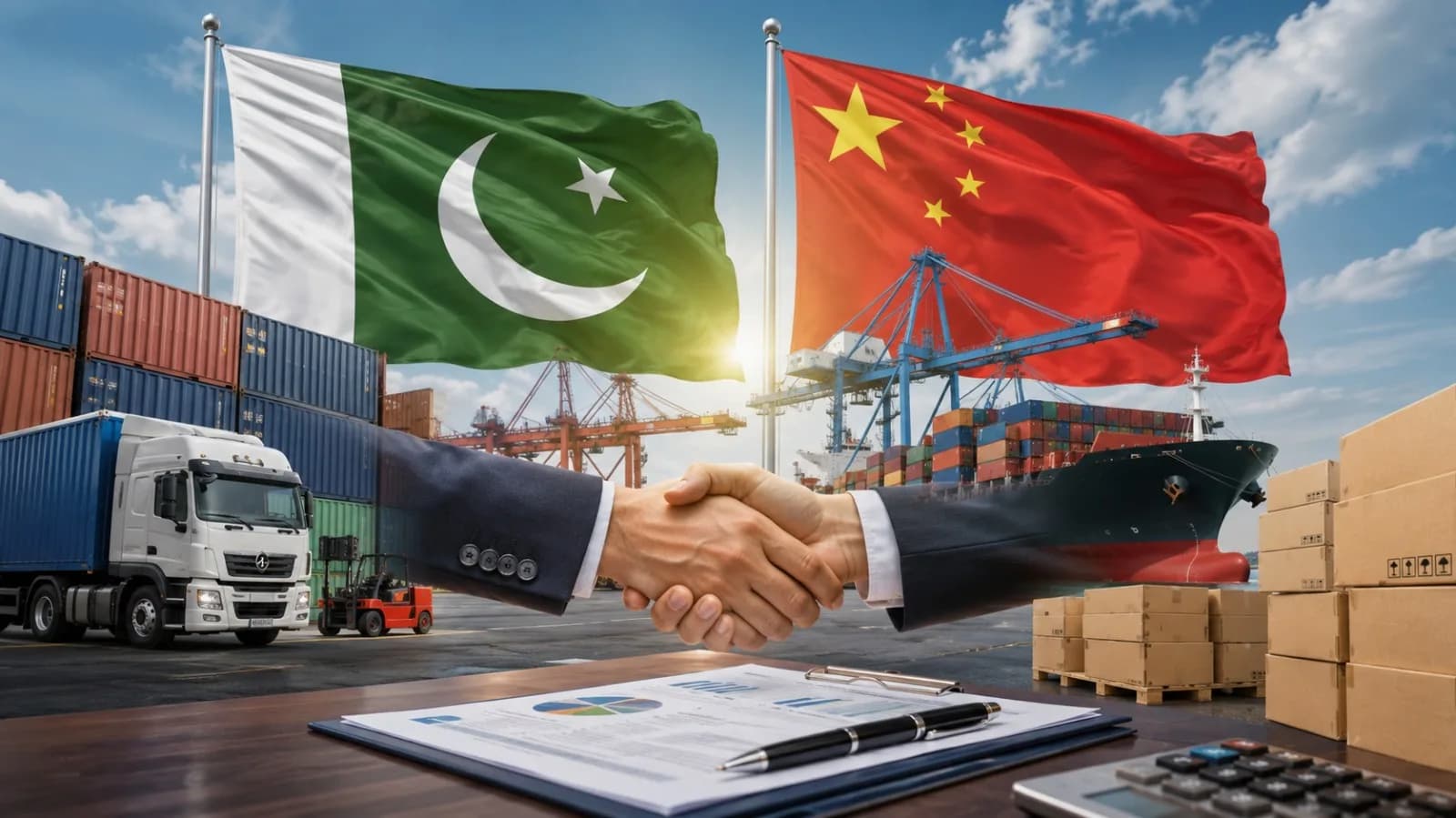
Pakistan Seeks Chinese Tariff Relief on 700 Export Products
The move comes at a time when Pakistan is actively pursuing export-led economic growth while managing pressure on foreign reserves, trade imbalances, and industrial competitiveness. The proposal could have important implications for exporters, manufacturing companies, textile producers, agricultural businesses, and investors monitoring Pakistan-China trade relations.
Official details regarding the exact tariff reductions, product categories, implementation timeline, and approval framework have not officially been mentioned yet.
Investment Overview
Pakistan’s request for tariff relief from Beijing is primarily aimed at increasing export access to the Chinese market under bilateral trade cooperation frameworks. China remains one of Pakistan’s largest trading partners and a major source of investment through the China-Pakistan Economic Corridor (CPEC).
From an investment perspective, reduced tariffs on Pakistani exports could improve revenue opportunities for export-oriented sectors, particularly textiles, leather, surgical goods, agriculture, minerals, seafood, and manufacturing industries.
Investors are also closely watching whether the tariff relief discussions translate into improved export volumes and stronger corporate earnings for listed export-driven companies on the Pakistan Stock Exchange (PSX).
Quick Facts Box
Market Background
Pakistan and China have maintained deep economic and trade relations for decades. Under the China-Pakistan Free Trade Agreement (CPFTA), both countries have periodically revised tariff structures to facilitate bilateral trade.
Pakistan’s exports to China have historically remained lower compared to imports from China, creating a significant trade imbalance. As a result, policymakers continue seeking better market access for Pakistani products in Chinese markets.
Exporters have repeatedly argued that reduced tariffs could improve competitiveness against regional suppliers from countries such as Bangladesh, Vietnam, and India in selected sectors.
In many cases, tariff reductions alone may not guarantee export growth unless local industries also improve productivity, quality standards, logistics, and supply chain efficiency.
Current Market Situation
- Pakistan continues focusing on export-led economic recovery.
- Foreign exchange reserves remain under close market observation.
- Export industries are seeking broader international market access.
- China remains Pakistan’s largest import partner.
- Investors are monitoring trade diplomacy developments closely.
Investment Type
The proposed tariff relief is not a direct investment product but may significantly impact export-oriented equities, manufacturing businesses, logistics providers, and foreign exchange-related sectors.
From an investment perspective, sectors linked to exports could potentially benefit if tariff reductions improve sales volumes and international competitiveness.
Price / Value Details
| Category | Details |
|---|---|
| Products Under Review | Around 700 export products |
| Tariff Reduction Percentage | Not officially mentioned yet. |
| Export Revenue Impact | Potentially positive for exporters |
| Currency Impact | Potential support for foreign exchange inflows |
Historical Performance
Pakistan’s export sector has experienced fluctuating performance over the years due to global demand cycles, energy costs, currency volatility, and domestic industrial challenges.
Textile exports have traditionally remained Pakistan’s largest export contributor, while agriculture and value-added manufacturing sectors have also gained attention in recent years.
| Historical Trend | Market Impact |
|---|---|
| Improved Trade Access | Higher export opportunities |
| Currency Depreciation | Mixed impact on exporters |
| Energy Cost Increases | Pressure on industrial margins |
Potential Returns and Risk Factors
| Potential Opportunity | Associated Risk |
|---|---|
| Higher export revenue | Policy approval uncertainty |
| Better trade competitiveness | Global demand slowdown |
| Potential currency support | Supply chain disruptions |
Short-Term vs Long-Term Outlook
| Investment Horizon | Outlook |
|---|---|
| Short-Term | Export-related stocks may react positively to policy discussions. |
| Long-Term | Sustainable export growth depends on industrial reforms and market competitiveness. |
Tax and Regulatory Details
| Category | Details |
|---|---|
| Main Authority | Ministry of Commerce |
| Trade Framework | China-Pakistan trade agreements |
| Final Tariff Notification | Not officially mentioned yet. |
How to Invest
- Track official trade policy announcements.
- Monitor export-oriented PSX-listed companies.
- Review quarterly export data and sector performance.
- Analyze currency market trends and foreign reserve levels.
- Consult licensed financial professionals before investing.
Investment Platforms Table
| Platform | Usage |
|---|---|
| Pakistan Stock Exchange | Investment in export-oriented companies |
| Brokerage Firms | Equity trading and market access |
| Banking Institutions | Trade financing and forex services |
Beginner Investor Checklist
| Checklist Item | Importance |
|---|---|
| Understand export market risks | Essential |
| Monitor trade policy updates | Highly Recommended |
| Diversify investments | Important |
Risk Management Tips
- Monitor global trade developments closely.
- Avoid concentrating investments in one export sector.
- Track exchange rate movements regularly.
- Review company export exposure before investing.
- Stay updated on China-Pakistan trade negotiations.
Common Mistakes Investors Make
One common mistake investors make is assuming trade negotiations automatically lead to immediate profit growth for exporters.
Many beginner investors overlook operational costs, energy pricing, logistics issues, and international demand fluctuations that can affect export performance.
In practical terms, successful export growth depends on both tariff advantages and domestic industrial efficiency.
Comparison With Other Investments
| Investment Type | Risk Level | Liquidity | Volatility |
|---|---|---|---|
| Export-Oriented Stocks | Medium to High | High | Moderate |
| Government Securities | Low | Moderate | Low |
| Foreign Exchange Exposure | High | High | High |
Pros and Cons
| Pros | Cons |
|---|---|
| Potential export growth | Policy uncertainty |
| Better trade competitiveness | Dependence on external markets |
| Possible support for reserves | Global economic slowdown risk |
Expert Analysis
From an investment perspective, broader Chinese market access could improve Pakistan’s export outlook if implemented effectively. Export-oriented sectors may benefit from stronger demand and improved price competitiveness.
However, investors should remain cautious because tariff reductions alone may not fully resolve structural issues such as energy costs, industrial productivity, infrastructure bottlenecks, and financing challenges.
For long-term investors, sustainable export growth will likely depend on broader economic reforms, consistent industrial policies, and stable trade diplomacy between Islamabad and Beijing.
Final Thoughts
Pakistan’s request for tariff relief on nearly 700 products highlights the country’s continued focus on boosting exports and improving trade competitiveness. While the discussions could open new opportunities for exporters, investors remain focused on execution, market access conditions, and long-term policy consistency.
In many cases, trade policy improvements can provide momentum for industrial growth, but sustainable gains typically require broader economic stability, infrastructure improvements, and investor confidence.
Frequently Asked Questions
1. What is tariff relief?
Tariff relief refers to reduced import duties or taxes on exported products entering another country.
2. How many products are included?
Pakistan is reportedly seeking relief on around 700 products.
3. Is the agreement finalized?
Final approval details have not officially been mentioned yet.
4. Which sectors may benefit most?
Export-oriented sectors such as textiles, agriculture, leather, and manufacturing could benefit.
5. Is this development positive for investors?
Potentially yes, particularly for export-linked businesses and related industries.
6. What are the main risks?
Risks include policy delays, global demand slowdown, and operational challenges.
7. Are there any taxes involved?
Applicable trade duties and regulations depend on final policy implementation.
8. Is this regulated in Pakistan?
Yes. Trade policy falls under the Ministry of Commerce and related regulatory authorities.
9. What documents do exporters usually require?
Export licenses, customs documentation, invoices, and regulatory approvals may be required.
10. What are alternative investment opportunities?
Investors may also consider government securities, banking stocks, mutual funds, and diversified equity investments.
Article Details
Category: Investment
Published:
Updated:
Author: Irfan Ali
More Stories
Continue Reading


International Investors
2026 Energy Crisis: Global Growth, Inflation & Market Outlook

International Investors