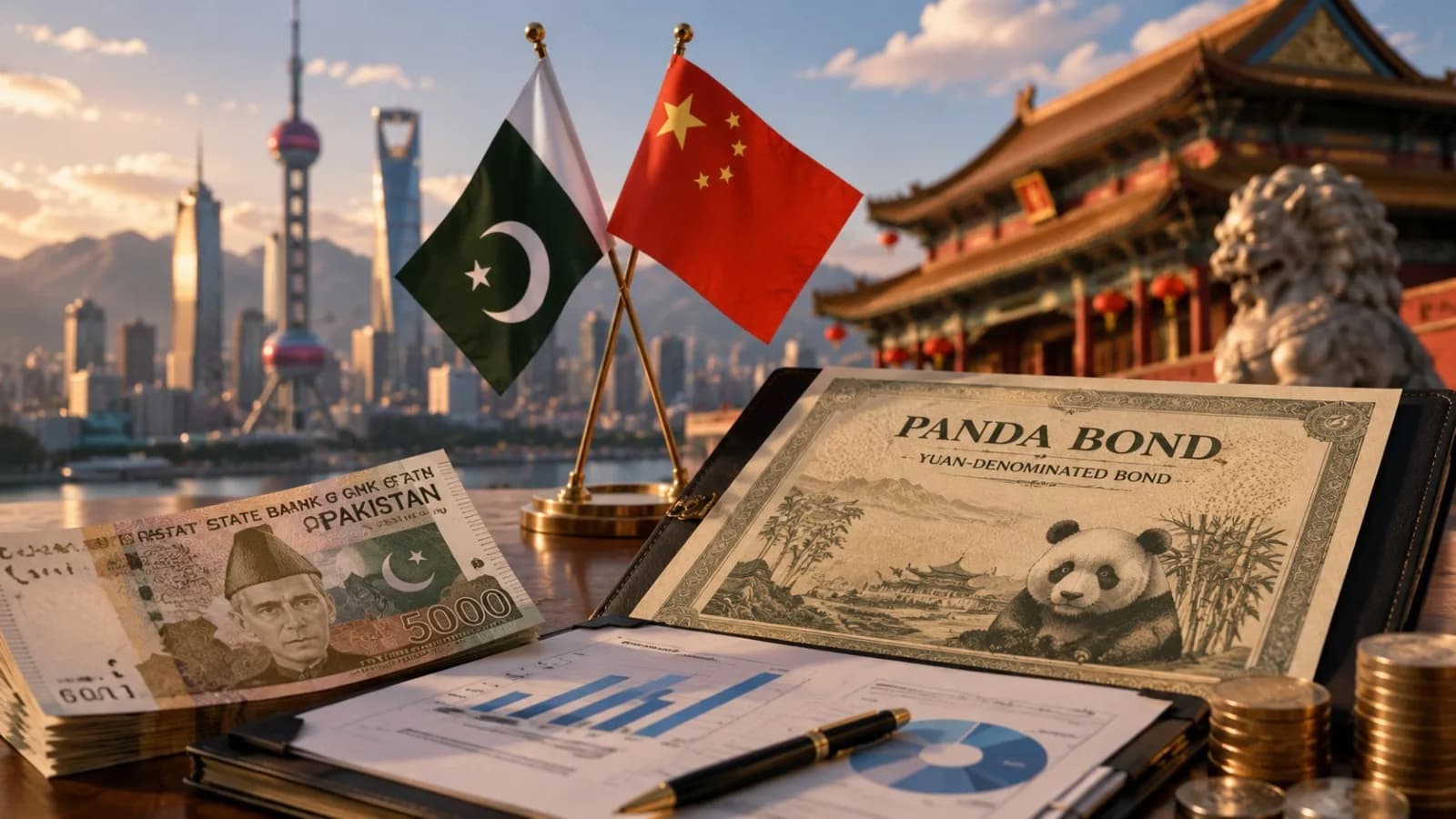
Pakistan Set to Launch First Panda Bond Next Week
The planned Panda bond issuance marks a significant development for Pakistan’s sovereign debt strategy. Panda bonds are yuan-denominated bonds issued in China by foreign governments or institutions. For Pakistan, this could open a fresh avenue for raising funds from Chinese capital markets while strengthening financial cooperation with China.
According to officially available statements, Pakistan intends to launch the bond next week. However, several technical details including exact pricing, maturity profile, coupon rate, and final issue size have not officially been mentioned yet.
Investment Overview
Panda bonds are increasingly used by emerging economies seeking access to China’s domestic debt market. Pakistan’s proposed issuance comes at a time when the country is facing elevated external financing needs, currency volatility, and pressure on foreign exchange reserves.
In practical terms, the bond would allow Pakistan to borrow in Chinese yuan instead of US dollars. This may help diversify currency exposure and deepen economic ties with China under broader bilateral cooperation frameworks.
Quick Facts Box
Market Background
Pakistan has traditionally relied on dollar-denominated Eurobonds, multilateral institutions, friendly countries, and IMF programs to manage external financing requirements. However, rising global interest rates and tightening financial conditions have increased borrowing costs for emerging markets.
The move toward Panda bonds reflects a broader trend where countries seek diversified funding channels. China’s domestic bond market is among the world’s largest, and access to it may provide Pakistan with additional liquidity options.
Many analysts believe the issuance also carries diplomatic importance because it highlights deepening economic cooperation between Pakistan and China.
Current Market Situation
- Pakistan continues to manage external debt obligations.
- Foreign exchange reserves remain under close market scrutiny.
- The Pakistani rupee has faced periodic volatility.
- Global investors remain cautious toward emerging-market debt.
- China remains one of Pakistan’s key economic partners.
Investment Type
A Panda bond is a fixed-income debt instrument issued in China and denominated in yuan. Investors purchasing the bond effectively lend money to the issuing sovereign government for a specified period in exchange for interest payments.
For institutional investors, sovereign bonds are often considered lower risk than equities, though emerging-market sovereign debt can still carry considerable currency and repayment risks.
Price / Value Details
| Metric | Status |
|---|---|
| Bond Size | Not officially mentioned yet. |
| Coupon Rate | Not officially mentioned yet. |
| Maturity Duration | Not officially mentioned yet. |
| Minimum Investment | Depends on participating institutions and market structure. |
Historical Performance
Pakistan has previously issued international bonds in global markets, including Eurobonds and Sukuk instruments. Historical performance of these instruments has often been influenced by political developments, IMF negotiations, foreign reserve trends, and global interest rates.
| Historical Factor | Impact |
|---|---|
| IMF Programs | Improved investor confidence at times |
| Currency Volatility | Increased repayment concerns |
| Global Interest Rates | Affected borrowing costs |
Potential Returns and Risk Factors
| Potential Reward | Associated Risk |
|---|---|
| Diversified funding source | Currency fluctuation risk |
| Access to Chinese investors | Sovereign repayment concerns |
| Potentially broader investor base | Global market uncertainty |
Short-Term vs Long-Term Outlook
| Time Horizon | Outlook |
|---|---|
| Short-Term | Market reaction will likely depend on pricing, investor demand, and macroeconomic stability. |
| Long-Term | Successful issuance may improve Pakistan’s access to diversified capital markets over time. |
Tax and Regulatory Details
| Category | Details |
|---|---|
| Regulatory Authority | Chinese financial regulators and Government of Pakistan |
| Tax Implications | Investors should consult tax professionals based on jurisdiction. |
| Legal Status | Sovereign debt instrument |
How to Invest
- Monitor official announcements from Pakistan’s Ministry of Finance.
- Check participating financial institutions and underwriters.
- Verify eligibility requirements for foreign investors.
- Review bond maturity, yield, and currency exposure.
- Consult a licensed investment advisor before investing.
Beginner Investor Checklist
| Checklist Item | Status |
|---|---|
| Understand sovereign bond risks | Essential |
| Assess currency exposure | Important |
| Verify official documentation | Mandatory |
Risk Management Tips
- Diversify investments across multiple asset classes.
- Do not rely solely on sovereign debt instruments.
- Monitor exchange rate movements carefully.
- Track global interest rate trends.
- Review sovereign credit ratings regularly.
Common Mistakes Investors Make
One common mistake investors make is assuming sovereign bonds are completely risk-free. In many cases, emerging-market bonds can face political, economic, and currency-related volatility.
Many beginner investors overlook the impact of foreign exchange fluctuations. Since Panda bonds are denominated in yuan, currency movements can directly influence returns for foreign investors.
Comparison With Other Investments
| Investment Type | Risk Level | Liquidity | Volatility |
|---|---|---|---|
| Panda Bond | Medium to High | Moderate | Moderate |
| Pakistani Equities | High | High | High |
| Bank Deposits | Low | High | Low |
Pros and Cons
| Pros | Cons |
|---|---|
| Diversifies Pakistan’s funding sources | Exposure to currency risk |
| Access to Chinese investors | Global market uncertainty |
| Potentially improved liquidity options | Sovereign debt pressure remains |
Expert Analysis
From an investment perspective, Pakistan’s entry into the Panda bond market is symbolically important because it demonstrates an effort to diversify financing tools beyond traditional Western capital markets.
However, investors will likely focus heavily on the final pricing, investor participation, sovereign credit outlook, and Pakistan’s broader macroeconomic reforms. In many cases, successful sovereign debt issuance depends as much on market confidence as it does on economic fundamentals.
Final Thoughts
Pakistan’s planned Panda bond issuance could become an important milestone for the country’s financial strategy if executed successfully. While the move may help diversify borrowing channels and deepen economic engagement with China, market participants will remain cautious about repayment capacity, currency trends, and overall macroeconomic stability.
For long-term investors, the development highlights how sovereign financing is evolving in emerging markets. At the same time, the issuance also underlines the importance of careful risk assessment, particularly in uncertain global economic conditions.
Frequently Asked Questions
1. What is a Panda bond?
A Panda bond is a yuan-denominated bond issued in China by a foreign government or institution.
2. Is Pakistan’s Panda bond officially confirmed?
Yes. Pakistan’s finance minister has publicly stated that the country plans to issue its first Panda bond next week.
3. Is this investment safe?
Sovereign bonds carry lower risk than many equities, but emerging-market debt still involves economic and currency risks.
4. What is the minimum investment amount?
Not officially mentioned yet.
5. What are the main risks?
Currency volatility, sovereign repayment pressure, and global market uncertainty are among the primary risks.
6. Is it suitable for beginners?
Beginners should fully understand sovereign debt and currency exposure before investing.
7. Are there tax implications?
Yes. Tax treatment depends on investor jurisdiction and applicable regulations.
8. How can investors buy or sell the bond?
Details regarding participating institutions and trading platforms have not officially been mentioned yet.
9. Is the bond regulated?
Yes. The issuance would fall under Chinese market regulations and sovereign debt frameworks.
10. What are the alternatives?
Investors may also consider equities, Sukuk, mutual funds, treasury bills, or bank deposits depending on their risk appetite.
Article Details
Category: Investment
Published:
Updated:
Author: Irfan Ali
More Stories