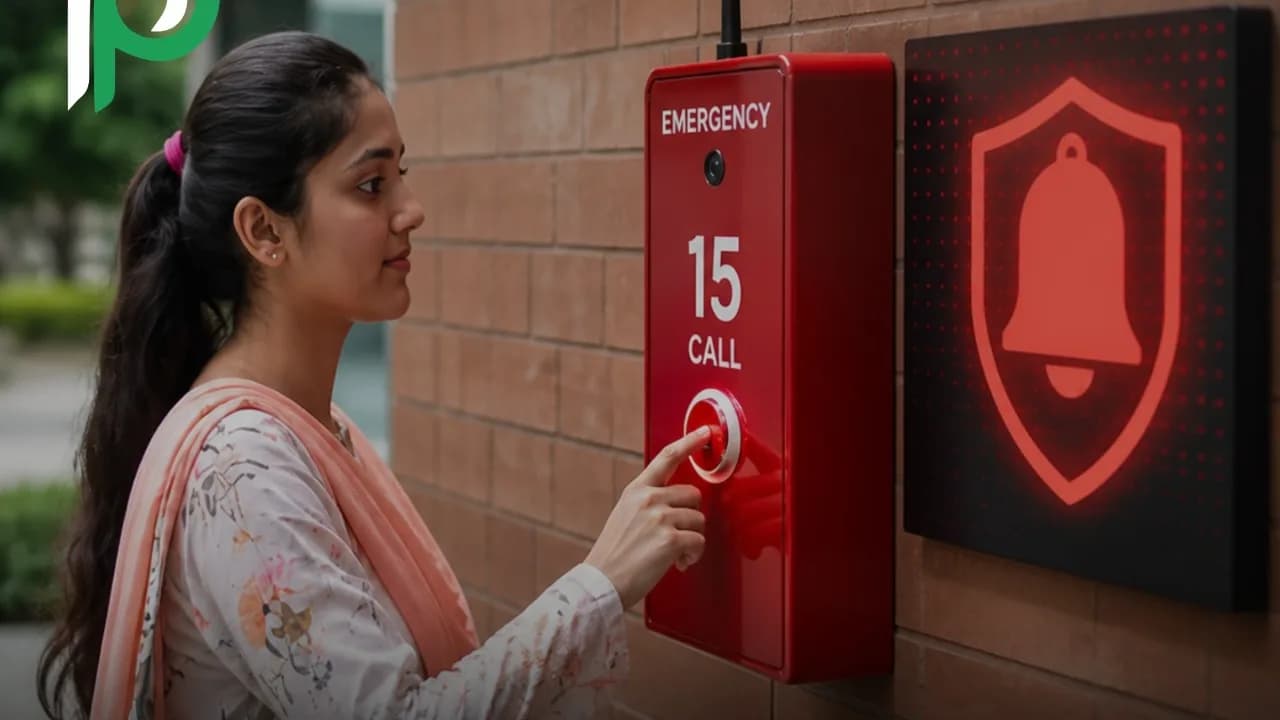
Punjab Expands Panic Button System for Faster Emergency Response
Punjab Panic Button System Expansion for Faster Response
The discussion around the Punjab Expands Panic Button System for Faster Emergency Response is not just another government tech update. It actually reflects a deeper shift in how emergency services are evolving in Pakistan, especially in Punjab. In many cases, people underestimate how critical response time is during emergencies. Even a delay of a few minutes can completely change the outcome of a situation.
From experience, when systems like this are implemented properly, they don’t just “add technology” they change behavior, coordination, and trust between citizens and institutions.
Let’s break it down in a practical, real-world way so you understand what is actually changing and why it matters.
What is a Panic Button System? (Definition of Panic Button)
A panic button system is a quick emergency alert mechanism that allows a person to instantly request help during a dangerous or urgent situation.
Simple Definition
A panic button is a physical or digital trigger that sends an immediate alert to emergency response departments such as police, rescue teams, or control rooms.
Real-life example
Think of it like this:
If someone feels unsafe in a public space or faces a medical emergency, instead of calling and explaining everything, they just press a button and help is dispatched immediately.
In countries like the USA, similar systems are used in schools, hospitals, and even rideshare apps for driver and passenger safety.
One common mistake people make is thinking it is only for extreme situations. In reality, it can be used in:
Road accidents
Medical emergencies
Harassment or security threats
Fire incidents
Domestic emergency situations
Punjab Expands Panic Button System for Faster Emergency Response
The Punjab Expands Panic Button System for Faster Emergency Response initiative is part of a broader effort to modernize public safety infrastructure in Pakistan.
From what we are seeing in Punjab’s digital governance approach, the focus is very clear: reduce response time, improve coordination, and make emergency access easier for the average citizen.
Why this expansion matters
In many cases, emergency delays happen not because help is unavailable, but because:
The location is unclear
The situation is not communicated properly
Multiple departments are not synchronized
This system tries to solve exactly that gap.
Key improvements in the expanded system
Faster emergency alerts through integrated digital platforms
Wider coverage across urban and rural Punjab
Real-time location tracking using GPS
Direct connection to control rooms
Improved coordination between departments
From experience in similar systems globally, the biggest improvement is not just speed, but accuracy. When responders know exactly where and what is happening, they act more effectively.
When was it introduced in Pakistan?
The panic button concept in Pakistan has gradually evolved over the last few years, especially after increasing focus on women safety initiatives and smart city projects.
Punjab has been one of the leading provinces experimenting with:
Safe city projects
Smart surveillance systems
Emergency response integration
While earlier versions existed in limited form (mostly in big cities like Lahore), this expansion is aimed at scaling it across the province.
Evolution timeline (simple breakdown)
Early phase: Limited emergency buttons in smart city setups
Middle phase: Integration with police helplines and surveillance systems
Current phase: Province-wide expansion and system integration
This is not a sudden development, but rather a structured upgrade of existing safety infrastructure.
Which departments are involved? (Punjab Police and others)
A system like this cannot work in isolation. The Punjab Expands Panic Button System for Faster Emergency Response relies on coordination between multiple departments.
Main departments involved
Punjab Police
Responsible for immediate law enforcement response and dispatch
Rescue 1122
Handles medical emergencies, fire incidents, and disaster response
Safe City Authority
Provides surveillance, monitoring, and real-time data support
Emergency Control Rooms
Act as central coordination hubs for incoming alerts
Health Department (in some cases)
For hospital coordination and ambulance dispatch
Why coordination is critical
One common mistake people assume is that technology alone solves the problem. From experience, I can say clearly: technology only works when departments are properly aligned.
If police arrive late or rescue teams don’t get accurate location data, the system loses effectiveness even if the technology is advanced.
How it works (Step-by-step process)
Let’s understand the actual flow in simple terms.
Step 1 – Triggering the panic button
A citizen presses a physical button or uses a mobile-based emergency option.
Step 2 – Instant signal transmission
The system sends:
Location data
Emergency type (if selected)
User ID or device information
Step 3 – Control room activation
The nearest control room receives the alert and verifies it quickly.
Step 4 – Dispatch of emergency units
Relevant departments are immediately notified:
Police for security threats
Rescue for accidents or medical issues
Step 5 – Real-time monitoring
Safe City cameras or tracking systems monitor the situation as help arrives.
In many cases, this reduces response time significantly compared to traditional phone-based reporting.
Comparison with international systems (USA example)
If we compare Punjab’s system with emergency systems in the USA, there are both similarities and gaps.
Similarities
Instant emergency alerts
GPS-based location tracking
Integration with police and medical services
Differences
USA systems are often more app-driven and widely adopted
Public awareness is higher in emergency usage
Integration with private platforms (like Uber emergency buttons) is more common
In many cases, the real difference is not technology but adoption and awareness.
For example, in the USA, students in schools are trained regularly on how to use emergency alert systems. In Pakistan, this kind of awareness is still developing.
Benefits of the Panic Button Expansion
The expansion brings several practical benefits that directly impact everyday citizens.
Faster emergency response
Time saved during emergencies can literally save lives.
Better safety for women and vulnerable groups
This is one of the most important use cases.
Reduced communication errors
Instead of explaining the situation over phone calls, location and alerts are automatically shared.
Improved public confidence
When people trust that help will arrive quickly, it improves overall sense of safety.
Challenges and real-world limitations
No system is perfect, and it is important to stay realistic.
Awareness gap
Many people still don’t know how or when to use panic buttons.
Technical limitations in remote areas
Internet connectivity and infrastructure can affect response speed.
Response coordination issues
If departments are not fully synchronized, delays can still happen.
One common mistake people make is assuming that launching a system automatically fixes the problem. In reality, continuous training and monitoring are required.
Future of emergency response in Punjab
The direction clearly points toward a more digital and integrated system.
We may see:
AI-based threat detection
Drone-assisted emergency monitoring
Integration with mobile apps and wearable devices
Predictive emergency response systems
From experience, countries that invest early in smart emergency systems see long-term improvements in public safety and urban management.
Final Thoughts
The Punjab Expands Panic Button System for Faster Emergency Response initiative is a strong step toward modernizing public safety infrastructure in Pakistan. It is not just about installing buttons or adding features, it is about building trust, reducing response time, and saving lives through better coordination.
If implemented and adopted properly, this system can become a backbone of emergency services in Punjab, similar to what we see in more advanced smart city ecosystems globally.
At the end of the day, technology only works when people know how to use it and institutions respond effectively. This expansion is a move in the right direction, but its real success will depend on execution on the ground.
Article Details
Category: News
Published:
Updated:
Author: Aliya
More Stories