
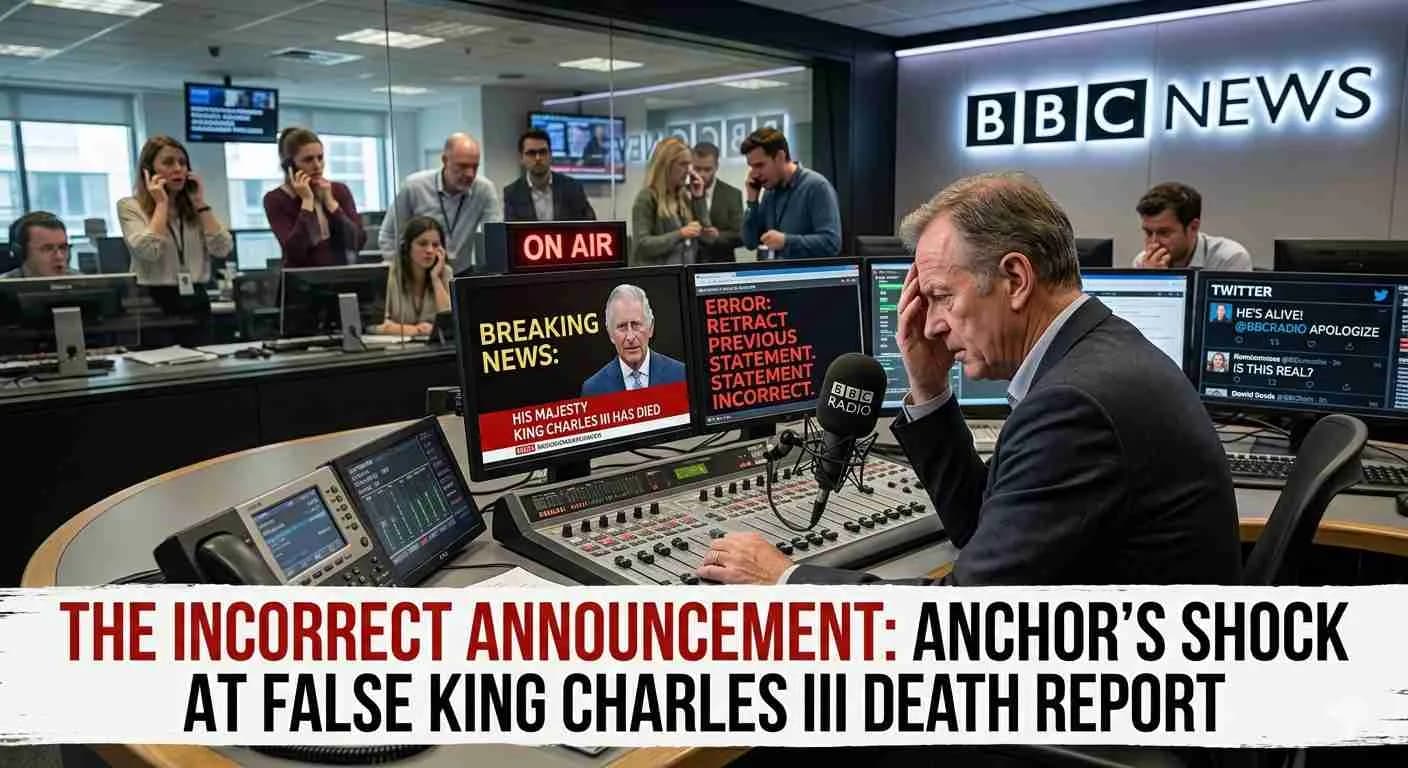
False King Charles Death Announcement Sparks Media Credibility Debate
Imagine waking up to shocking breaking news, only to discover it never happened. That confusion spread quickly after a radio station mistakenly announced the death of King Charles.
How the Incorrect Broadcast Triggered Immediate Reactions
Listeners were left stunned after a radio station reportedly aired an incorrect announcement claiming that King Charles had died. Within minutes, confusion spread across social media platforms as users questioned whether the report was real or simply another online rumor.
The false announcement quickly became a trending topic. Some users rushed to search for confirmation from official palace sources, while others criticized how sensitive information could be aired without proper verification.
In many cases, people trust traditional radio and television broadcasts more than random social media posts. That is why errors involving public figures, especially members of the British royal family, can create significant public reaction in a very short time.
Why Verification Matters More Than Speed
Modern newsrooms operate in an environment where speed often competes directly with accuracy. Broadcasters feel pressure to break stories first, especially when audiences expect instant updates through phones, apps, and live alerts.
From experience, one incorrect headline can damage public trust far more than a delayed report. Audiences may forgive late reporting, but they rarely forget false information tied to major public events.
One common mistake people make is assuming every breaking news alert has already been verified by multiple sources. In reality, newsroom mistakes can happen when information moves too quickly between producers, presenters, and digital teams.
| Issue | Public Reaction | Media Impact |
|---|---|---|
| False Death Announcement | Confusion and panic | Questions over credibility |
| Social Media Sharing | Rapid misinformation spread | Increased pressure on journalists |
| Official Clarification | Public reassurance | Damage control efforts |
The Cost of Misinformation in the Digital Age
The incident also highlights how misinformation now travels faster than corrections. A false announcement can be clipped, reposted, and reshared thousands of times before broadcasters issue clarifications.
Families often experience this confusion firsthand during emergencies. It can feel similar to hearing sudden rumors about a relative’s health before receiving verified information from doctors. That emotional uncertainty creates anxiety, especially for older audiences who rely heavily on traditional media.
Financially, these mistakes can also hurt media organizations. Public backlash, advertiser concerns, and damaged audience trust can reduce long-term credibility. Rebuilding that reputation is often expensive and time-consuming.
How Newsrooms Are Responding
Many broadcasters are now strengthening internal verification procedures. News organizations increasingly require multiple confirmations before airing sensitive updates involving world leaders, celebrities, or royal figures.
Some media analysts believe artificial intelligence monitoring tools may eventually help identify suspicious or unverified reports before they reach audiences. However, technology alone cannot replace editorial judgment.
Human oversight remains critical. Editors, producers, and presenters still carry responsibility for ensuring information is accurate before broadcasting it publicly.
Public Trust Remains the Real Story
Beyond the royal headline itself, the larger issue is audience confidence in news platforms. Trust has become one of the most valuable assets in modern journalism.
People today consume information faster than ever, but they also question it more carefully. That skepticism is reshaping how media companies approach breaking news coverage.
As digital platforms continue accelerating the news cycle, broadcasters will likely face even greater pressure to balance speed with responsibility. Moments like this serve as reminders that one incorrect sentence can travel around the world long before the truth catches up.
Quick Facts
- Radio station mistakenly announced King Charles’ death
- Social media amplified confusion within minutes
- Public attention shifted toward media verification standards
- Broadcasters face growing pressure to prioritize accuracy
The incident may fade from headlines soon, but the conversation around responsible journalism is unlikely to disappear. Audiences now expect fast reporting, yet they also demand reliability. Finding that balance will remain one of the biggest challenges for modern media organizations.
Article Details
Category: Entertainment
Published:
Author: Irfan Ali
More Stories