Rawalpindi Woman Breaks New Ground with Historic HTV Driving Licence Achievement
What happens when someone dares to enter a field where very few expect to see them? In Rawalpindi, one woman's determination has created a milestone that could inspire countless others across Pakistan.
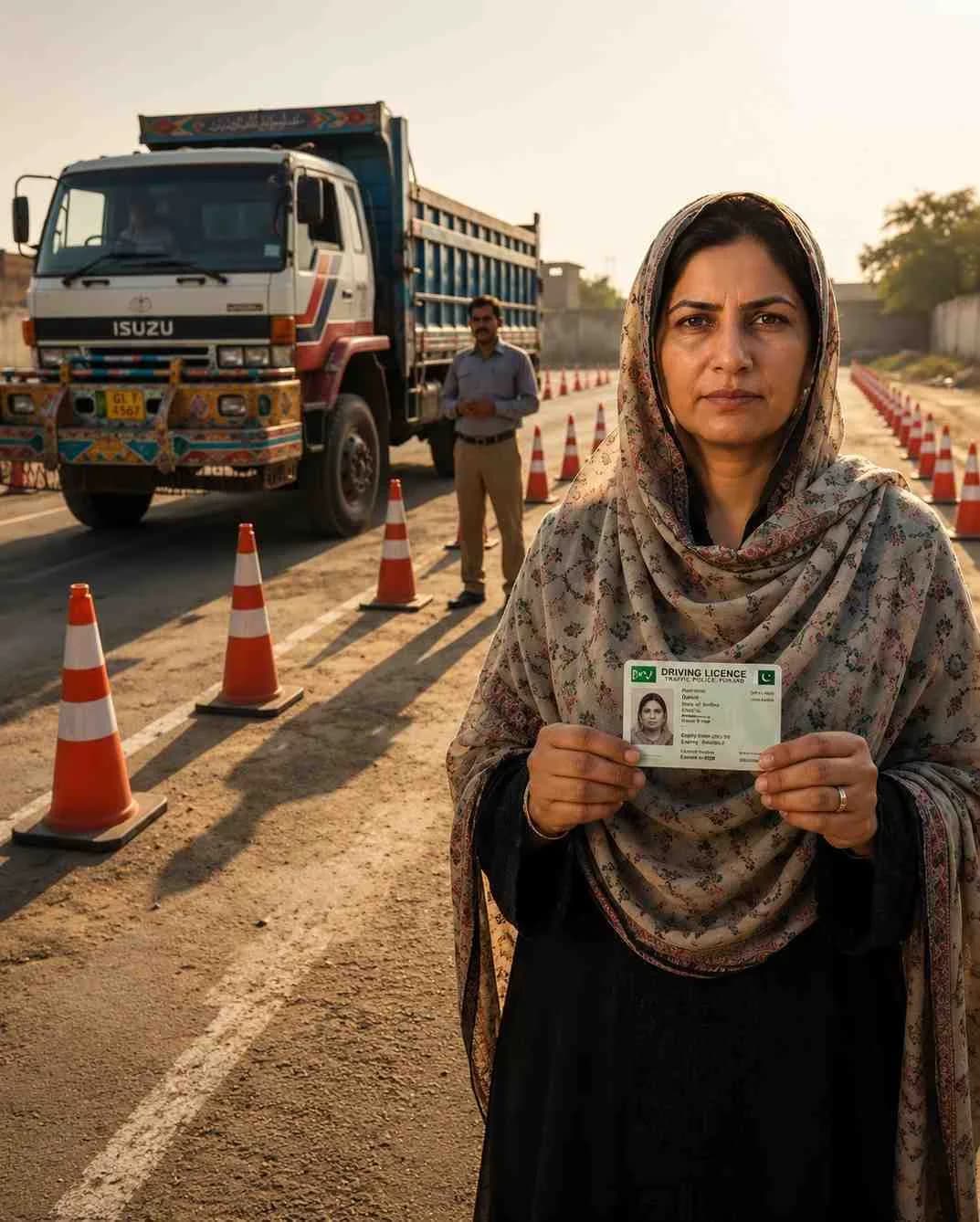
A woman from Rawalpindi has successfully obtained an HTV (Heavy Transport Vehicle) driving licence, becoming one of the very few women in Pakistan to qualify for operating heavy vehicles. The achievement is being viewed as a significant step toward greater female participation in sectors traditionally dominated by men, including transportation and logistics.
Quick Facts
- Rawalpindi woman successfully obtained an HTV driving licence
- HTV licences allow drivers to operate heavy transport vehicles
- The achievement highlights increasing opportunities for women
- Pakistan's transport sector remains largely male-dominated
A Milestone Beyond a Driving Licence
At first glance, obtaining a driving licence may seem like a routine administrative process. However, an HTV licence carries far greater significance because it authorizes individuals to drive large commercial vehicles, including trucks, buses, and other heavy transport units.
For years, heavy vehicle driving has been considered a profession almost exclusively reserved for men. Social perceptions, workplace barriers, and limited opportunities have often discouraged women from entering the field.
The successful issuance of an HTV licence to a woman in Rawalpindi challenges those assumptions and demonstrates that professional skills are not defined by gender.
In many cases, milestones like these do more than benefit one individual. They encourage institutions, employers, and society to reconsider long-standing beliefs about who can perform certain jobs.
Why HTV Licences Matter
Heavy Transport Vehicle licences represent one of the highest categories of driving certification available to civilian drivers. Unlike standard motorcycle or car licences, HTV permits require additional training, testing, and knowledge of road safety regulations.
Drivers operating heavy vehicles carry greater responsibilities because of the size, weight, and operational complexity of commercial transport units.
Obtaining such a licence requires discipline, confidence, and technical competence. The process often involves extensive practical training and strict examinations designed to ensure public safety.
As a result, earning an HTV licence is viewed as a professional achievement rather than a routine certification.
Women Are Expanding Their Presence Across New Industries
Pakistan has witnessed gradual but noticeable changes in female participation across sectors that were once considered inaccessible.
Women now serve as commercial pilots, police officers, engineers, entrepreneurs, firefighters, and ride-hailing drivers. Each breakthrough creates new possibilities for future generations.
The transport industry remains one of the final frontiers where female representation remains relatively low. This makes the Rawalpindi achievement particularly noteworthy.
From experience, social change often begins with a single individual willing to challenge expectations. Once one person succeeds, others begin to see similar goals as realistic rather than impossible.
Women in Non-Traditional Professions
| Profession | Traditional Perception | Current Trend |
|---|---|---|
| Commercial Pilot | Male Dominated | Growing Female Participation |
| Police Service | Male Dominated | Increasing Recruitment |
| Engineering | Male Dominated | Expanding Opportunities |
| Heavy Transport Driving | Highly Male Dominated | Emerging Female Participation |
Economic Opportunities Associated with HTV Licensing
Beyond symbolism, the achievement also carries economic significance.
The transport and logistics industry plays a vital role in Pakistan's economy. Commercial drivers are essential for moving goods, supporting supply chains, and connecting businesses across cities and provinces.
An HTV licence opens access to professional opportunities that are often unavailable to ordinary drivers. These opportunities can include employment in logistics firms, passenger transportation services, industrial operations, and commercial fleet management.
For many families, access to a stable income source can have a transformative impact. It can help support education, healthcare, and long-term financial planning.
A relatable example is when a family gains an additional skilled earner. Much like adding another strong pillar to a house, financial stability becomes easier to maintain during periods of economic uncertainty.
The Importance of Skills Over Stereotypes
One common mistake people make is assuming that certain professions require characteristics linked to gender rather than training and competence.
Modern transportation systems rely on professional standards, safety awareness, and technical knowledge. These qualities can be developed through education and experience regardless of gender.
The successful completion of HTV licensing requirements demonstrates that skill and determination remain the most important factors.
As industries evolve, employers increasingly focus on qualifications and performance rather than traditional assumptions.
What This Means for Young Women in Pakistan
For young women considering unconventional career paths, this milestone sends a powerful message. It shows that opportunities continue to expand across sectors that once appeared out of reach.
Career choices are becoming increasingly diverse. Women are exploring technology, aviation, transportation, law enforcement, manufacturing, and entrepreneurship with growing confidence.
Educational institutions and vocational training centers are also adapting to support broader participation in technical professions.
The visibility of success stories matters because they provide practical examples rather than abstract encouragement.
When young people see someone from their own city achieve something unusual, the possibility feels much more attainable.
Practical Advice for Aspiring Female Drivers
- Complete formal driving education and training
- Learn traffic laws and safety procedures thoroughly
- Practice regularly under qualified supervision
- Stay informed about licence requirements
- Develop confidence through experience and continuous learning
- Seek mentorship from experienced professionals when possible
A Positive Signal for the Transport Sector
The broader transport industry can also benefit from increased diversity. A larger talent pool allows organizations to recruit skilled professionals from a wider range of backgrounds.
As more women enter transportation-related careers, employers may be encouraged to create more inclusive workplaces and training opportunities.
Global trends suggest that industries perform better when talent is selected based on ability and dedication rather than outdated assumptions.
Pakistan's transport sector is undergoing modernization, and workforce diversity could become an important part of that transformation.
Changing Perceptions One Achievement at a Time
Social attitudes rarely change overnight. Progress usually happens through individual achievements that gradually reshape public expectations.
The Rawalpindi woman's success serves as a practical example of how barriers can be challenged through persistence and preparation.
While the licence itself represents a personal accomplishment, its broader significance extends to discussions about opportunity, inclusion, and professional growth.
Closing Thought
The successful issuance of an HTV driving licence to a woman in Rawalpindi represents more than a personal milestone. It reflects a changing professional landscape where skills, training, and determination continue to create new possibilities. As more women explore careers in transportation and other non-traditional fields, achievements like this may become less exceptional and more common, helping build a future where opportunities are defined by capability rather than convention.
Article Details
Category: News
Published:
Updated:
Author: Rabia
More Stories