
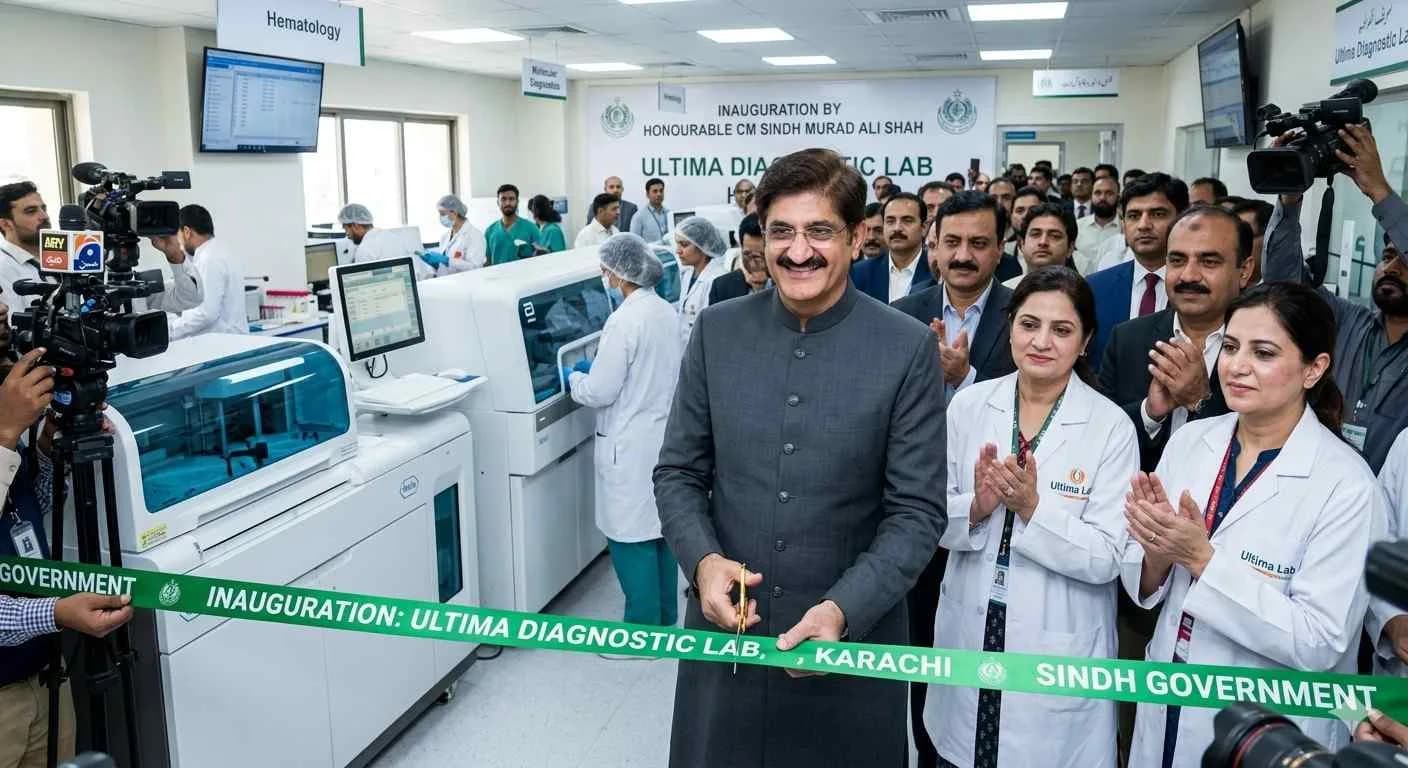
Introduction: A Step Forward in Sindh’s Healthcare System
The healthcare sector in Pakistan is often discussed in terms of challenges rather than progress, but moments like the Sindh CM Murad Ali Shah Inaugurates Ultima Diagnostic Lab initiative in Karachi bring a different narrative into focus. The launch of the Ultima Diagnostic Lab is not just another ribbon-cutting event. It reflects a growing shift toward modern healthcare infrastructure in Sindh.
In many cases, people only realize the importance of diagnostic labs when they face delays in medical testing or receive inaccurate reports. From experience, one common mistake people make is relying on outdated or under-equipped labs, which can directly affect treatment decisions. The introduction of a modern diagnostic lab in Karachi aims to address exactly these gaps.
This development under the broader umbrella of Sindh healthcare development signals a more structured approach toward improving patient care, medical accuracy, and healthcare accessibility.
Sindh CM Murad Ali Shah Inaugurates Ultima Diagnostic Lab in Karachi – Why It Matters
The Ultima Research and Diagnostic Laboratory in Karachi is being seen as a key milestone in the province’s healthcare evolution. But why is this inauguration getting attention?
Because it represents a shift from basic healthcare services toward a more technology-driven medical ecosystem.
A Focus on Accuracy and Speed in Diagnosis
Modern medicine depends heavily on accurate and timely test results. Whether it’s blood analysis, imaging, or specialized pathology tests, delays can lead to incorrect treatment paths.
In practical terms:
Faster diagnosis means quicker treatment decisions
Accurate results reduce unnecessary medication
Advanced systems reduce human error
Digital reporting improves doctor-patient coordination
In comparison, many public healthcare facilities still rely on semi-manual systems. This is where the gap becomes clear.
Inside the Ultima Diagnostic Lab Karachi – What Makes It Different?
The Ultima Diagnostic Lab Karachi is designed as a modern medical testing facility Karachi residents can rely on for a wide range of diagnostic needs.
Key Features of the Lab
Some of the standout features include:
Automated testing systems for faster results
Advanced pathology and imaging equipment
Digital record-keeping for patient history tracking
Improved quality control systems
Streamlined sample processing workflow
In global healthcare models like those in the United States, diagnostic centers are integrated into hospital networks. For example, many American patients rely on centralized labs that reduce redundancy and speed up diagnosis. The idea behind this lab seems to follow a similar direction, though on a developing system scale.
CM Sindh Health Initiatives and the Bigger Picture
The inauguration of this lab is not an isolated project. It falls under broader CM Sindh health initiatives aimed at improving healthcare infrastructure Sindh wide.
What the Government Is Trying to Achieve
The long-term goals appear to be:
Expanding access to quality diagnostics
Reducing patient load in major hospitals
Encouraging private-public healthcare collaboration
Introducing technology-driven healthcare systems
Improving rural-urban healthcare balance
From experience, healthcare reforms only succeed when diagnostics are strengthened first. Without reliable testing, even the best hospitals cannot function effectively.
Real-World Impact on Patients and Doctors
The impact of a modern diagnostic lab in Karachi is not theoretical. It directly affects everyday healthcare experiences.
For Patients
Patients will benefit in several practical ways:
Reduced waiting time for test results
More reliable diagnosis
Better affordability in long-term treatment
Easier access to advanced testing locally
Imagine a patient in Karachi previously waiting 3–5 days for a test result. Now, with automated systems, that time could potentially be reduced significantly. That difference can be life-changing in urgent medical conditions.
For Doctors
Doctors also benefit from:
More accurate lab reports
Faster treatment planning
Reduced guesswork in diagnosis
Better patient follow-up data
One common issue in developing healthcare systems is misdiagnosis due to delayed or incomplete lab results. This initiative directly addresses that challenge.
Comparison with Healthcare Models in Other Countries
To better understand the importance of the Ultima Research and Diagnostic Laboratory, it helps to compare it with international systems.
United States Healthcare Diagnostic Model
In the USA:
Diagnostic labs are highly centralized
Automation reduces manual errors
Insurance systems cover advanced testing
Digital integration connects hospitals and labs
This ensures that patients receive quick and reliable results. While Pakistan is still developing in this area, initiatives like this lab are steps toward a similar direction.
Pakistan vs Developed Healthcare Systems
Here’s a simple comparison:
Pakistan: Many labs are fragmented, varying in quality
USA: Standardized and regulated diagnostic systems
Pakistan: Limited automation in many public labs
USA: High reliance on AI and automated testing
Pakistan: Growing private-sector involvement
USA: Fully integrated hospital-lab ecosystems
This comparison shows that while Pakistan is behind, it is gradually moving forward through initiatives like CM Sindh health initiatives.
Challenges That Still Need Attention
While the inauguration is a positive development, it is also important to stay realistic.
Key Challenges in Healthcare Infrastructure Sindh
Some ongoing challenges include:
Limited access in rural areas
Shortage of trained lab technicians
High patient load in public hospitals
Maintenance of advanced equipment
Need for consistent funding and oversight
From experience, one of the biggest issues is sustainability. Many healthcare projects start strong but struggle with long-term maintenance and staffing.
Why This Matters for Karachi’s Healthcare Future
Karachi is the largest urban center in Pakistan, and its healthcare demands are constantly growing. The introduction of the Ultima Diagnostic Lab Karachi adds capacity where it is most needed.
Long-Term Benefits
Over time, this initiative can lead to:
Stronger hospital support systems
Reduced burden on emergency care units
Better disease detection rates
Improved public trust in healthcare services
Expansion of diagnostic networks across Sindh
In many cases, cities that invest early in diagnostics see long-term improvements in public health outcomes.
Final Thoughts – A Positive but Early Step
The Sindh CM Murad Ali Shah Inaugurates Ultima Diagnostic Lab project is a meaningful step toward modernizing healthcare in the province. It reflects a shift toward technology, accuracy, and efficiency in medical testing.
However, real transformation will depend on consistency, expansion, and integration with the broader healthcare system. A single facility cannot solve systemic challenges, but it can definitely set a benchmark.
For readers following Sindh healthcare development, this initiative is worth watching closely because it represents how healthcare infrastructure Sindh is slowly evolving toward modern standards.
For more updates and detailed coverage on national developments, visit Pehle Pakistan.
Article Details
Category: News
Published:
Updated:
Author: Fiza
More Stories