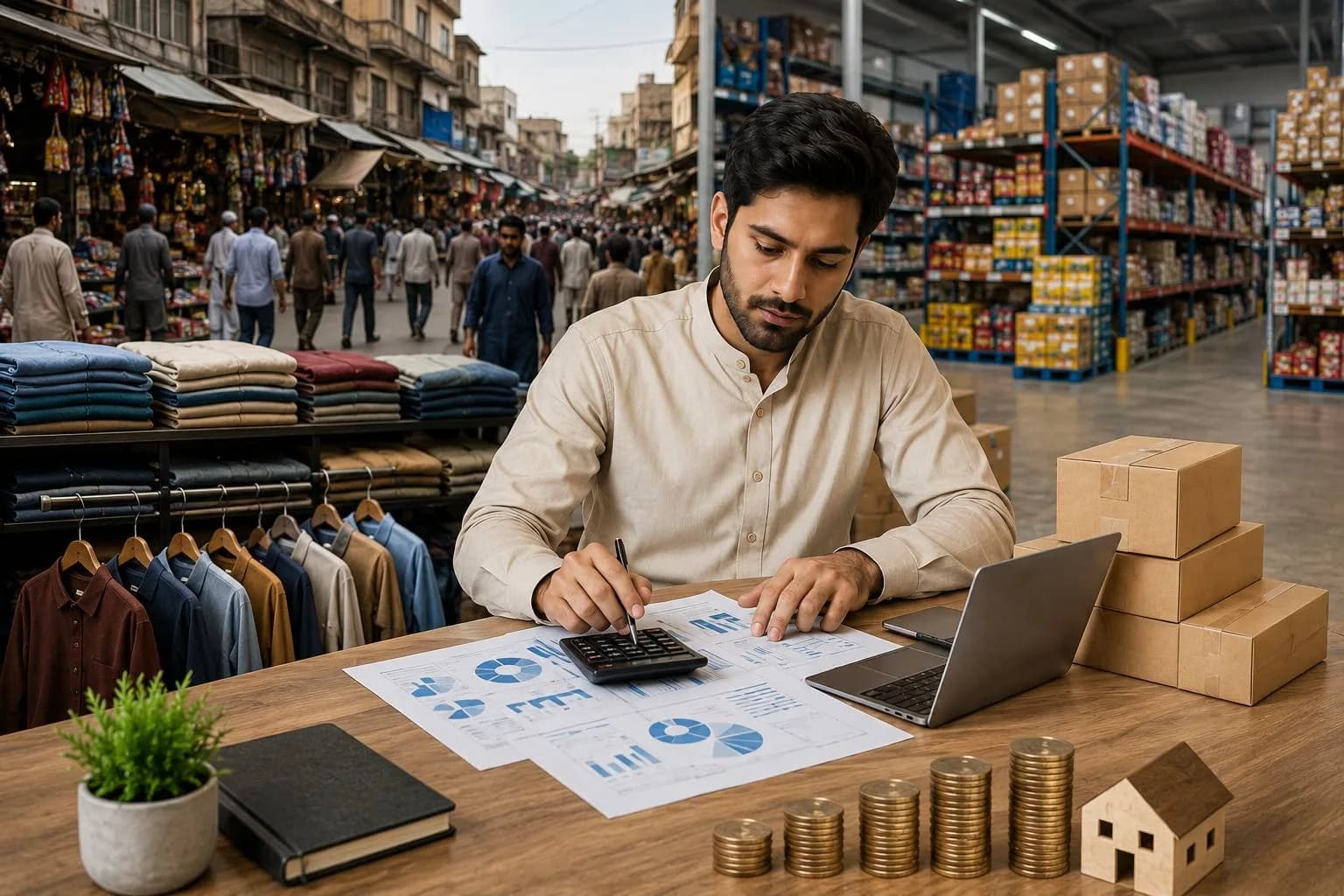
Small business investment in Pakistan is becoming one of the most reliable ways for locals to build steady monthly income without needing massive capital. If you've ever wondered where to put your savings so they actually work for you, this guide walks through the real options – from retail to franchising – with honest, practical detail instead of vague promises.
Small Business Investment in Pakistan-Why It Makes Sense Right Now
Honestly, this is a fairly favourable time for small investors. Pakistan's SME sector has been growing steadily, digital payments have cut down a lot of the hassle around handling cash, and for people who are just parking money in a bank account while inflation quietly eats into it, small business investment has become a genuinely better alternative.
Current Economic Factors Favouring Small Investors
According to State Bank of Pakistan reporting, digital retail payment transactions have seen consistent growth — meaning customers can pay faster, and sellers don't have to deal with as much cash handling as before. That might sound like a small detail, but it removes a surprising amount of day-to-day friction for a small business owner.
Internet and telecom penetration have also expanded significantly, which means more people are discovering local businesses online, whether that's a retail shop or a service provider. So relying purely on walk-in customers isn't really necessary anymore.
Low vs. High Capital Investment Options Overview
Not everyone needs to start with lakhs of rupees, and honestly, most people shouldn't. The options generally break down like this:
- Low capital: A small retail setup, reselling, or starting with a modest distributorship
- Medium capital: A franchise model, where you partner with an already-established brand
- Higher capital (but still accessible): Wholesale-based retail or investing in commercial property through instalment plans
Let's look at each of these in more detail.
Retail Shop Investment in Pakistan-Getting Started
Retail remains the most common and trusted investment route in Pakistan — and the reason is simple: people like to see and touch what they're buying, no matter how much online shopping grows.
Choosing the Right Location and Market
Location genuinely decides most of the outcome here. A spot with good foot traffic, somewhere people already go for their regular shopping, gives you a real head start. Before finalising any location, it's worth checking how much competition already exists in the area — if there are five similar shops nearby, standing out becomes a lot harder.
Estimated Startup Cost for a Small Retail Shop
Costs vary depending on the city and category, but the general breakdown usually includes:
- Shop rent or advance payment
- Initial inventory
- Basic licensing and registration
- Signage and setup costs
Most small retail shops can be started within a realistic budget, especially if you're sourcing directly from an established wholesale market, which brings us to the next point.
Wholesale Market Investment Options in Pakistan
If you want to maximise your margins in retail, sourcing directly from wholesale markets is one of the smartest moves you can make. Pakistan has several well-established markets where traders have been buying for decades — places like Shah Alam Market in Karachi, Azam Cloth Market in Lahore, and Raja Bazar in Rawalpindi.
Why Wholesale Sourcing Increases Profit Margins
When you buy directly from a wholesale market, you cut out several layers of middlemen, which means a bigger margin stays with you. This is particularly useful for anyone running or planning a retail business in clothing, accessories, or household goods.
(A detailed comparison of these markets — what's cheaper where and what each one specialises in — is covered in our dedicated guide on wholesale markets in Pakistan.)
Franchise Investment in Pakistan-What You Need to Know
The franchise model works well for people who want to put their money into an already-trusted brand instead of going through the effort of building a new one from scratch.
Which Retail Brands Actually Offer Franchises in Pakistan
Here's an important clarification — not every well-known retail name actually offers franchising. Several popular supermarket chains in Pakistan, including Chase Up and Imtiaz, operate all of their stores directly and don't offer a third-party franchise model. If a website or blog claims you can buy a franchise for these brands, that information is outdated or simply incorrect.
The brand that does genuinely offer franchise operations is Metro Cash & Carry, which has expanded in Pakistan through an established franchise model. Before committing to any franchise, always confirm details directly with the brand's official website or corporate office rather than relying on third-party sources.
Franchise Cost and Requirements Overview
Franchise costs vary considerably depending on the brand and location. The general industry pattern includes both an initial investment and an ongoing fee, with exact figures typically clarified during direct negotiation with the brand.
(A full step-by-step breakdown of the franchise process, requirements, and application steps is covered separately in our dedicated franchise guide.)
Distributorship Business Investment in Pakistan
Distributorship is a solid option for people who want a direct partnership with manufacturing companies without running a retail store themselves.
How Distributorship Agreements Work
Essentially, a company supplies you with its product at wholesale rates, and you get that product to retailers in your area. You act as the middle link between the company and smaller shop owners.
Minimum Capital Required for Distributorship
This depends heavily on which product or company you're working with — FMCG (fast-moving consumer goods), mobile accessories, and food brands all come with different requirements. Some companies offer distributorship for smaller areas at lower capital, while national-level brands typically require a bigger investment upfront.
Commercial Property Investment for Small Investors
Not everyone can afford a large commercial plot — and honestly, you don't need one. A practical route for smaller investors is buying a small commercial unit through instalment plans in a mall or commercial building.
Rental Yield vs. Lump-Sum Property Investment
The idea is straightforward: you buy a small commercial unit on instalments, then rent it out to a business. The monthly rental income becomes a steady cash flow for you, without having to run a business yourself. This works particularly well for people who prefer passive income over active business management.
(How to select the right instalment file, what to watch out for, and what a realistic rental yield looks like — all of that is covered in our dedicated commercial property guide.)
Small Business Investment in Pakistan — Risk Factors to Consider
No investment is without risk, and small business is no exception.
Market Saturation and Competition
Some categories — general grocery stores or mobile accessories, for example — are already fairly saturated in certain areas. Before starting, it's worth honestly assessing the demand and competition in your specific location.
Legal Registration Requirements (SECP, FBR Basics)
Even for a small business, basic legal registration — such as tax registration with the [FBR](https://www.fbr.gov.pk) or, where relevant, company registration through the [Securities and Exchange Commission of Pakistan (SECP)](https://www.secp.gov.pk) — protects you in the long run and is often necessary for future growth.
Conclusion — Is Small Business Investment in Pakistan Worth It?
To put it plainly, small business investment in Pakistan is genuinely worth considering — but it's important to understand that every path (retail, wholesale, franchise, distributorship, or commercial property) comes with its own risk-and-reward profile. There's no single "guaranteed profit" option here — each one requires planning, market research, and a bit of patience.
If you want to dive deeper into a specific direction, check out our dedicated guides:
- Best Wholesale Markets in Pakistan for Retail Business Investment
- How to Get Franchise of Cash and Carry in Pakistan
- How to Invest in Commercial Property with Low Money for Rental Income
Each guide covers its specific option in detail, so you can make the right decision based on your own situation.
Frequently Asked Questions
How much minimum investment is needed for a small business in Pakistan?
It depends on the business type. A small retail shop or reselling model can start with lower capital, while a franchise or commercial property instalment plan typically requires a larger investment.
Which small business is currently the most profitable?
There's no single "best" answer here — retail, wholesale-based reselling, and commercial property rental can all be profitable, depending on location, demand, and how much capital you have available.
Retail shop vs. franchise — which is better for beginners?
A retail shop gives you more flexibility, but you have to build the brand yourself. A franchise lets you benefit from an already-established brand, though it usually requires a higher initial investment.
Is getting a distributorship profitable?
It can be if you choose the right company and the right area. This model works especially well for people who already have connections with local retailers.
Are commercial property instalment files safe?
That depends on the credibility of the developer or project. Before investing in any instalment file, thoroughly verify the project's legal status and the developer's track record.
Topics in this story
Article Details
Category: Private
Published:
Updated:
Author: Fiza
More Stories