Telecom sector expands with over 57,000 BTS operational across Pakistan
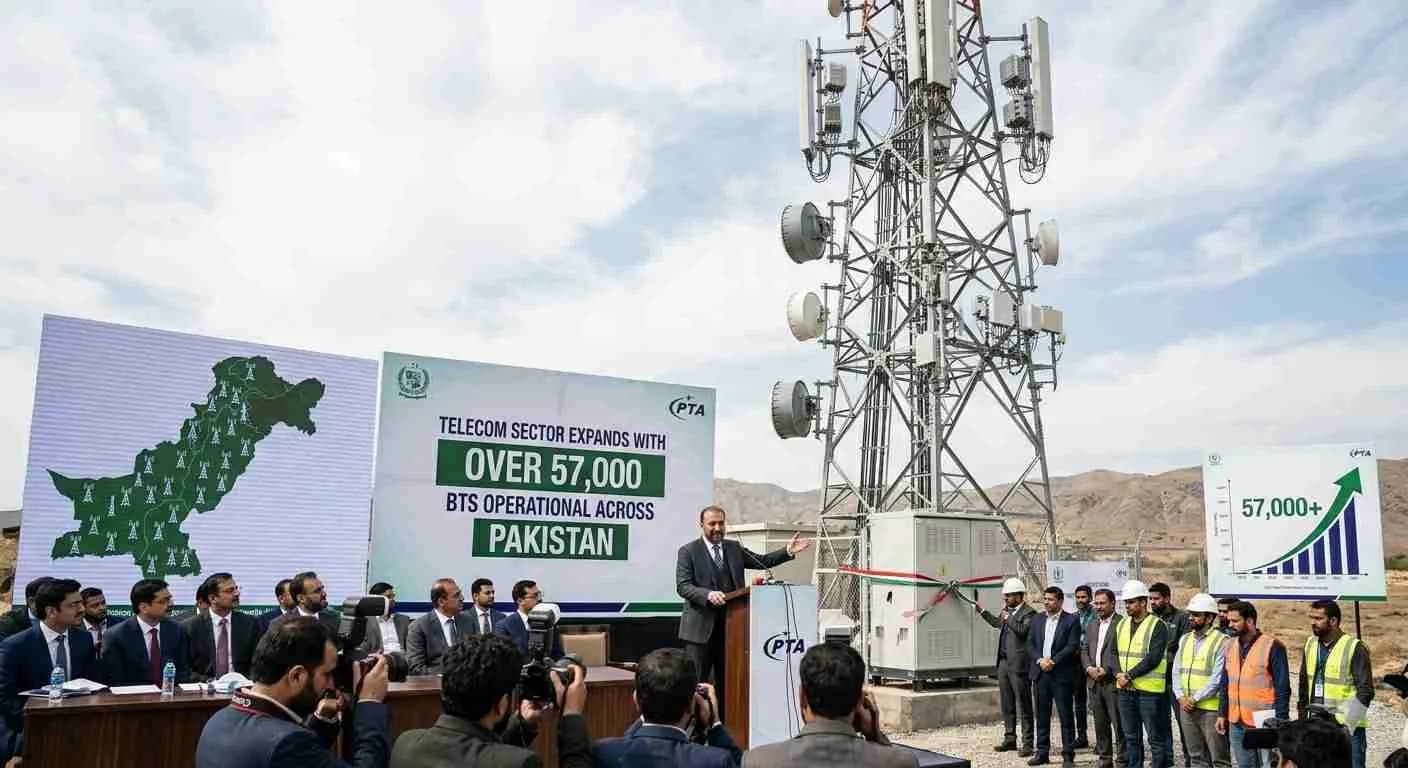
Telecom sector expands with over 57,000 BTS operational across Pakistan
Pakistan’s Telecom Network Expands as BTS Sites Cross 57,000 Nationwide
Bold reality: better mobile coverage is no longer a luxury when banking, education, work and family life all depend on stable signals.
Closing Thought
Pakistan’s telecom expansion shows clear progress, but the real test is not only the number of towers. Users need reliable indoor coverage, fewer dropped calls, affordable data and faster broadband in smaller cities. If operators, regulators and policymakers keep pushing investment in fibre, energy backup and 5G readiness, the next phase can bring meaningful digital access to more households.
Quick Facts Box
- Pakistan now has over 57,000 operational BTS sites.
- The sites support 2G, 3G and 4G mobile networks.
- PTA says 2,646 new BTS sites were processed in 2024-25.
- Seven submarine cables connect Pakistan internationally.
Pakistan’s telecom sector has crossed an important infrastructure milestone, with more than 57,000 Base Transceiver Station sites now operational across the country. These BTS sites are the backbone of mobile connectivity, carrying voice calls, SMS traffic and internet services for millions of users.
The expansion matters because mobile networks are now part of daily survival. Students attend online classes, freelancers submit work, shopkeepers receive digital payments, and families stay connected through video calls. In many cases, one weak signal can disturb an entire day.
Why BTS Growth Matters for Ordinary Users
A BTS site works like a local signal point for mobile users. The more sites a network has in the right places, the better the chances of stronger coverage and smoother service. However, more towers do not automatically mean perfect internet everywhere.
From experience, people often blame their handset when calls drop or data slows down. Sometimes the real issue is congestion, weak backhaul, power outages, or limited fibre connectivity behind the tower.
The Cost Pressure on Families
Poor connectivity also creates a financial burden. A family may buy larger data bundles because slow internet wastes sessions, refreshes videos, and disrupts calls. It is like paying for petrol but getting stuck in traffic every day. The fuel is used, but the journey remains frustrating.
This is why network quality matters as much as package prices. A cheaper bundle loses value if users cannot rely on it during work, study or emergency communication.
What Operators Need to Improve Next
One common mistake people make is measuring telecom progress only through tower count. Real progress also depends on fibre rollout, stable electricity, spectrum availability, and better maintenance in remote areas.
PTA’s recent updates show focus on network growth, 5G readiness and quality of service surveys. This is important because Pakistan is preparing for next-generation services, but 5G cannot succeed on weak backhaul.
Practical Tips for Mobile Users
Users should test network strength at home before buying expensive monthly bundles. If most usage happens indoors, check call quality, video streaming and upload speed during peak evening hours.
Small businesses should also keep backup connectivity where possible. A retailer using QR payments, delivery apps or WhatsApp orders cannot afford repeated outages during working hours.
Article Details
Category: Telecom
Published: 21 May 2026
Time: 1:36 pm
Author: Muhammad Umer
More Stories