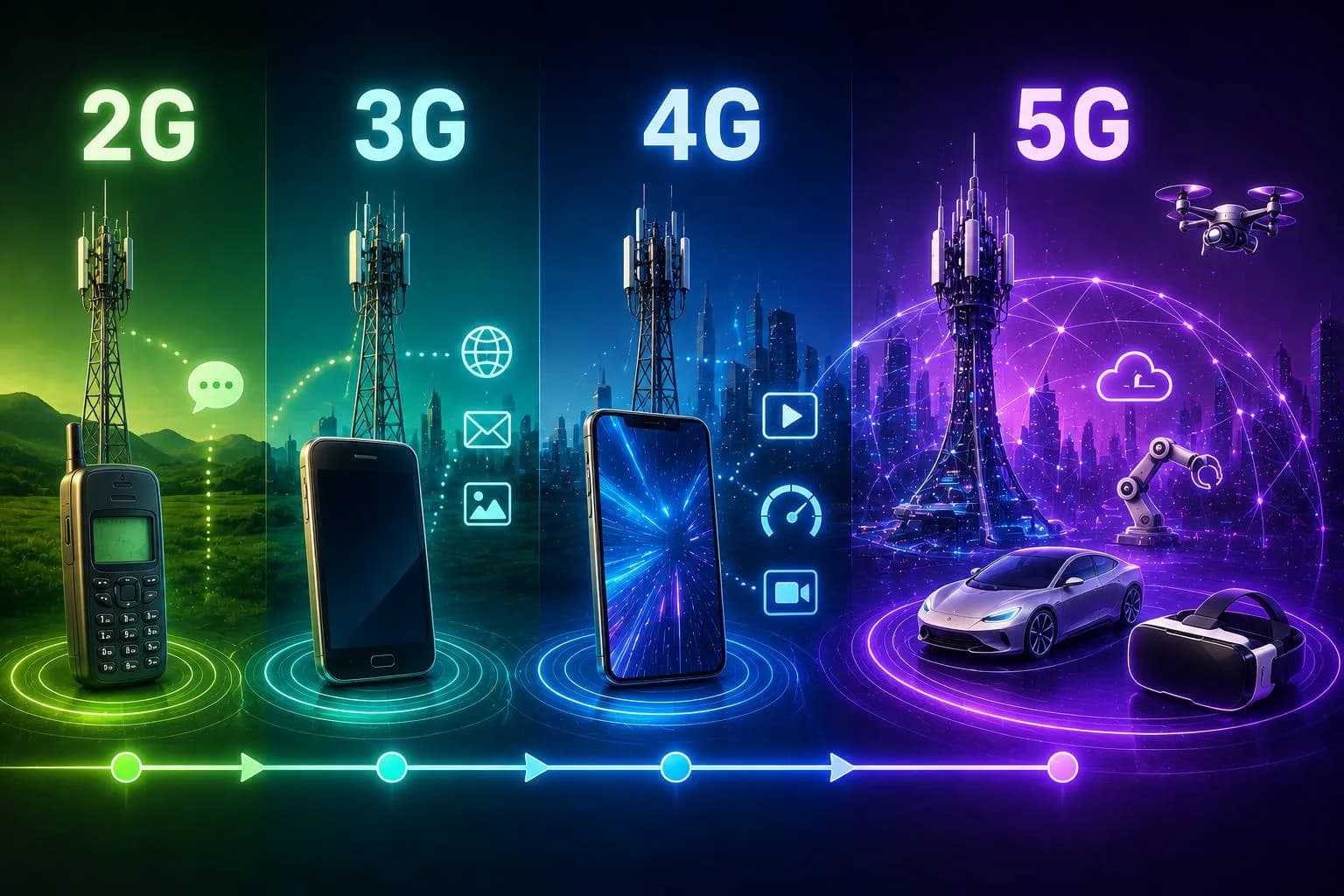
Remember when sending one SMS felt modern? Pakistan’s mobile networks have come a long way from basic voice calls to high-speed internet, digital payments, online classes, and now the early 5G era.
How 2G Changed Communication In Pakistan
2G made mobile phones common for calls and text messages. For many families, it was the first time they could stay connected without depending on landlines.
Mobile Networks in Pakistan started becoming part of daily life during this phase. Shopkeepers, students, drivers, and families used mobile phones mainly for calling, SMS, and basic balance sharing.
From 2G To 5G At A Glance
| Network Era | Main User Impact |
|---|---|
| 2G | Voice calls, SMS, basic mobile access. |
| 3G | Mobile internet, browsing, social media, messaging apps. |
| 4G | Video streaming, online classes, mobile wallets, remote work. |
| 5G | Faster speeds, low delay, smart services, stronger business use cases. |
3G And 4G Opened The Digital Door
3G introduced mobile internet to a much larger audience. People began using search, social media, email, and messaging apps on the go. It changed how students learned, how families communicated, and how small sellers reached customers.
Then 4G pushed usage even further. Video calls, online shopping, ride-hailing, digital banking, freelancing, and content creation became easier. In many cases, a smartphone became a small office, classroom, wallet, and entertainment screen.
The Cost Burden For Families
From experience, every network upgrade brings new benefits but also new expenses. A family may need better phones, larger data bundles, and backup internet for school or work. It is like moving from a bicycle to a motorbike. Travel becomes faster, but fuel and maintenance become part of the monthly budget.
5G Is The Next Big Shift
Pakistan’s 5G spectrum auction was inaugurated on March 10, 2026, according to PTA. The auction covered Next Generation Mobile Services and aimed to support the country’s digital infrastructure.
Reports said the government raised around $507 million through the 5G spectrum auction, with three telecom operators securing frequencies for rollout. Early services are expected to focus on major cities before wider expansion.
Mobile Networks in Pakistan will now move toward faster speed, lower delay, and better support for smart systems. But 5G will need strong fiber links, modern towers, affordable devices, and practical packages to reach ordinary users.
What Users Should Understand
One common mistake people make is assuming a new network automatically fixes every problem. Even with 5G, weak indoor coverage, tower congestion, and high data prices can still affect experience.
Users should check whether their phones support local 5G bands, whether their SIM is ready, and whether their area has proper coverage before upgrading only for speed.
Closing Thought
Pakistan’s journey from 2G to 5G shows how quickly mobile technology can reshape daily life. The next challenge is not just launching faster networks. It is making them reliable, affordable, and useful for students, families, small businesses, and rural communities across the country.
Quick Facts Box
- PTA inaugurated Pakistan’s 5G spectrum auction on March 10, 2026.
- The 2026 NGMS auction included 700, 1800, 2100, 2300, 2600, and 3500 MHz bands.
- Public reports said around $507 million was raised from the auction.
- Pakistan has crossed 200 million telecom subscribers, according to PTA updates.
Article Details
Category: Telecom
Published:
Author: Pari Row
More Stories