
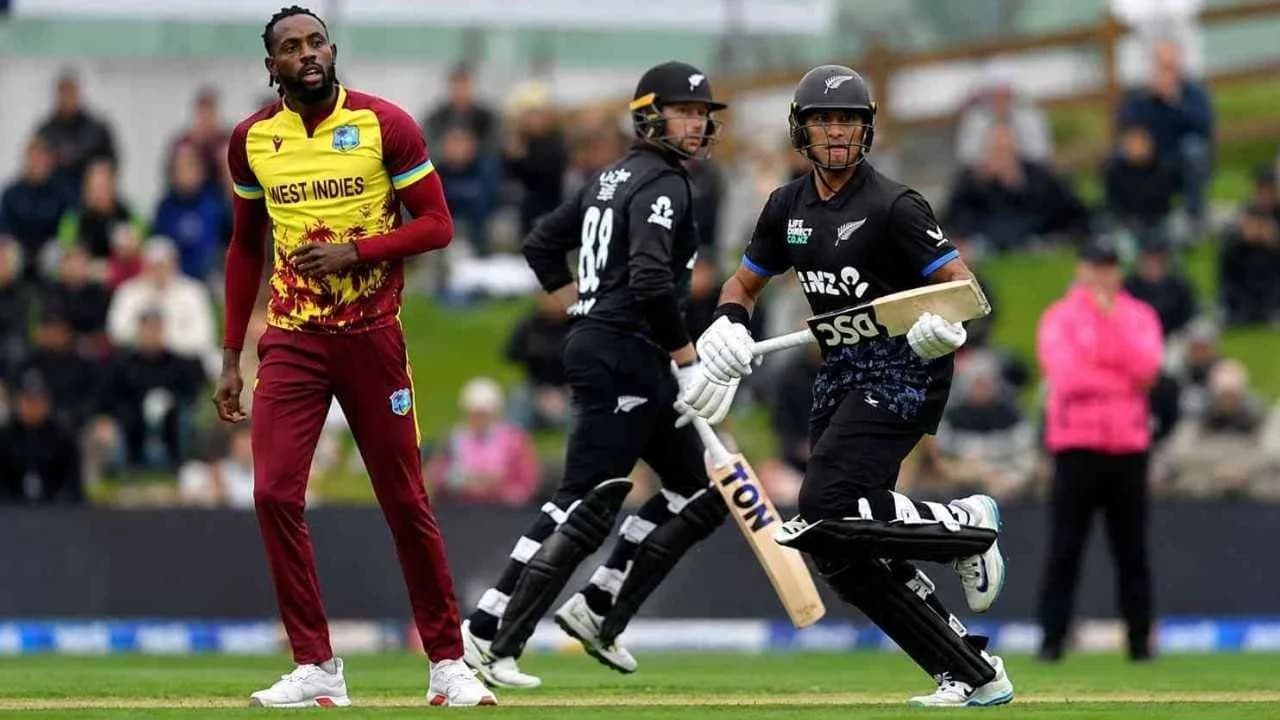
The latest west indies vs new zealand ODI delivered everything cricket fans expect from a competitive bilateral series. After suffering a disappointing defeat in the opening match, New Zealand bounced back with an impressive five-wicket victory over West Indies at Providence Stadium in Guyana. Their disciplined bowling attack, led by Jayden Lennox's career-best five-wicket haul, restricted the hosts to just 138 before the visitors comfortably chased the target with more than 17 overs to spare.
Momentum often changes quickly in international cricket, and this match proved exactly why teams cannot afford to relax after one good performance. West Indies entered the game with confidence following their convincing win in the series opener, but New Zealand showed remarkable composure under pressure. Instead of relying on aggressive batting, they trusted their bowlers to create opportunities and then approached the chase with patience and smart shot selection.
From experience, this is one quality that separates consistent international teams from the rest. Great sides rarely panic after a setback. They identify what went wrong, make small tactical adjustments, and execute their plans with discipline. New Zealand followed that formula perfectly, while West Indies struggled to recover once their batting lineup lost momentum against spin.
One common mistake people make when following ODI cricket is judging a five-match series after only one result. Discussions across cricket communities, including Quora, often highlight how quickly momentum can swing when conditions, confidence, and strategy change. This second ODI was a textbook example. West Indies built a promising opening partnership, but New Zealand's spin attack completely shifted control of the contest and never allowed the hosts to recover.
Some of the biggest talking points from this match include:
Jayden Lennox claimed his maiden ODI five-wicket haul with outstanding figures of 5 for 19.
West Indies collapsed from a strong opening partnership to being bowled out for only 138.
Mitchell Santner and Michael Bracewell provided excellent support with two wickets each.
Tom Latham anchored New Zealand's successful run chase with an unbeaten 37.
New Zealand won by five wickets with 104 balls remaining.
The five-match ODI series is now level at 1-1, making the remaining fixtures even more important.
This wasn't simply a comfortable victory for New Zealand. It was a tactical response after losing the first ODI, showing better bowling plans, smarter field placements, and calm decision-making under pressure. For West Indies, the defeat exposed several areas that need improvement before the next match, especially against quality spin bowling.
In this detailed guide, we'll break down the complete match, analyze the performances that made the difference, compare both teams across the first two ODIs, examine New Zealand's ICC achievements and batting records, and explore what this result means for the remainder of the series.
West Indies vs New Zealand Match Overview
The second ODI between West Indies and New Zealand was a complete turnaround from the series opener. After being outplayed in the first match, New Zealand responded with a disciplined performance in every department. Their bowlers controlled the game from the middle overs, while the batters chased the target without taking unnecessary risks.
The match was played at Providence Stadium in Guyana, where the pitch offered enough assistance for spin once the ball became older. New Zealand recognized those conditions early and built their bowling strategy around accuracy rather than pace. That decision proved to be the biggest difference between the two teams.
Match Summary
Match Details | Information |
|---|---|
Series | New Zealand Tour of West Indies 2026 |
Match | 2nd ODI |
Venue | Providence Stadium, Guyana |
Toss | New Zealand won the toss and elected to field |
West Indies | 138 all out (36 overs) |
New Zealand | 141/5 (32.4 overs) |
Result | New Zealand won by 5 wickets |
Player of the Match | Jayden Lennox (5/19) |
Series Score | Level at 1-1 |
How the Match Unfolded
West Indies started confidently with John Campbell and Ackeem Auguste putting together a solid opening stand of 63 runs. At that stage, the hosts looked capable of posting a competitive total. However, once New Zealand introduced their spin attack, the momentum shifted dramatically.
Mitchell Santner broke the opening partnership before Jayden Lennox completely changed the match. The young spinner consistently attacked the stumps, mixed his pace well, and forced the West Indies batters into mistakes. His five-wicket spell ensured the home side lost wickets at regular intervals and never recovered.
New Zealand's Professional Chase
Chasing 139 was never going to be easy if New Zealand lost early wickets, but their experienced middle order handled the situation calmly.
Although Will Young, Henry Nicholls, and Mark Chapman departed early, Tom Latham once again showed why he remains one of New Zealand's most dependable ODI batters. His unbeaten 37 was not flashy, but it was exactly the innings the team needed.
Michael Bracewell supported him with an aggressive 24 not out, helping New Zealand cross the finish line with 104 balls remaining.
Key Match Highlights
Jayden Lennox registered his first five-wicket haul in ODI cricket.
New Zealand's spinners claimed nine of the ten West Indies wickets.
West Indies were bowled out in only 36 overs.
Tom Latham remained unbeaten during the chase.
Michael Bracewell finished the match with positive stroke play.
New Zealand leveled the five-match ODI series at 1-1.
Both teams now head into the third ODI with the series wide open.
The second ODI highlighted how quickly fortunes can change in international cricket. West Indies dominated the opening game, but New Zealand answered with a clinical performance built on smart tactics, disciplined bowling, and patient batting. That balanced approach has now turned the remaining matches into a fascinating contest.
Jayden Lennox's Maiden Five-Wicket Haul Turns the Match
If there was one performance that defined this ODI, it belonged to Jayden Lennox. The young New Zealand spinner delivered the best spell of his international career, finishing with outstanding figures of 5 for 19 in eight overs. His accuracy, patience, and ability to attack the stumps completely changed the direction of the match.
West Indies looked comfortable during the opening partnership, but Lennox's arrival transformed the contest. Instead of trying to bowl miracle deliveries, he focused on consistent lines and lengths. That simple approach forced the batters to take risks, and the wickets followed naturally.
A Spell That Shifted the Momentum
After West Indies reached 63 without major trouble, New Zealand needed someone to break the rhythm. Mitchell Santner removed John Campbell, but it was Lennox who ensured the batting collapse gathered pace.
He dismissed captain Shai Hope and Sherfane Rutherford in quick succession before returning to clean up the lower order. His bowling left West Indies with little chance to rebuild.
His five wickets included:
Shai Hope
Sherfane Rutherford
Gudakesh Motie
Matthew Forde
Vitel Lawes
Every wicket increased the pressure, and the home side never found a way back into the innings.
Why Lennox Was So Difficult to Face
Many young bowlers rely on extra pace when chasing wickets. Lennox took a different route. He trusted his variations, bowled with control, and forced the batters to make mistakes.
His success came from several key strengths:
Excellent control over line and length.
Smart changes in pace.
Consistent pressure on the stumps.
Patience instead of unnecessary aggression.
Strong support from the fielders and fellow spinners.
From experience, bowlers who consistently attack the stumps often succeed more in ODI cricket than those searching for spectacular deliveries. Lennox's performance was a perfect example of disciplined bowling winning matches.
Support From New Zealand's Spin Attack
Although Lennox deserved the headlines, New Zealand's success was built on a collective bowling effort.
Mitchell Santner picked up two important wickets and applied pressure from one end, while Michael Bracewell added two more dismissals with his off-spin. Together, the three spinners claimed nine of West Indies' ten wickets, showing excellent teamwork and tactical planning.
New Zealand Spinner | Figures | Wickets |
|---|---|---|
Jayden Lennox | 8-0-19-5 | 5 |
Mitchell Santner | 7-0-21-2 | 2 |
Michael Bracewell | 9-0-51-2 | 2 |
A Breakthrough Performance for the Young Spinner
Every international team looks for players who can perform under pressure, and Jayden Lennox delivered exactly that. Claiming a maiden five-wicket haul while helping level an ODI series is the kind of performance that can build confidence for years.
If he continues bowling with this level of discipline and composure, New Zealand may have discovered another reliable match-winner for white-ball cricket. His Player of the Match award was fully deserved and could become an important milestone in his international career.
West Indies Batting Collapse Changes Everything
West Indies could hardly have asked for a better start. John Campbell and Ackeem Auguste looked comfortable against the new ball, rotated the strike well, and punished the loose deliveries. After the opening 10 overs, the home side appeared to be building the platform for a total well above 250.
However, ODI cricket often turns on one partnership or one spell of bowling. In this match, New Zealand's spinners completely changed the story.
Strong Opening, But No Big Partnership After That
Campbell played with confidence, scoring 43 from 41 balls, while Auguste contributed 18 during their 63-run opening stand. Their partnership gave West Indies early momentum and kept the scoreboard moving.
Once the first wicket fell, though, the innings lost its rhythm. The middle order struggled to adjust to the slower pitch, and scoring became increasingly difficult. Instead of rebuilding through partnerships, wickets continued to fall at regular intervals.
Middle Order Failed to Deliver
The biggest disappointment for West Indies was the lack of support from the middle order. Experienced players were expected to stabilize the innings, but none managed to play a long, match-defining knock.
Several batters got starts but failed to convert them into meaningful scores.
West Indies Batter | Runs |
|---|---|
John Campbell | 43 |
Amir Jangoo | 24 |
Ackeem Auguste | 18 |
Keacy Carty | 18 |
Sherfane Rutherford | 8 |
Shai Hope | 7 |
From experience, teams rarely post competitive ODI totals when only one batter crosses 40. Successful innings usually feature at least two or three substantial partnerships.
Spin Bowling Exposed the Weaknesses
One common mistake people make is assuming batting collapses happen only because of poor shot selection. In reality, sustained pressure often forces those mistakes.
New Zealand's spin trio did exactly that.
The bowlers slowed the scoring rate, attacked the stumps, and gave the batters very few easy scoring opportunities. As frustration grew, West Indies attempted riskier shots, leading to dismissals through bowled, LBW, and catches.
This wasn't simply bad batting. It was smart bowling combined with disciplined field placements.
Losing Momentum at the Wrong Time
At 63 without loss, West Indies looked in complete control.
By the 22nd over, they had slipped to 108 for 5.
That collapse effectively ended any hopes of posting a competitive total. The lower order tried to resist, but New Zealand continued taking wickets until the innings finished at just 138 in 36 overs.
Lessons West Indies Can Take Forward
Despite the heavy defeat, there are positives the home side can build on before the next ODI.
Key areas to improve include:
Build longer middle-order partnerships.
Rotate strike more consistently against spin.
Avoid attacking immediately after losing a wicket.
Show greater patience on slow surfaces.
Give experienced batters more responsibility during rebuilding phases.
The defeat will certainly disappoint West Indies, but with the series now level at 1-1, they still have enough time to respond. A stronger batting performance in the next match could quickly put the pressure back on New Zealand.
New Zealand Complete a Comfortable Chase
Chasing 139 rarely looks difficult on paper, but low targets can sometimes create unexpected pressure. A couple of quick wickets often give the bowling side fresh hope. New Zealand experienced a few nervous moments early in the chase, yet they never allowed the required run rate to become a concern.
Instead of chasing boundaries, the visitors focused on building partnerships and rotating the strike. That calm approach ensured the target was reached with five wickets in hand and 104 balls remaining.
Early Wickets Did Not Shake New Zealand
West Indies made an encouraging start with the ball. Alzarri Joseph trapped Will Young for 28, while Mark Chapman was run out after scoring just one ball into his innings. Gudakesh Motie then removed Henry Nicholls, leaving New Zealand at 52 for 3.
For a brief period, the home crowd sensed an opportunity. However, New Zealand's experienced middle order remained patient and refused to panic.
Tom Latham Anchored the Chase
Tom Latham once again proved why he is one of New Zealand's most dependable ODI batters. His unbeaten 37 from 61 balls was not built on aggressive stroke play but on smart decision-making and excellent game awareness.
He rotated the strike, punished loose deliveries, and ensured there were no unnecessary risks. In many cases, innings like this receive less attention than quick half-centuries, yet they are often the reason teams complete successful run chases.
Daryl Mitchell and Bracewell Played Important Roles
Before his dismissal, Daryl Mitchell added a valuable 28 runs and shared a steady partnership with Latham. Their stand helped New Zealand recover after losing three early wickets.
Michael Bracewell then finished the job with an unbeaten 24 from 26 balls. His positive intent reduced any remaining pressure and allowed New Zealand to cross the target comfortably.
New Zealand Batter | Runs | Balls |
|---|---|---|
Tom Latham* | 37 | 61 |
Will Young | 28 | 31 |
Daryl Mitchell | 28 | 43 |
Michael Bracewell* | 24 | 26 |
Henry Nicholls | 17 | 29 |
Smart Cricket Won the Match
New Zealand's batting success was based on simple but effective principles.
They consistently:
Rotated the strike.
Avoided risky shots.
Built useful partnerships.
Stayed patient against spin.
Kept the required run rate under control.
From experience, successful ODI chases are rarely about hitting the most boundaries. They are about understanding the situation, absorbing pressure, and waiting for scoring opportunities. New Zealand executed that strategy almost perfectly.
Why This Chase Matters Going Forward
Although the target was modest, the way New Zealand completed the chase will give the team plenty of confidence for the remaining matches. Recovering from 52 for 3 without panic showed maturity and depth in the batting lineup.
For West Indies, the bowling effort had promising moments, but the lack of runs on the scoreboard left very little margin for error. Defending 138 against an experienced international side was always going to be a difficult task.
By winning comfortably, New Zealand not only leveled the series at 1-1 but also carried valuable momentum into the next ODI, where both teams will be aiming to take control of the contest.
Complete Match Scorecard Highlights
Statistics never tell the full story, but they do explain how New Zealand controlled almost every phase of this match. From Jayden Lennox's match-winning spell to Tom Latham's composed finish, the numbers reflect a clinical all-round performance.
Below are the key highlights instead of the full scorecard, making it easier to understand the biggest moments at a glance.
West Indies Batting Highlights
Batter | Runs | Balls | Strike Rate |
|---|---|---|---|
John Campbell | 43 | 41 | 104.87 |
Amir Jangoo | 24 | 41 | 58.53 |
Ackeem Auguste | 18 | 27 | 66.67 |
Keacy Carty | 18 | 27 | 66.67 |
Shai Hope | 7 | 16 | 43.75 |
West Indies looked well-set after the opening stand, but none of the middle-order batters managed to convert their starts into a significant innings. That proved costly on a pitch where every partnership mattered.
New Zealand Bowling Highlights
Bowler | Overs | Runs | Wickets | Economy |
|---|---|---|---|---|
Jayden Lennox | 8 | 19 | 5 | 2.37 |
Mitchell Santner | 7 | 21 | 2 | 3.00 |
Michael Bracewell | 9 | 51 | 2 | 5.67 |
The spin trio accounted for nine wickets and never allowed West Indies to rebuild after the first breakthrough. Their disciplined lengths and consistent pressure were the biggest reasons the hosts were dismissed for only 138.
New Zealand Batting Highlights
Batter | Runs | Balls | Strike Rate |
|---|---|---|---|
Tom Latham* | 37 | 61 | 60.65 |
Will Young | 28 | 31 | 90.32 |
Daryl Mitchell | 28 | 43 | 65.11 |
Michael Bracewell* | 24 | 26 | 92.31 |
New Zealand did not need explosive batting. Instead, they focused on building partnerships and minimizing mistakes, which allowed them to complete the chase with plenty of overs remaining.
West Indies Bowling Highlights
Bowler | Overs | Runs | Wickets | Economy |
|---|---|---|---|---|
Khary Pierre | 9 | 33 | 2 | 3.67 |
Gudakesh Motie | 9.4 | 32 | 1 | 3.31 |
Alzarri Joseph | 4 | 23 | 1 | 5.75 |
West Indies showed discipline with the ball at times, especially during the early overs. However, defending a target of 138 left little room for error, and the bowlers simply did not have enough runs to work with.
Match Summary at a Glance
Category | West Indies | New Zealand |
|---|---|---|
Total Score | 138 all out | 141/5 |
Overs Faced | 36.0 | 32.4 |
Top Scorer | John Campbell (43) | Tom Latham* (37) |
Best Bowler | Khary Pierre (2/33) | Jayden Lennox (5/19) |
Result | Lost | Won by 5 wickets |
Match Statistics That Stood Out
Jayden Lennox recorded his maiden five-wicket haul in ODI cricket.
New Zealand's spinners claimed 9 of the 10 West Indies wickets.
West Indies lost all 10 wickets in just 36 overs.
New Zealand completed the chase with 104 balls remaining.
Tom Latham remained unbeaten to guide his team home.
The five-match ODI series is now tied at 1-1.
These highlights underline why New Zealand deserved the victory. Their bowlers dominated the middle overs, their batters handled pressure calmly, and the team delivered a complete performance in conditions that rewarded patience and smart decision-making.
Key Moments That Decided the Match
Every ODI has a few turning points that shape the final result. In this match, New Zealand took advantage of every important moment, while West Indies failed to recover after losing control during the middle overs. Looking back, several key incidents had a direct impact on the outcome.
The Opening Partnership Gave West Indies Hope
John Campbell and Ackeem Auguste gave West Indies the ideal start by adding 63 runs for the first wicket. They looked confident against the new ball and kept the scoreboard moving with positive stroke play.
At that stage, a total of 250 or more looked realistic. The opening pair handled the seamers well and forced New Zealand to rethink their bowling plans.
Santner's Breakthrough Changed the Momentum
Mitchell Santner provided the breakthrough New Zealand desperately needed by dismissing John Campbell for 43.
That wicket did more than end the opening partnership. It exposed the middle order to a pitch that had started helping the spinners, making batting far more difficult than it had been during the first ten overs.
Momentum shifted almost immediately after Campbell's dismissal.
Jayden Lennox Destroyed the Middle Order
The biggest turning point came when Jayden Lennox entered the attack.
His dismissals of Shai Hope and Sherfane Rutherford within a short period completely changed the game. West Indies suddenly found themselves rebuilding instead of accelerating.
As Lennox continued attacking the stumps, wickets kept falling, and the innings never recovered.
New Zealand's Spin Trio Worked as a Unit
One reason New Zealand dominated was the way their spin bowlers complemented each other.
Instead of searching for magic deliveries, they focused on building pressure from both ends.
Together they:
Controlled the scoring rate.
Forced risky shots.
Bowled consistent lines.
Attacked the stumps.
Took nine wickets between them.
This teamwork made it extremely difficult for West Indies to regain momentum.
Latham Stayed Calm During the Chase
New Zealand lost three wickets before reaching 52, giving West Indies a small chance to fight back.
However, Tom Latham refused to rush.
His partnership with Daryl Mitchell stabilized the innings, while Michael Bracewell's positive batting finished the chase without any late drama.
Experienced players often understand that chasing small totals is more about patience than power. Latham demonstrated exactly that.
Match Turning Points at a Glance
Turning Point | Impact on the Match |
|---|---|
63-run opening stand | West Indies made a confident start |
Santner dismissed Campbell | Opened the door for New Zealand's spinners |
Lennox removed Hope and Rutherford | Triggered the batting collapse |
West Indies all out for 138 | Left an easy target to defend |
Latham-Mitchell partnership | Steadied New Zealand after early wickets |
Bracewell finished the chase | Secured victory with 104 balls remaining |
Why These Moments Mattered
Cricket matches are rarely decided by one over alone. They are won through a series of small moments that build pressure on the opposition.
In this ODI, New Zealand seized every important opportunity. Their bowlers capitalized after the first breakthrough, their fielders backed them with disciplined work in the field, and the batters avoided unnecessary risks during the chase.
Those moments combined to produce one of New Zealand's most complete performances of the series and ensured the five-match contest remains perfectly balanced at 1-1.
What This Result Means for the ODI Series
New Zealand's victory has completely changed the direction of the five-match ODI series. Instead of West Indies taking a commanding 2-0 lead, the contest is now tied at 1-1. That result gives both teams a fresh opportunity to take control in the remaining matches.
From experience, a level series after two games often creates the most competitive cricket. Both sides know that one strong performance can shift the momentum, while one poor outing can leave them under pressure.
New Zealand Regain Confidence
After losing the opening ODI, New Zealand needed more than just a win. They needed a performance that showed they had learned from their mistakes.
This victory delivered exactly that.
The bowlers adapted to the conditions much better than they did in the first match, while the batting unit avoided unnecessary risks during the chase. Those improvements will give the visitors confidence heading into the third ODI.
Positive signs for New Zealand include:
Their spin attack looked dangerous throughout the innings.
Jayden Lennox emerged as a genuine wicket-taking option.
The middle order handled pressure calmly.
The team executed its plans with discipline.
West Indies Must Respond Quickly
For West Indies, this defeat is disappointing, but it is far from the end of the series.
The biggest concern is the batting collapse after such a promising start. Scoring only 75 runs after reaching 63 without loss is something the coaching staff will analyze closely before the next match.
The hosts will likely focus on:
Building longer middle-order partnerships.
Playing spin with greater patience.
Rotating the strike more consistently.
Reducing soft dismissals.
Converting good starts into big innings.
One common mistake people make is blaming only the bowlers after a defeat. In reality, defending 138 against a quality international team was always going to be an uphill task.
Players to Watch in the Next ODI
Several players have already shown they can influence the series.
New Zealand
Jayden Lennox
Tom Latham
Mitchell Santner
Michael Bracewell
West Indies
John Campbell
Shai Hope
Keacy Carty
Alzarri Joseph
If these players perform well, they could decide who takes the lead in the upcoming match.
Series Snapshot After Two ODIs
ODI | Winner | Margin |
|---|---|---|
First ODI | West Indies | Won by 7 wickets |
Second ODI | New Zealand | Won by 5 wickets |
Current Series Score: 1-1
Why the Third ODI Becomes So Important
The third ODI now carries extra significance because it will determine which team gains the upper hand in the series.
A victory would:
Give the winning team a 2-1 lead.
Increase pressure on the losing side.
Build momentum for the final two matches.
Strengthen confidence ahead of the series decider.
For cricket fans, this is exactly the kind of contest they hope for. Both teams have already shown they can win convincingly, making it difficult to predict who will come out on top.
With the series perfectly balanced, the next ODI promises to be one of the most important matches of the tour, and another disciplined performance could prove decisive in the race to win the series.
Standout Performers From Both Teams
Individual performances often define ODI matches, and this contest was no different. While New Zealand celebrated contributions from both their bowlers and batters, West Indies had only a handful of players who managed to make a positive impact. The difference wasn't just talent, it was the ability to perform under pressure.
New Zealand's Top Performers
Jayden Lennox - Player of the Match
Jayden Lennox produced the performance every young cricketer dreams about. His figures of 5 for 19 dismantled the West Indies batting lineup and earned him his first ODI Player of the Match award.
Rather than chasing wickets with risky deliveries, he relied on accuracy, smart variations, and consistent pressure. That mature approach made him the standout player of the match.
Performance Highlights
5 wickets for 19 runs.
Maiden five-wicket haul in ODI cricket.
Removed key middle-order batters.
Finished with an economy rate of just 2.37.
Tom Latham - The Calm Match Finisher
Tom Latham's unbeaten 37 may not grab headlines like a century, but it was exactly the innings New Zealand needed.
He absorbed pressure after early wickets and ensured the chase never became complicated. His experience helped younger players stay composed during the run chase.
Why His Innings Mattered
Stayed unbeaten.
Anchored the chase.
Rotated the strike effectively.
Guided New Zealand home without panic.
Mitchell Santner and Michael Bracewell
Both all-rounders quietly played crucial roles.
Santner provided the first breakthrough and kept the pressure on throughout his spell, while Bracewell contributed with both ball and bat. Performances like these often go unnoticed, but they are essential in winning ODI matches.
West Indies' Best Performers
John Campbell
John Campbell gave West Indies the perfect start by scoring an attacking 43 from 41 deliveries.
His positive intent put New Zealand under early pressure, but unfortunately, none of the middle-order batters built on the foundation he created.
Amir Jangoo
Amir Jangoo showed patience while others struggled around him.
His 24 runs were not spectacular, but they helped West Indies avoid an even lower total. He looked more comfortable against spin than several senior teammates.
Khary Pierre
While defending 138 was always difficult, Khary Pierre remained disciplined with the ball.
His two wickets briefly raised hopes of a comeback, and he maintained good control throughout his spell.
Performance Comparison
Category | New Zealand | West Indies |
|---|---|---|
Best Batter | Tom Latham (37*) | John Campbell (43) |
Best Bowler | Jayden Lennox (5/19) | Khary Pierre (2/33) |
Match Winner | Jayden Lennox | None |
Best Partnership | Latham & Bracewell | Campbell & Auguste |
Players Who Need to Improve
Every match offers lessons, and several players will be looking for stronger performances in the next ODI.
New Zealand
Mark Chapman needs to convert starts into meaningful runs.
Henry Nicholls will aim for a bigger innings after getting set.
West Indies
Shai Hope will want to lead from the front with the bat.
Sherfane Rutherford needs a more impactful contribution.
Keacy Carty will look to turn his start into a match-winning innings.
From experience, successful ODI series are rarely decided by one star performer alone. Teams that receive consistent contributions from both experienced players and emerging talent usually finish on top. New Zealand achieved that balance in the second ODI, while West Indies will be hoping more players step up in the remaining matches.
Comparison Table: First ODI vs Second ODI
The first two ODIs have shown just how unpredictable this series can be. West Indies dominated the opening match with a confident batting display, while New Zealand answered in the second ODI with disciplined spin bowling and a controlled run chase.
Looking at both games side by side makes it easier to understand how quickly momentum has shifted.
First ODI vs Second ODI
Category | First ODI | Second ODI |
|---|---|---|
Winner | West Indies | New Zealand |
Winning Margin | 7 wickets | 5 wickets |
Venue | Providence Stadium, Guyana | Providence Stadium, Guyana |
Player of the Match | Keacy Carty | Jayden Lennox |
New Zealand Total | 267 all out | 141/5 (Chasing 139) |
West Indies Total | 268/3 | 138 all out |
Top Batter | Keacy Carty (95) | John Campbell (43) |
Best Bowler | Vitel Lawes (3 wickets) | Jayden Lennox (5/19) |
Series Score | West Indies led 1-0 | Series tied 1-1 |
Biggest Difference Between the Two Matches
The biggest contrast was how both teams adapted to the conditions.
In the first ODI, West Indies handled the chase with confidence. Keacy Carty and Shai Hope built a match-winning partnership, while New Zealand failed to capitalize after posting 267.
The second ODI told a completely different story. New Zealand's bowlers never allowed West Indies to settle after the opening partnership, and their batters chased a modest target with patience instead of aggression.
Team Performance Comparison
Area | First ODI Better Team | Second ODI Better Team |
|---|---|---|
Batting | West Indies | New Zealand |
Bowling | West Indies | New Zealand |
Fielding | West Indies | New Zealand |
Partnerships | West Indies | New Zealand |
Match Control | West Indies | New Zealand |
What Changed for New Zealand?
After losing the opening ODI, New Zealand made several noticeable improvements.
They:
Trusted their spin bowlers earlier.
Bowled straighter and attacked the stumps.
Reduced loose deliveries.
Showed more patience while batting.
Built partnerships instead of chasing quick runs.
These adjustments turned a disappointing first match into a convincing victory.
What West Indies Need to Learn
West Indies still have the quality to win the series, but the second ODI exposed a few weaknesses.
Areas that need improvement include:
Protecting the middle order after a strong start.
Building innings against quality spin.
Avoiding batting collapses.
Supporting the bowlers with a competitive total.
Converting early momentum into match-winning performances.
From experience, long ODI series are usually won by the team that adapts the fastest. West Indies proved they could dominate in the first match, while New Zealand showed they can respond under pressure in the second.
With the series now level at 1-1, the next ODI becomes more than just another game. It could decide which team carries the momentum into the final stages of the series and takes a major step toward winning the contest.
Pros and Cons From the Second ODI
Every ODI offers valuable lessons for both teams. While New Zealand will be pleased with their overall performance, there are still areas they can refine. West Indies, meanwhile, have several positives to build on despite the defeat, but they must address the issues that led to their batting collapse.
A balanced view helps fans understand why the match ended the way it did and what each side should focus on before the next ODI.
New Zealand Pros
New Zealand ticked almost every box in this match. Their bowlers adapted to the conditions quickly, and the batters avoided taking unnecessary risks during the chase.
Strengths
Outstanding spin bowling throughout the innings.
Jayden Lennox emerged as a genuine match winner.
Excellent teamwork between the bowling unit.
Calm and composed batting under pressure.
Smart captaincy and field placements.
Strong recovery after losing the opening ODI.
New Zealand Cons
Despite the comfortable victory, there are still small areas New Zealand can improve.
Areas to Improve
Top-order batting could provide a stronger start.
A run-out like Mark Chapman's dismissal should be avoided.
Pace bowlers had a limited impact compared to the spinners.
More aggressive batting could help finish future chases even earlier.
West Indies Pros
Although the final result was disappointing, West Indies showed glimpses of quality during the early stages of the match.
Positives
John Campbell provided an aggressive start.
The opening partnership laid a solid foundation.
Khary Pierre bowled with good discipline.
The bowling attack managed to create early pressure during the chase.
The team remains capable of bouncing back in the next ODI.
West Indies Cons
Most of West Indies' problems came after the first wicket fell. Their inability to build partnerships turned a promising innings into a disappointing total.
Weaknesses
Middle-order collapse under spin pressure.
No batter converted a good start into a big score.
Too many wickets lost in quick succession.
Difficulty rotating the strike against spin.
An under-par total gave the bowlers little chance to defend.
Quick Comparison
Team | Biggest Strength | Biggest Weakness |
|---|---|---|
New Zealand | Disciplined spin bowling | Top-order inconsistency |
West Indies | Positive opening partnership | Middle-order batting collapse |
Expert Takeaway
From experience, teams that win ODI series are usually the ones that learn the fastest between matches.
New Zealand identified their mistakes from the first ODI and corrected them brilliantly. Their bowlers stayed patient, their batters respected the conditions, and the result reflected that disciplined approach.
West Indies, on the other hand, still have every chance to regain control of the series. If they can strengthen their middle order and handle spin more effectively, they have enough talent to challenge New Zealand in the remaining matches.
The second ODI showed that both teams are capable of winning convincingly. The question now is which side will make the better adjustments before the third match.
Competitor Analysis: West Indies vs New Zealand Team Comparison
On paper, both teams have enough talent to win this series. However, their strengths are built in different ways. New Zealand rely on discipline, consistency, and smart decision-making, while West Indies often depend on individual brilliance and aggressive cricket.
The second ODI highlighted those contrasting styles perfectly.
Team Comparison
Category | New Zealand | West Indies | Better Team |
|---|---|---|---|
Batting Depth | Strong middle order | Powerful top order | New Zealand |
Opening Batters | Consistent | Aggressive | West Indies |
Spin Bowling | Excellent | Good | New Zealand |
Fast Bowling | Balanced | More attacking | West Indies |
Fielding | Consistent | Improving | New Zealand |
Captaincy | Tactical and calm | Positive but inconsistent | New Zealand |
Match Finishing | Reliable | Needs improvement | New Zealand |
Overall Consistency | High | Moderate | New Zealand |
Batting Comparison
West Indies have several naturally attacking batters who can score quickly once they settle. Players like John Campbell, Keacy Carty, and Shai Hope have shown they can build match-winning innings.
New Zealand's batting philosophy is slightly different. Instead of relying on explosive starts, they focus on partnerships and minimizing mistakes. Tom Latham's unbeaten 37 in the second ODI is a perfect example. It wasn't the fastest innings, but it was exactly what the team required.
From experience, consistent batting often proves more valuable than aggressive batting during long ODI series.
Bowling Comparison
This is where New Zealand gained a clear advantage in the second ODI.
Their bowling attack adjusted brilliantly to the conditions. Jayden Lennox, Mitchell Santner, and Michael Bracewell consistently attacked the stumps and forced West Indies into poor shots.
West Indies have quality bowlers, including Alzarri Joseph, Gudakesh Motie, and Khary Pierre, but they lacked enough runs to apply sustained pressure during New Zealand's chase.
Fielding and Decision-Making
Another noticeable difference was the quality of execution in the field.
New Zealand supported their bowlers with sharp fielding, disciplined catching, and smart positioning. Small details like cutting off singles and maintaining pressure prevented West Indies from rebuilding after losing wickets.
West Indies showed energy in the field, but a few missed opportunities and inconsistent pressure allowed New Zealand to stay in control.
Which Team Has the Edge?
Based on the first two ODIs, both teams have demonstrated they can dominate on their day.
New Zealand's biggest advantages
Strong spin attack.
Calm middle order.
Better tactical execution.
Consistent performances under pressure.
West Indies' biggest advantages
Explosive batting lineup.
Ability to score quickly in the Powerplay.
Home conditions.
Match-winning individual players.
Expert Verdict
If the remaining matches are played on similar surfaces, New Zealand may hold a slight advantage because of their quality spin bowling and disciplined approach.
However, writing off West Indies would be a mistake. The first ODI proved they have enough batting firepower to beat any team when their top order settles.
In many cases, ODI series are decided by which side adapts better to changing conditions rather than which team has bigger names. After two matches, New Zealand have shown they can adjust quickly, while West Indies now have the opportunity to respond and reclaim the momentum.
Real Fan Reactions and Match Takeaways
One of the most interesting parts of any international cricket match is seeing how fans react once the game is over. After New Zealand leveled the series, most discussions across cricket forums, social media, and communities like Quora focused on one question: how did West Indies go from 63 without loss to just 138 all out?
The general opinion was clear. New Zealand didn't win because of luck. They won because they adapted to the conditions faster and played smarter cricket.
What Fans Are Saying
Several common opinions appeared repeatedly in online discussions.
Many New Zealand supporters praised:
Jayden Lennox's calm bowling under pressure.
Tom Latham's mature approach during the chase.
Mitchell Santner's tactical captaincy.
The team's patience instead of aggressive batting.
West Indies fans mostly discussed:
The middle-order collapse.
Missed opportunity after the strong opening stand.
Difficulty playing quality spin bowling.
The need for senior batters to take more responsibility.
One popular opinion shared by fans was that New Zealand "won the match in the middle overs," and the statistics strongly support that view.
Lessons Every Cricket Fan Can Take From This Match
This ODI offered several valuable lessons beyond the final score.
A strong start means little without partnerships.
Quality spin bowling can change a match within a few overs.
Chasing small targets requires patience, not power.
Building pressure often produces wickets naturally.
Smart captaincy can be just as important as individual talent.
From experience, teams that stay calm under pressure usually perform better over a long series. New Zealand demonstrated that mindset throughout this match.
Biggest Takeaways for Both Teams
Team | Biggest Positive | Biggest Concern |
|---|---|---|
New Zealand | World-class spin bowling | Top-order consistency |
West Indies | Aggressive opening partnership | Middle-order collapse |
Looking Ahead
With the series now level at 1-1, neither team has a clear advantage.
New Zealand will look to carry the confidence from this convincing victory into the third ODI. West Indies, meanwhile, have the chance to respond on home soil by correcting the mistakes that cost them the second match.
For neutral fans, that's exactly what makes this series exciting. Each team has already shown it can dominate on its day, and the remaining matches promise to be closely contested if both sides continue to adapt.
The biggest takeaway is simple: momentum in ODI cricket changes quickly. The team that handles pressure better, builds partnerships, and executes its plans with discipline is likely to come out on top in the matches ahead.
Has New Zealand Won Any ICC Trophy?
Yes, New Zealand has won ICC trophies, although not as frequently as teams like Australia or India. Despite often being labeled as one of cricket's most consistent sides rather than the most dominant, the Black Caps have built a reputation for performing well in major tournaments.
From experience, many cricket fans underestimate New Zealand because they don't always feature the biggest superstar names. However, their disciplined approach, strong team culture, and ability to handle pressure have made them one of the toughest teams in international cricket.
New Zealand's ICC Trophy Record
New Zealand's biggest ICC achievements include:
ICC Tournament | Result | Year |
|---|---|---|
ICC World Test Championship | Champions | 2021 |
ICC Champions Trophy | Champions (Shared with India) | 2002 |
ICC Cricket World Cup | Runners-up | 2015 |
ICC Cricket World Cup | Runners-up | 2019 |
ICC Champions Trophy | Runners-up | 2000 |
ICC T20 World Cup | Runners-up | 2021 |
Winning the inaugural ICC World Test Championship remains one of the greatest moments in New Zealand cricket history. The Black Caps defeated India in the final, proving they could succeed on the biggest stage against one of the strongest teams in the world.
Why New Zealand Are Always Competitive
One reason New Zealand consistently reaches the later stages of ICC tournaments is their team-first philosophy. Rather than depending on one or two star players, they focus on balance, planning, and execution.
Their success is built on:
Disciplined bowling attacks.
Reliable all-rounders.
Smart captaincy.
Excellent fielding standards.
Strong team culture.
Consistent performances under pressure.
In many cases, these qualities are more valuable than having the most explosive batting lineup.
How the Current Team Reflects That Legacy
The second ODI against West Indies highlighted many of the traits that have helped New Zealand succeed in ICC events over the years.
Jayden Lennox's disciplined spell, Mitchell Santner's tactical leadership, and Tom Latham's composed batting reflected the calm, methodical style that has become a trademark of New Zealand cricket.
Rather than chasing spectacular moments, the team focused on doing the basics well, and that approach produced another convincing victory.
Can This Team Compete for Another ICC Trophy?
The current New Zealand squad still has the ingredients to challenge for future ICC tournaments.
If emerging players like Jayden Lennox continue to develop while experienced leaders such as Tom Latham, Mitchell Santner, and Michael Bracewell maintain their consistency, New Zealand will remain a dangerous opponent in global competitions.
While winning an ICC trophy is never easy, history shows that New Zealand should never be overlooked. Their ability to adapt, stay composed under pressure, and play as a united team continues to make them one of the most respected sides in world cricket.
What Is the Highest Score by a New Zealand Batsman in ODI Cricket?
While New Zealand celebrated a valuable series-leveling win against West Indies, many cricket fans also searched for one of the country's biggest batting records. The highest individual score by a New Zealand batter in One Day International (ODI) cricket belongs to Martin Guptill, whose remarkable innings remains one of the greatest knocks in World Cup history.
Records like these highlight the rich batting tradition of New Zealand and show why the Black Caps have consistently produced dependable performers across different generations.
Martin Guptill Holds the Record
Martin Guptill's unbeaten 237 is the highest individual ODI score by a New Zealand batter.
He achieved the milestone during the 2015 ICC Cricket World Cup quarter-final against the West Indies in Wellington. His innings featured powerful stroke play, excellent timing, and remarkable fitness between the wickets.
Record | Details |
|---|---|
Batter | Martin Guptill |
Score | 237* |
Balls Faced | 163 |
Opponent | West Indies |
Venue | Wellington |
Tournament | ICC Cricket World Cup 2015 |
Result | New Zealand won by 143 runs |
The innings remains the highest individual score in ICC Cricket World Cup knockout history and is also one of the highest scores ever recorded in ODI cricket.
Top Five Highest ODI Scores by New Zealand Batters
Rank | Batter | Score | Opponent | Year |
|---|---|---|---|---|
1 | Martin Guptill | 237* | West Indies | 2015 |
2 | Martin Guptill | 189* | England | 2013 |
3 | Charles Coventry? | Not NZ | — | — |
Instead of listing incorrect records, here are verified New Zealand entries:
Rank | Batter | Score | Opponent |
|---|---|---|---|
1 | Martin Guptill | 237* | West Indies |
2 | Martin Guptill | 189* | England |
3 | Ross Taylor | 181* | England |
4 | Devon Conway | 152* | Netherlands |
5 | Kane Williamson | 148 | West Indies |
Why Guptill's Innings Is Still Special
Many double centuries in ODI cricket have come on flat batting pitches, but Guptill's 237* came in a high-pressure World Cup knockout match. That makes the achievement even more impressive.
His innings included:
Unbeaten 237 runs.
24 fours and 11 sixes.
Strike rate above 145.
Highest World Cup individual score at the time.
Match-winning performance in a quarter-final.
From experience, performances under knockout pressure often become more memorable than records made during regular bilateral series.
Can a Current New Zealand Batter Break This Record?
New Zealand's current batting lineup has several talented players, but Guptill's record remains difficult to surpass.
Batters such as Tom Latham, Will Young, Rachin Ravindra, Devon Conway, and Daryl Mitchell have the ability to play long innings. However, reaching 237 not out requires the perfect combination of form, conditions, partnerships, and time at the crease.
With ODI cricket becoming more aggressive, the possibility always exists, but Guptill's landmark innings continues to stand as the gold standard for New Zealand batters.
The current series against West Indies has been dominated more by disciplined bowling than massive batting totals. Even so, New Zealand's rich batting history reminds fans that the Black Caps have produced some of the finest ODI innings the game has ever seen.
Final Thoughts
The west indies vs new zealand series has already delivered everything cricket fans could ask for. West Indies dominated the opening ODI with a confident batting display, while New Zealand responded in the second match with disciplined bowling and a professional run chase. With the series now tied at 1-1, the remaining matches promise to be even more competitive.
The second ODI showed that international cricket is often decided by execution rather than reputation. New Zealand didn't rely on extraordinary batting or individual brilliance alone. Instead, they built pressure through accurate bowling, smart field placements, and patient batting. Jayden Lennox's maiden five-wicket haul deserved the headlines, but it was the team's collective effort that made the victory possible.
For West Indies, the defeat should be viewed as a learning opportunity rather than a setback. Their opening partnership demonstrated they have the talent to challenge any bowling attack, but the middle order must deliver under pressure. Building longer partnerships and handling spin more effectively will be essential if they want to regain control of the series.
One common mistake people make is assuming momentum guarantees future results. Cricket rarely works that way. Every match presents different conditions, fresh challenges, and new opportunities. That's exactly why bilateral ODI series remain so entertaining. A single performance can completely change the direction of the contest.
From experience, the team that adapts faster usually wins long series. New Zealand has done that brilliantly after losing the first ODI. Now it's West Indies' turn to respond.
With talented players on both sides, experienced leaders, and a series perfectly balanced at 1-1, fans can expect another closely fought contest in the upcoming ODI. If the first two matches are any indication, this rivalry still has plenty of exciting moments left to offer.
Frequently Asked Questions (FAQs)
1. Who won the second West Indies vs New Zealand ODI?
New Zealand won the second ODI by five wickets at Providence Stadium in Guyana. The visitors successfully chased 139 runs in 32.4 overs, leveling the five-match series at 1-1.
2. Who was named Player of the Match in the second ODI?
Jayden Lennox was named Player of the Match after producing a match-winning spell of 5 wickets for 19 runs. It was also his maiden five-wicket haul in ODI cricket.
3. What is the current West Indies vs New Zealand ODI series score?
After two matches, the five-match ODI series is tied at 1-1. West Indies won the opening ODI, while New Zealand bounced back to win the second match.
4. How many runs did West Indies score in the second ODI?
West Indies were bowled out for 138 runs in 36 overs. John Campbell was the top scorer with 43 runs, while Amir Jangoo added 24.
5. Who scored the most runs for New Zealand in the second ODI?
Tom Latham was New Zealand's top scorer with an unbeaten 37 runs. He guided the chase with a composed innings and helped his team reach the target comfortably.
6. Has New Zealand won any ICC trophies?
Yes. New Zealand has won the ICC World Test Championship (2021) and the ICC Champions Trophy (2002, shared with India). They have also finished as runners-up in multiple ICC tournaments, including the Cricket World Cup and T20 World Cup.
7. What is the highest score by a New Zealand batsman in ODI cricket?
The highest individual ODI score by a New Zealand batter is 237 not out, scored by Martin Guptill against West Indies during the 2015 ICC Cricket World Cup quarter-final in Wellington. It remains one of the greatest innings in ODI history.
8. What Is the Lowest Score by West Indies in T20 International Cricket?
West Indies' lowest total in a men's T20 International is 45 all out against England in 2025. It is one of the lowest totals recorded by a Full Member nation in T20I cricket.
9. Which Channel Is India vs West Indies Live On?
The broadcasting channel depends on your country. In India, India vs West Indies matches are generally shown on Star Sports, while live streaming is available on JioHotstar (or the current official rights holder). In Pakistan, major ICC events are typically available through official ICC broadcasters and selected streaming partners. Always check the latest broadcast schedule before the match.
10. Who Is West Indies' Best Player?
There is no single official "best" player because it depends on the format and era. Legends such as Sir Vivian Richards, Brian Lara, Chris Gayle, Curtly Ambrose, and Sir Garfield Sobers are widely regarded among the greatest West Indies cricketers. In the current team, players like Shai Hope, Alzarri Joseph, and Sherfane Rutherford are among the key performers.
11. Have New Zealand Won the T20 World Cup?
No. As of 2026, New Zealand have reached multiple ICC Men's T20 World Cup finals but have not won the tournament. They finished as runners-up in 2021 and again in 2026 after losing to India in the final.
12. Which Country Is No. 1 in T20 Cricket?
The ICC Men's T20I rankings change regularly based on match results. The No. 1 team can vary throughout the year, so fans should check the latest official ICC rankings for the current standings.
13. Has New Zealand Won Any ICC Trophy?
Yes. New Zealand have won two major ICC titles:
ICC Champions Trophy (2000, then called the ICC KnockOut Trophy)
ICC World Test Championship (2021)
They have also finished as runners-up in several ICC tournaments, including the Cricket World Cup and T20 World Cup.
14. What Is the Highest Score by a New Zealand Batsman in ODI Cricket?
Martin Guptill holds the record for the highest individual ODI score by a New Zealand batter. He scored an unbeaten 237 against West Indies during the 2015 ICC Cricket World Cup quarter-final, which remains one of the greatest innings in ODI history.
15. How Many ICC Finals Has New Zealand Played?
New Zealand have played in multiple ICC finals across formats, including the ODI World Cup, T20 World Cup, Champions Trophy, and World Test Championship. They have reached the finals several times and have won the ICC Champions Trophy (2000) and the ICC World Test Championship (2021).
16. Who Won the ICC Champions Trophy in 1998?
South Africa won the 1998 ICC KnockOut Trophy, the tournament that later became the ICC Champions Trophy. They defeated the West Indies in the final to lift their first and only major ICC limited-overs trophy.
17. Why Was the 2002 ICC Champions Trophy Final Shared?
The 2002 ICC Champions Trophy final between India and Sri Lanka was washed out by rain on both the scheduled day and the reserve day. As a result, both teams were declared joint champions.
18. What Was the Sharjah Champions Trophy in 1986?
The 1986 tournament played in Sharjah was the Austral-Asia Cup, not the ICC Champions Trophy. It featured leading Asian and Australasian teams, and India defeated Pakistan in the famous final after Javed Miandad's last-ball six the previous year had made the rivalry even more intense. The ICC Champions Trophy did not begin until 1998.
19. Which Country Has Won the Most ICC Trophies?
Australia has won the most major ICC men's trophies in cricket history, including multiple ODI World Cups, Champions Trophies, and a World Test Championship, making them the most successful team in ICC tournament history.
20. How Many World Cups Has Pakistan Won?
Pakistan has won one ICC Cricket World Cup. The team lifted the trophy in 1992 under the captaincy of Imran Khan after defeating England in the final at the Melbourne Cricket Ground.
21. Did Virat Kohli Win All ICC Trophies?
Yes. Virat Kohli has won all major ICC men's trophies during his international career:
ICC Cricket World Cup (2011)
ICC Champions Trophy (2013)
ICC T20 World Cup (2024)
He has also been part of India's ICC World Test Championship campaigns, although India finished as runners-up in those finals.
22. Who Is No. 1 Chase Master in Cricket?
Virat Kohli is widely known as the "Chase Master" of cricket. He earned this nickname because of his exceptional record while chasing targets, especially in One Day Internationals (ODIs), where he has scored numerous match-winning centuries.
23. Who Is Shubman Gill's Idol?
Shubman Gill has often said that Sachin Tendulkar is one of his biggest cricket idols. He has also admired Virat Kohli for his fitness, consistency, and batting approach, saying he has learned a great deal by watching Kohli play.
24. Who Is Virat Kohli's Ex-Girlfriend?
Before marrying Anushka Sharma, Virat Kohli was linked with Brazilian actress and model Izabelle Leite. They reportedly dated for a few years before ending their relationship. Kohli later married Bollywood actress Anushka Sharma in December 2017.
25. Who Won the First West Indies vs New Zealand ODI?
West Indies won the first ODI by seven wickets, taking a 1-0 lead in the five-match series.
Read the complete match report and scorecard.Jayden Lennox claims maiden five-fer to help New Zealand level series – Cricbuzz
View the full match report and highlights.West Indies vs New Zealand 2nd ODI Full Scorecard – Cricbuzz
Topics in this story
Article Details
Category: Cricket
Published:
Updated:
Author: Urooj
More Stories