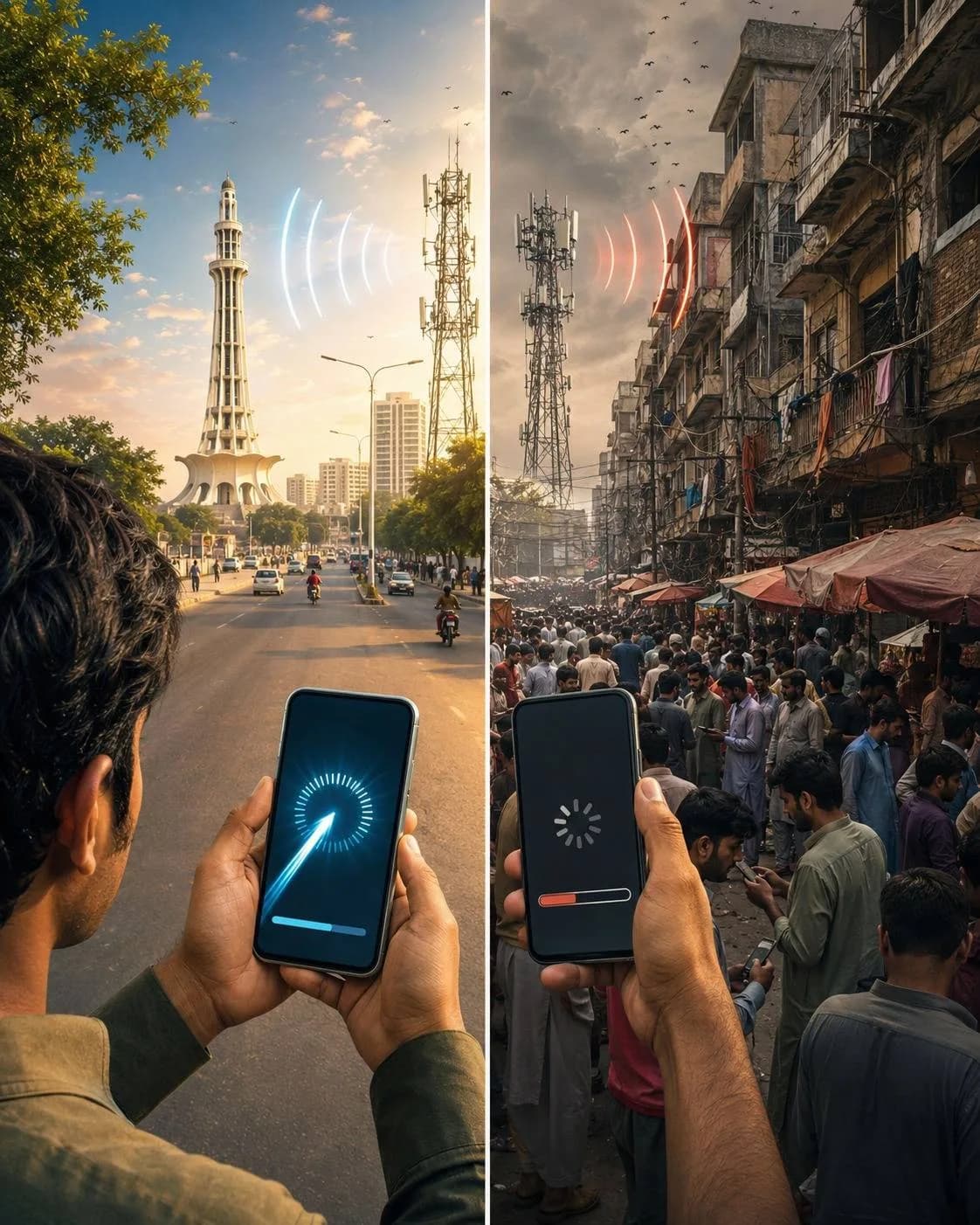
Ever noticed your phone works smoothly in one city but struggles to load a simple video in another? That difference is not always because of your mobile package. In many cases, it comes down to network load, tower density, spectrum, device quality, and how many people are using mobile data at the same time.
The Real Reason Speeds Change From City to City
Mobile Internet Speeds in Pakistan are shaped by local network conditions. A city with more towers, better fiber links, and less congestion will usually offer a smoother experience. A crowded commercial area, however, can slow down even a strong 4G signal.
From experience, users often judge the whole network from one bad location. That is not always fair. A phone may perform well near a properly upgraded tower but slow down inside a basement, market, university, or apartment block where signals face walls and heavy traffic.
Key Factors Behind Different Mobile Speeds
| Factor | How It Affects Users |
|---|---|
| Tower congestion | More users sharing one tower means slower browsing and downloads. |
| Spectrum capacity | More available spectrum helps operators carry heavier data traffic. |
| Backhaul quality | Fiber-connected towers usually perform better than weak microwave links. |
| User device | Older phones may not support stronger bands or carrier aggregation. |
Why Big Cities Can Still Feel Slow
One common mistake people make is assuming bigger cities always have faster internet. Karachi, Lahore, Islamabad, Faisalabad, and Multan may have stronger infrastructure, but they also have heavier demand. Offices, malls, universities, hospitals, and transport hubs create data pressure throughout the day.
Think of it like a family sharing one water tank. If everyone opens the tap at the same time, pressure drops. Mobile internet works in a similar way. When thousands of users stream videos, upload reels, attend online classes, or make video calls in one area, speed naturally falls.
The Financial Burden on Families
Slow internet also affects household budgets. A student may buy extra data because classes keep buffering. A freelancer may shift to another SIM or backup device. For many families, this is like paying for a full meal but receiving it plate by plate. The cost may look small daily, but it becomes painful every month.
Practical Tips for Better Mobile Internet
Users can improve performance by testing different spots at home, switching between 4G and auto network mode, updating phone software, and checking whether their SIM supports the latest network features. It also helps to avoid heavy downloads during peak evening hours.
If speed remains poor in one location, try another operator’s SIM before blaming the phone. In some areas, one network may have better coverage while another may perform better for uploads or video calls.
Closing Thought
Pakistan’s mobile internet experience will improve only when investment, spectrum planning, tower upgrades, and user awareness move together. The demand for fast data is rising quickly, and cities will need smarter network expansion to support students, businesses, creators, and everyday families without making connectivity feel like a daily struggle.
Quick Facts Box
- PTA’s Q4 2025 benchmarking covered 10 major Pakistani cities.
- The assessment used a 90-day data period from October to December 2025.
- National average download experience was reported at 18.60 Mbps.
- Upload speed matters more now because users create and share more content.
Article Details
Category: Telecom
Published:
Updated:
Author: Pari Row
More Stories