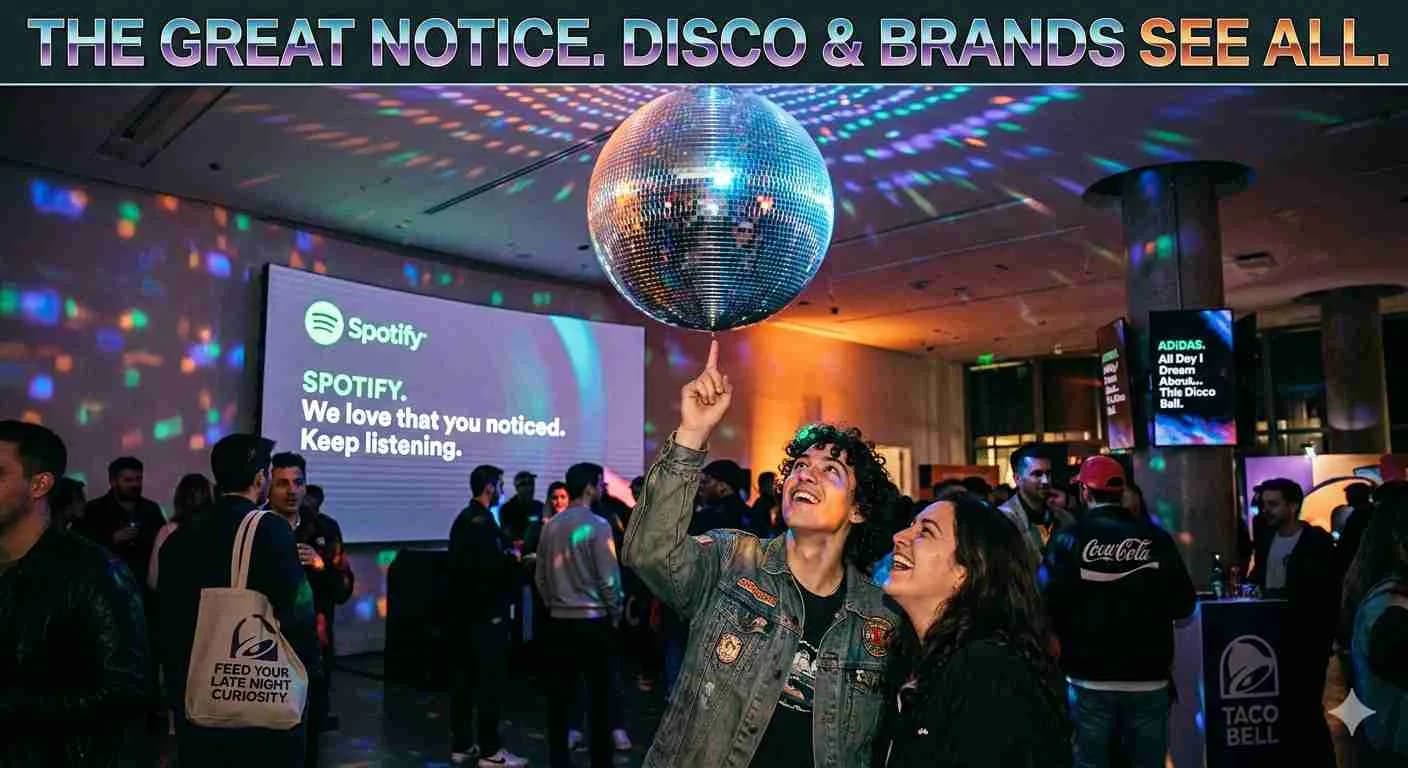
Spotify’s Disco Ball Became a Marketing Magnet and Users Didn’t Even Realize It
Ever noticed how one tiny visual on an app suddenly appears everywhere online? That happened with Spotify’s spinning disco ball, and brands quickly turned it into a digital goldmine.
Why Spotify’s Disco Ball Suddenly Took Over Social Media
Spotify users recently began spotting a shiny animated disco ball inside the app, especially during music discovery sessions and playlist interactions. What looked like a harmless design experiment quickly became one of the platform’s most talked-about visual cues.
In many cases, users shared screenshots and short clips online simply because the animation felt nostalgic. It reminded people of retro dance floors, party culture, and the emotional connection tied to music. That emotional trigger is exactly what brands look for when chasing attention online.
Soon after, fashion labels, beverage companies, meme pages, and entertainment accounts started referencing the disco ball aesthetic in their own campaigns. Some mirrored the visual style directly, while others leaned into the “music mood” culture Spotify helped amplify.
A Small Feature With Big Branding Power
Digital marketing experts often say modern branding works like a crowded wedding hall. The loudest voice rarely wins. Instead, people remember the table with the best lighting and atmosphere. Spotify’s disco ball worked the same way. It didn’t scream for attention, but people naturally noticed it.
From experience, internet culture moves fast when users voluntarily engage with something visual. Brands no longer need massive campaigns to stay relevant. Sometimes a simple animation can generate more organic conversation than expensive advertisements.
One common mistake people make is assuming viral trends always start intentionally. In reality, many online moments grow because users emotionally connect with a design, sound, or relatable feature before companies even react.
How Brands Turned User Curiosity Into Engagement
Marketing teams wasted no time. Across social media platforms, brands began creating disco-themed visuals, playlist memes, and dance-inspired short videos to ride the momentum.
The strategy was simple. If users were already talking about the disco ball, brands wanted to insert themselves naturally into that conversation without appearing forced.
| Trend Element | User Reaction | Brand Response |
|---|---|---|
| Spotify Disco Ball | Shared widely on social media | Used in themed campaigns |
| Retro Music Aesthetic | Triggered nostalgia | Inspired visual branding |
| Playlist Culture | Higher audience interaction | More music-driven promotions |
Why Visual Trends Matter More Than Ever
Short-form content has changed how audiences consume entertainment. People now react faster to visuals than text-heavy campaigns. A recognizable animation or symbol can travel across platforms within hours.
That creates a major opportunity for brands trying to stay culturally relevant. Instead of forcing trends, companies increasingly monitor what users naturally notice online. Spotify’s disco ball became a perfect example of passive branding turning into active engagement.
The financial side matters too. Creating large-scale campaigns can cost companies millions, much like families trying to manage rising grocery bills with shrinking budgets. A low-cost viral moment often delivers stronger engagement with far less spending.
The Bigger Shift Happening in Digital Marketing
The rise of subtle app features becoming internet talking points signals a bigger change in online behavior. Users are now part of the branding process. Their reactions shape what trends survive and what disappears within days.
For companies, the lesson is clear. Audiences respond more to authenticity and emotional familiarity than polished corporate messaging. Features that feel playful, nostalgic, or culturally aware often outperform traditional promotions.
Looking ahead, more platforms are likely to experiment with small interactive visuals designed to spark curiosity. Some will fade quickly, while others may become the next unexpected social media obsession.
Quick Facts
- Spotify’s disco ball visual gained traction through organic user sharing
- Brands quickly adapted the trend into social media campaigns
- Retro-themed visuals continue to drive strong online engagement
- Short-form video culture amplified the trend’s visibility
As digital culture keeps evolving, moments like these show how quickly online attention shifts from users to brands and back again. The next viral marketing trend may not come from a billion-dollar campaign. It could start with a tiny animation people simply enjoy watching.
Article Details
Category: Entertainment
Published:
Author: Irfan Ali
More Stories