Bike Fuel Subsidy Struggles to Reach Target Users, Mettis Global Poll Reveals
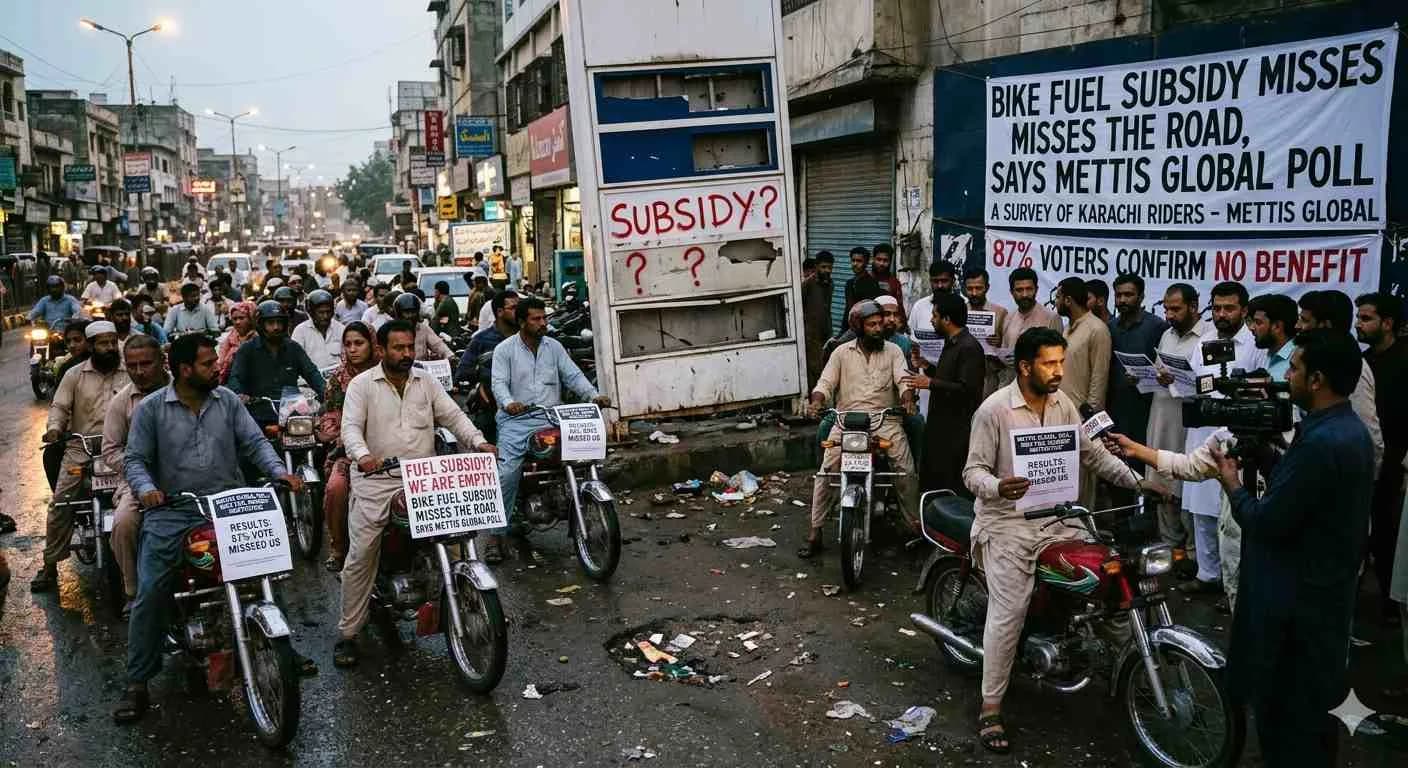
Can a subsidy really help commuters if it never fully reaches them? A recent Mettis Global poll suggests Pakistan’s bike fuel subsidy framework is falling short of expectations, raising fresh concerns about targeting, accessibility, and real-world impact on daily riders.
Subsidy Program Faces Questions Over Effectiveness
The poll highlights growing skepticism among stakeholders regarding the effectiveness of the bike fuel subsidy mechanism. While the policy aims to ease transportation costs for motorcycle users, results suggest limited penetration among intended beneficiaries.
Rising fuel prices continue to pressure low and middle income commuters, especially those who rely on motorcycles for daily travel. However, structural inefficiencies in subsidy distribution appear to be weakening its intended relief effect.
In many cases, policy support looks strong on paper but struggles during execution, where identification, registration, and verification gaps create barriers for end users.
Why the Subsidy Is Missing Its Target
The core challenge lies in targeting accuracy and system accessibility. Many eligible users either remain unregistered or fail to access subsidy benefits due to procedural complexity.
From experience, one common mistake people make is assuming that digital subsidy systems automatically ensure fair distribution. In reality, weak data integration and limited outreach often exclude the very groups the policy aims to support.
For daily wage earners and small business owners, even minor fuel price increases can significantly affect monthly budgets. A motorbike that costs slightly more to fuel each week can quietly reduce household savings over time, much like a slow leak in a water tank that goes unnoticed until it empties.
Key Findings From the Mettis Global Poll
| Aspect | Observation |
|---|---|
| Subsidy Reach | Limited access among intended beneficiaries |
| System Efficiency | Administrative delays and verification gaps |
| Public Awareness | Low awareness in lower income segments |
| Policy Impact | Weak direct relief effect on commuters |
Administrative and Structural Challenges
Experts point out that subsidy programs often face bottlenecks due to fragmented databases and inconsistent eligibility verification processes. Without real-time data coordination, even well-designed policies struggle to achieve meaningful outcomes.
There is also concern that overlapping government programs may create confusion among users, reducing participation rates and weakening the overall impact of financial support schemes.
Policymakers are now being urged to simplify registration systems and improve digital accessibility to ensure subsidies reach genuine motorcycle users more efficiently.
Quick Facts
- Mettis Global poll highlights gaps in bike fuel subsidy effectiveness
- Many eligible users face access and registration challenges
- Rising fuel costs continue to impact motorcycle commuters
- Experts call for improved targeting and system simplification
Closing Thought
The findings suggest that while the bike fuel subsidy initiative carries strong intent, execution remains its weakest link. Without streamlined systems and better targeting mechanisms, the gap between policy design and real-world relief is likely to persist, leaving commuters to absorb the pressure of rising fuel costs on their own.
Article Details
Category: Global
Published:
Author: Muhammad Sheikh
More Stories