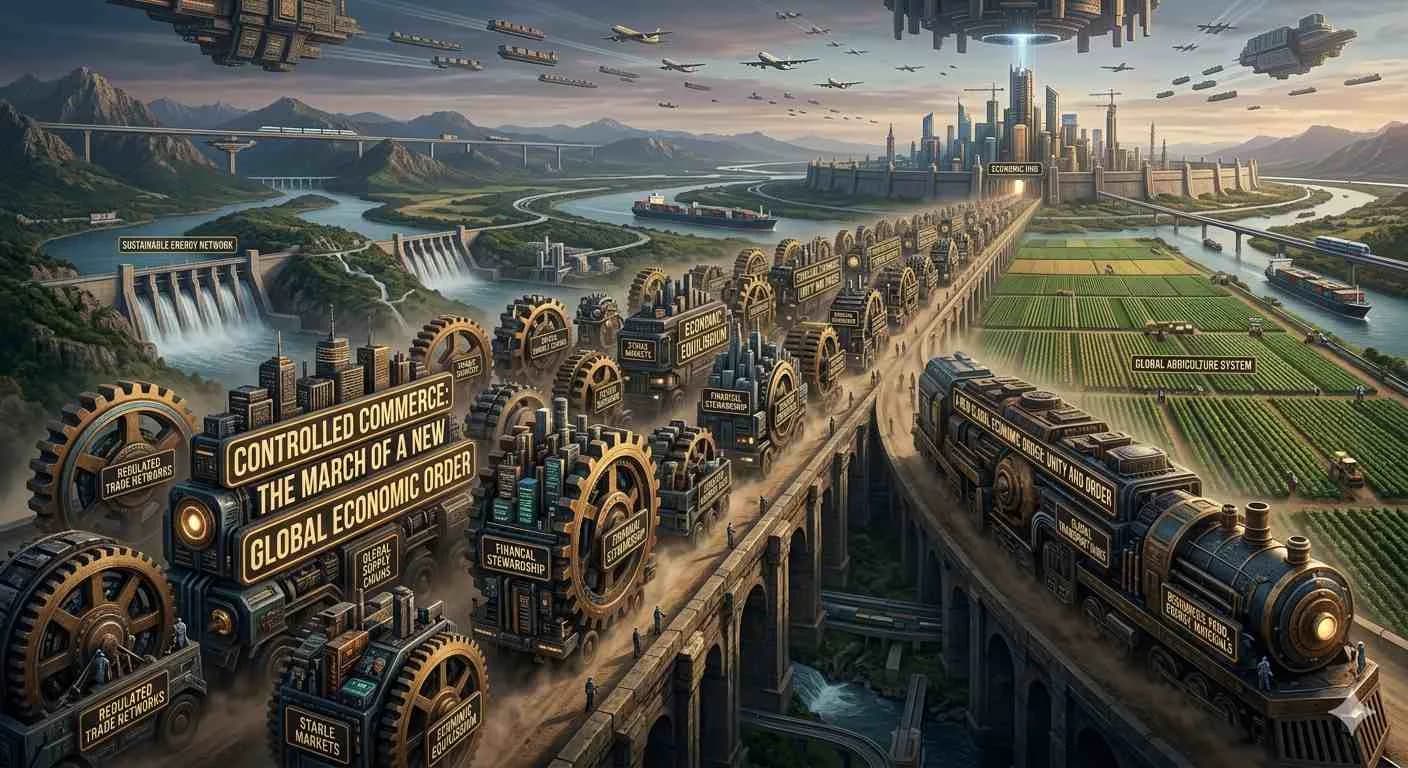
Controlled Commerce Signals Shift Toward a New Global Economic Order
Is global trade still truly free, or are we quietly entering an era where commerce is increasingly managed, filtered, and politically steered? The idea of “controlled commerce” is no longer theoretical. It is becoming a defining feature of how modern economies interact.
A Shift From Open Markets to Managed Trade
Global economic systems are gradually moving away from fully liberalized trade models toward more structured and controlled frameworks. Governments are now prioritizing supply chain security, strategic independence, and geopolitical alignment over pure market efficiency.
This shift is visible in export controls, technology restrictions, and selective trade partnerships. Instead of global openness, countries are increasingly shaping trade based on national security and economic resilience considerations.
In many cases, this transition feels similar to replacing an open highway with monitored lanes where access depends on destination, cargo type, and political clearance.
Why Controlled Commerce Is Emerging Now
Several global disruptions over the past decade have pushed governments to rethink unrestricted trade flows. Supply chain breakdowns, semiconductor shortages, and geopolitical tensions have exposed vulnerabilities in highly interconnected systems.
From experience, one common mistake people make is assuming globalization will always move in a single direction. In reality, economic systems evolve in cycles, especially when security and economic independence become top priorities.
Industries such as energy, technology, and critical minerals are now at the center of this shift. Governments are actively reshaping trade routes and partnerships to reduce dependency on single regions or suppliers.
Key Features of Controlled Commerce
| Feature | Economic Impact |
|---|---|
| Export Restrictions | Limits access to strategic technologies |
| Trade Bloc Formation | Strengthens regional economic alliances |
| Supply Chain Localization | Reduces reliance on global suppliers |
| Strategic Tariffs | Used as geopolitical and economic tools |
Impact on Businesses and Consumers
The rise of controlled commerce is already reshaping how companies design supply chains and pricing strategies. Businesses are being forced to diversify suppliers and maintain higher inventory buffers to manage uncertainty.
For consumers, the effects often appear indirectly through pricing shifts and product availability changes. When global sourcing becomes restricted, production costs can rise, eventually reaching retail markets.
For households, this can feel like managing a budget where essential goods are available but come with fluctuating and less predictable pricing, similar to fuel costs changing unpredictably every month.
Economists suggest that while controlled commerce may improve supply chain security, it may also reduce efficiency and increase long-term costs.
The Global Economic Landscape Is Fragmenting
One of the most significant outcomes of this trend is the gradual fragmentation of the global economy into regional blocs. Countries are forming tighter economic partnerships with trusted allies while limiting exposure to strategic competitors.
This fragmentation is also influencing investment flows, technology transfers, and industrial policy decisions across major economies.
Some analysts believe this marks the beginning of a more cautious and segmented global trade environment where efficiency is balanced with control and security.
Quick Facts
- Global trade is shifting toward more controlled economic frameworks
- Governments are prioritizing supply chain security over efficiency
- Strategic sectors like tech and energy are most affected
- Regional trade blocs are becoming increasingly influential
Closing Thought
Controlled commerce is reshaping the foundations of global trade, replacing open-market assumptions with more structured and strategic economic planning. While this shift may strengthen resilience in uncertain times, it also introduces new complexities for businesses and consumers navigating a more segmented global economy.
Article Details
Category: Global
Published:
Author: Muhammad Sheikh
More Stories