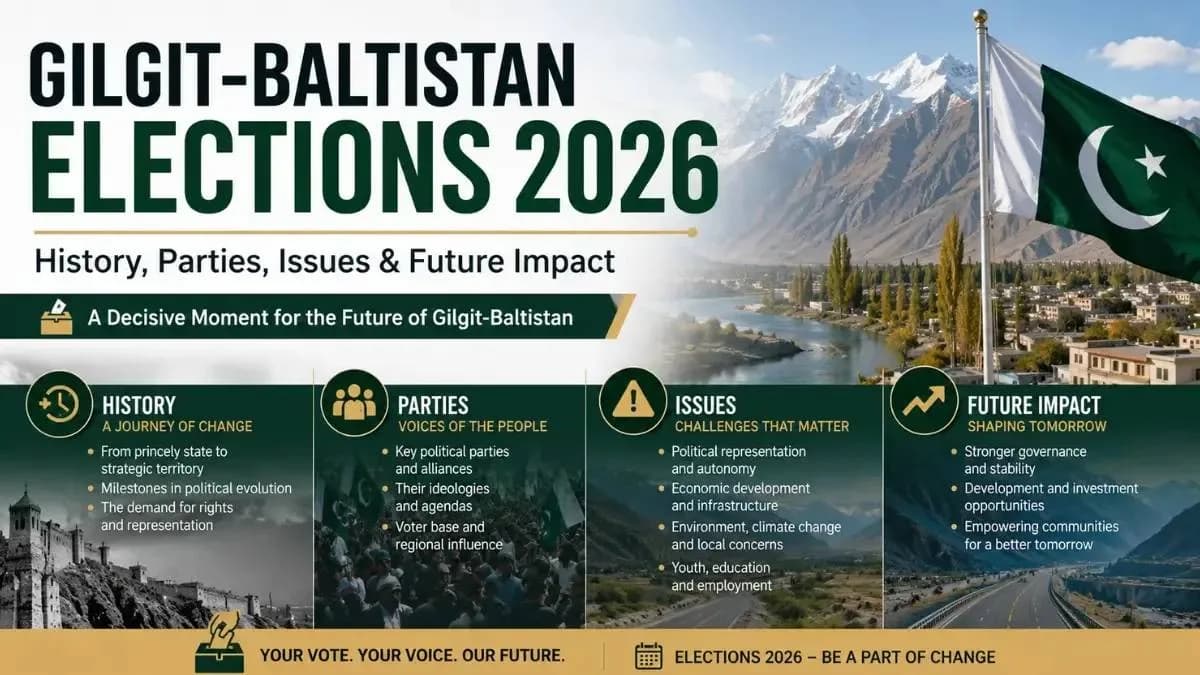
Gilgit-Baltistan Elections 2026: History, Parties, Issues & Future Impact
The Gilgit-Baltistan Elections 2026 are shaping up to be one of the most talked about political events in northern Pakistan this year. Anyone who has followed regional politics knows these elections rarely stay "regional" for long. From experience, what happens in GB often echoes across Islamabad's corridors of power too.
This isn't just about who wins a seat in Skardu or Hunza. It's about representation, development, and a region trying to define its political identity on its own terms.
Why Gilgit-Baltistan Elections 2026 Matter So Much
Gilgit-Baltistan sits at a geographic crossroads connecting Pakistan, China, and Central Asia. That alone makes political stability here a national priority, not just a local concern.
One common mistake people make is assuming GB's small population means small political stakes. In reality, this region controls key CPEC routes, hydropower potential, and some of the most valuable tourism real estate in South Asia.
Key reasons this election carries weight:
Strategic location tied to CPEC and regional trade
Ongoing constitutional status debate
Growing youth population demanding jobs and reform
Increased media and public scrutiny compared to past cycles
A Quick Look Back: How GB's Political System Evolved
Understanding the Gilgit-Baltistan political history helps explain why 2026 feels different.
The 2009 Turning Point
The Self-Governance Order of 2009 created the modern GB Assembly. Before that, residents had limited say in how their own region was run.
Elections That Shaped Today's Landscape
Election Year | Winning Party | Major Theme |
|---|---|---|
2009 | PPP | Democratic transition |
2015 | PML-N | CPEC and development |
2020 | PTI | Governance and reform |
2026 | To be decided | Constitution, jobs, delivery |
In many cases, GB voters have historically leaned toward whichever party governs at the federal level. That pattern may finally be loosening.
Major Political Parties Competing in 2026
PPP: The Governance Legacy Player
PPP formed GB's first elected government back in 2009 and still leans heavily on that legacy. Its pitch centers on constitutional rights and institutional continuity.
PML-N: The Development and Infrastructure Brand
PML-N built its GB reputation on roads, CPEC-linked projects, and tourism corridors. Supporters point to visible construction; critics say maintenance often lags behind ribbon cuttings.
PTI: The Youth and Reform Contender
PTI performed strongly with first-time voters in 2020. Its 2026 messaging is expected to lean on accountability and digital-era governance promises.
Independents: The Wildcard Factor
Local independents often outperform party candidates in tight constituencies simply because voters know them personally.
Party Comparison Table
Party | Core Focus | Support Base | Biggest Challenge |
|---|---|---|---|
PPP | Constitutional reform | Traditional voters | Newer competing narratives |
PML-N | Infrastructure | Business community | Rising public expectations |
PTI | Accountability | Youth voters | Sustaining momentum |
Independents | Local issues | Constituency-based | Limited resources |
Issues That Will Actually Decide the 2026 Vote
Employment tops almost every list of voter concerns right now. A Quora thread on Pakistani regional politics summed it up well: young graduates in GB often say they'd rather stay home if there were decent local jobs.
Other issues gaining traction:
Constitutional representation and legislative authority
Healthcare access in remote valleys
Tourism infrastructure that keeps pace with visitor growth
Resource ownership and local benefit-sharing
From experience, elections turn competitive fastest when voters stop believing promises and start demanding proof.
Pros and Cons of the Current Political Environment
Pros
Strong voter turnout history compared to some other regions
Growing youth political engagement
Multiple credible party options instead of one dominant force
Independent candidates keep local accountability alive
Cons
Constitutional ambiguity still unresolved after years of debate
Harsh terrain makes campaigning and polling logistically tough
Voter education gaps persist in remote districts
Political polarization can overshadow local development talk
How GB Elections Compare to Other Pakistani Regional Contests
Compared to Punjab or Sindh's provincial elections, GB Assembly races feel more personal. Candidates often know voters by name, not just by constituency data.
Competitor Comparison: GB vs Other Regional Elections
Factor | Gilgit-Baltistan | Punjab/Sindh Assemblies |
|---|---|---|
Independent influence | Very high | Moderate |
National party dominance | Moderate | Very high |
Voter-candidate familiarity | High | Lower |
Constitutional debate weight | Central issue | Rarely a factor |
This local closeness is exactly why performance, not just party branding, tends to swing results in GB.
Real Voices: What People Are Actually Saying
Public sentiment rarely shows up cleanly in polls. It shows up in forums and travel reviews.
One traveler on Quora who visited Skardu mentioned the scenery was stunning, but basic facilities struggled during peak tourist season. That single comment reflects a bigger voter complaint: tourism growth without matching infrastructure.
Locals on community forums frequently echo similar feedback:
"Development projects should hire local labor first."
"We want hospitals, not just highways."
"Independent candidates actually show up when we call."
These aren't scripted talking points. They're the kind of honest, occasionally blunt feedback that shapes real election outcomes.
What This Means for Pakistan's Bigger Political Picture
The GB Assembly 2026 result could influence federal conversations on autonomy, CPEC governance, and constitutional reform. A stable, credible government here often boosts investor confidence too.
Whether it's a clear majority, a coalition, or an independent-heavy assembly, the next government inherits high expectations and limited room for empty promises.
Stay Ahead of the Gilgit-Baltistan Elections 2026
If you're tracking Pakistan's democratic journey, GB's 2026 vote deserves your attention. Follow pehlepakistan.pk for real-time updates, party analysis, and ground-level reporting as campaigning heats up. Bookmark this page, share it with someone who follows Pakistani politics, and check back for fresh updates as election day approaches.
Frequently Asked Questions
1. When will the Gilgit-Baltistan Elections 2026 be held?
Elections are expected in 2026 once the current assembly's term concludes, based on the official schedule from election authorities.
2. Why are these elections considered important nationally?
They influence conversations around constitutional status, CPEC governance, and federal-regional relations beyond just local administration.
3. How many seats make up the GB Assembly?
The assembly has 33 seats total, including 24 general, 6 women's reserved, and 3 technocrat seats.
4. Which parties are expected to lead the race?
PPP, PML-N, PTI, and several strong independent candidates are the main contenders this cycle.
5. What issues matter most to GB voters right now?
Employment, constitutional representation, healthcare access, and tourism infrastructure top most voter concerns.
6. Do independent candidates really have a shot at winning?
Yes. Independents have historically played decisive roles in GB, especially in tightly contested constituencies.
7. How could this election affect Pakistan overall?
Results may shape federal policy on regional autonomy, CPEC-linked development, and constitutional reform discussions nationwide.
Topics in this story
Article Details
Category: News
Published:
Updated:
Author: Fiza
More Stories