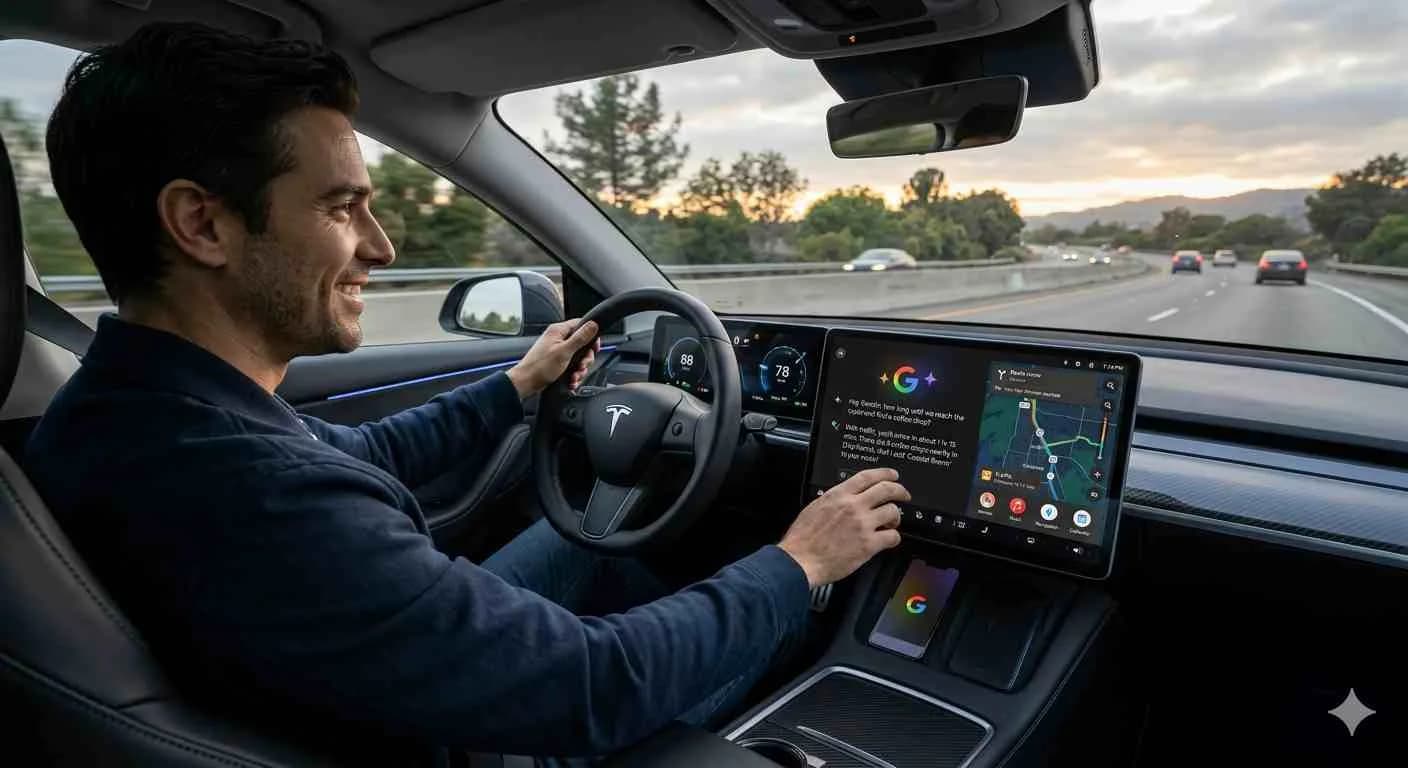
What if your car could understand natural conversation instead of forcing you to repeat robotic voice commands? That future is moving closer as Google Gemini begins expanding into connected vehicles, bringing advanced AI assistance directly to drivers and passengers.
Google Wants Smarter Conversations Inside Vehicles
Google is gradually integrating Gemini into automotive systems powered by Android Automotive OS. The goal is simple. Make in-car interaction feel less mechanical and more human. Drivers may soon ask complex questions, request navigation changes naturally, or control entertainment systems without memorizing strict command phrases.
In many cases, existing voice assistants inside vehicles struggle with accents, incomplete commands, or follow-up questions. Gemini aims to improve that experience through conversational AI that can maintain context during interactions.
Why This Matters for Everyday Drivers
Modern vehicles already function like mobile computers. Navigation, music streaming, calling, and real-time traffic updates are now standard features in many new cars. Adding a more intelligent assistant changes how drivers interact with all these systems.
From experience, one common mistake people make is taking their eyes off the road while adjusting maps or changing playlists manually. A smarter AI assistant could reduce that distraction significantly by handling tasks through natural conversation.
For families, this may also reduce the need for expensive infotainment upgrades later. It is similar to how smartphones replaced standalone GPS devices years ago. Instead of buying separate smart features, software updates can continuously improve the driving experience over time.
Expected Features Drivers Could See
Gemini’s automotive integration is expected to focus on practical daily functions rather than flashy gimmicks. The assistant may help with route planning, nearby recommendations, scheduling reminders, and hands-free communication.
| Feature | Potential Benefit |
|---|---|
| Natural Voice Commands | Less distraction while driving |
| Context-Aware Navigation | Smarter rerouting based on traffic |
| AI-Powered Recommendations | Faster discovery of fuel stations and restaurants |
| Hands-Free Messaging | Safer communication on the road |
Privacy and Reliability Will Still Matter
While the technology sounds promising, privacy concerns remain part of the conversation. Vehicles already collect large amounts of driving and location data. Users will likely expect clear controls over what information is stored or shared.
Another challenge is reliability in areas with inconsistent internet coverage. AI-powered features depend heavily on stable connectivity. In countries where mobile signals fluctuate outside major cities, performance may vary.
The Bigger Shift Happening in Automotive Technology
The arrival of advanced AI inside vehicles reflects a broader industry trend. Cars are evolving from transportation machines into software-driven platforms. Automakers increasingly compete not just on engine performance, but also on digital experience.
This shift could influence how future buyers evaluate vehicles. Features like intelligent voice interaction, seamless updates, and AI assistance may eventually become as important as fuel economy or cabin comfort.
Closing Thought
Google Gemini’s move into vehicles signals a major step toward more conversational and connected driving experiences. If implemented carefully, it could simplify daily travel and reduce distractions without overwhelming users with unnecessary complexity. The real success will depend on how naturally the technology fits into everyday driving habits.
Quick Facts Box
- Google Gemini is expanding into Android-powered vehicles
- Focus is on natural voice interaction and smarter navigation
- AI features may reduce driver distraction during travel
- Privacy and internet reliability remain key concerns
Article Details
Category: Auto
Published:
Author: Muhammad Sheikh
More Stories