
When Oil Markets Fail the Policy Test: What the World Gets Wrong in a Global Energy Shock
What happens when global fuel stability is handled with short-term thinking instead of long-term planning? The result is often economic confusion, unstable prices, and pressure that quickly reaches household budgets. A global oil crisis does not just hit governments and trading floors, it quietly reshapes daily life for millions.
The Core Problem Behind Mismanagement
In many cases, the real issue is not the shortage itself but how quickly decisions are made under pressure. When supply chains tighten, panic-driven policies often replace structured energy planning. Export restrictions, sudden subsidies, and inconsistent pricing mechanisms create more instability than relief.
From experience, one common mistake people make is assuming that global oil shocks can be solved with single-layer solutions. In reality, they demand coordinated fiscal, diplomatic, and industrial responses.
Short-Term Fixes That Backfire
Quick fixes such as sudden price caps or abrupt import diversification often distort supply signals. Refiners reduce output, importers hesitate, and the gap between demand and availability widens.
Fragmented responses deepen the crisis instead of resolving it.
Real-World Impact on Households
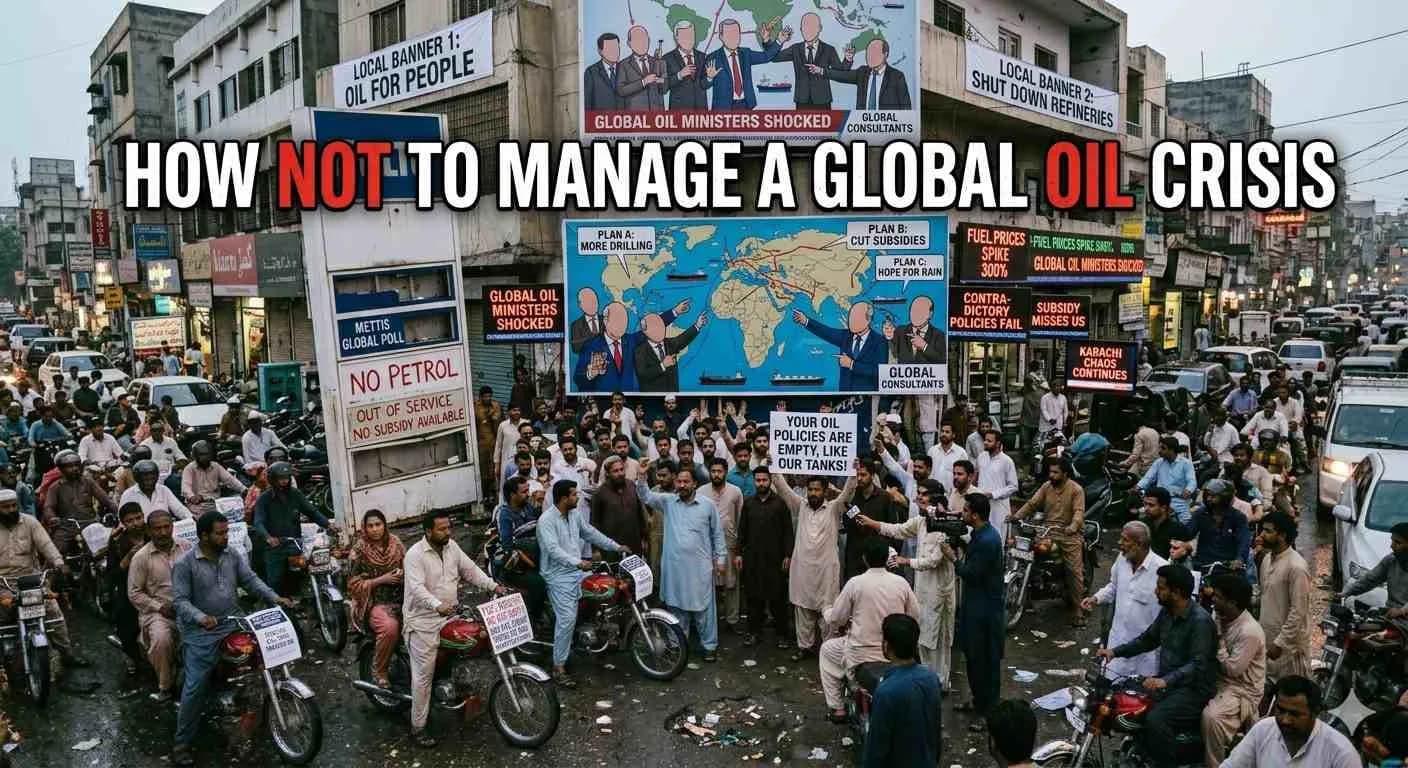
Think of a fixed-income family in Karachi. When fuel prices jump, transport costs rise instantly. That means less money for groceries, education, or utilities. The burden shifts quietly but heavily, like squeezing a stretched budget from both ends.
Policy Response Comparison
| Approach | Short-Term Effect | Long-Term Risk |
|---|---|---|
| Price Controls | Temporary relief | Supply shortages |
| Subsidies | Lower prices | Fiscal pressure |
| Diversification | Stability in supply | Stronger resilience |
Quick Facts Box
- Global oil demand exceeds 100 million barrels per day
- Transport consumes nearly 60% of total oil usage
- Even small supply shocks trigger price spikes
- Inflation usually follows within weeks of oil hikes
Closing Perspective
Oil crises are rarely about a single shortage. They are about coordination failure. Countries that act in isolation often deepen volatility, while coordinated strategies help stabilize markets faster.
The real lesson is simple: reactive decisions cost more than prepared systems. And that difference shapes how deeply ordinary people feel the shock.
Article Details
Category: Global
Published:
Author: Muhammad Sheikh
More Stories