
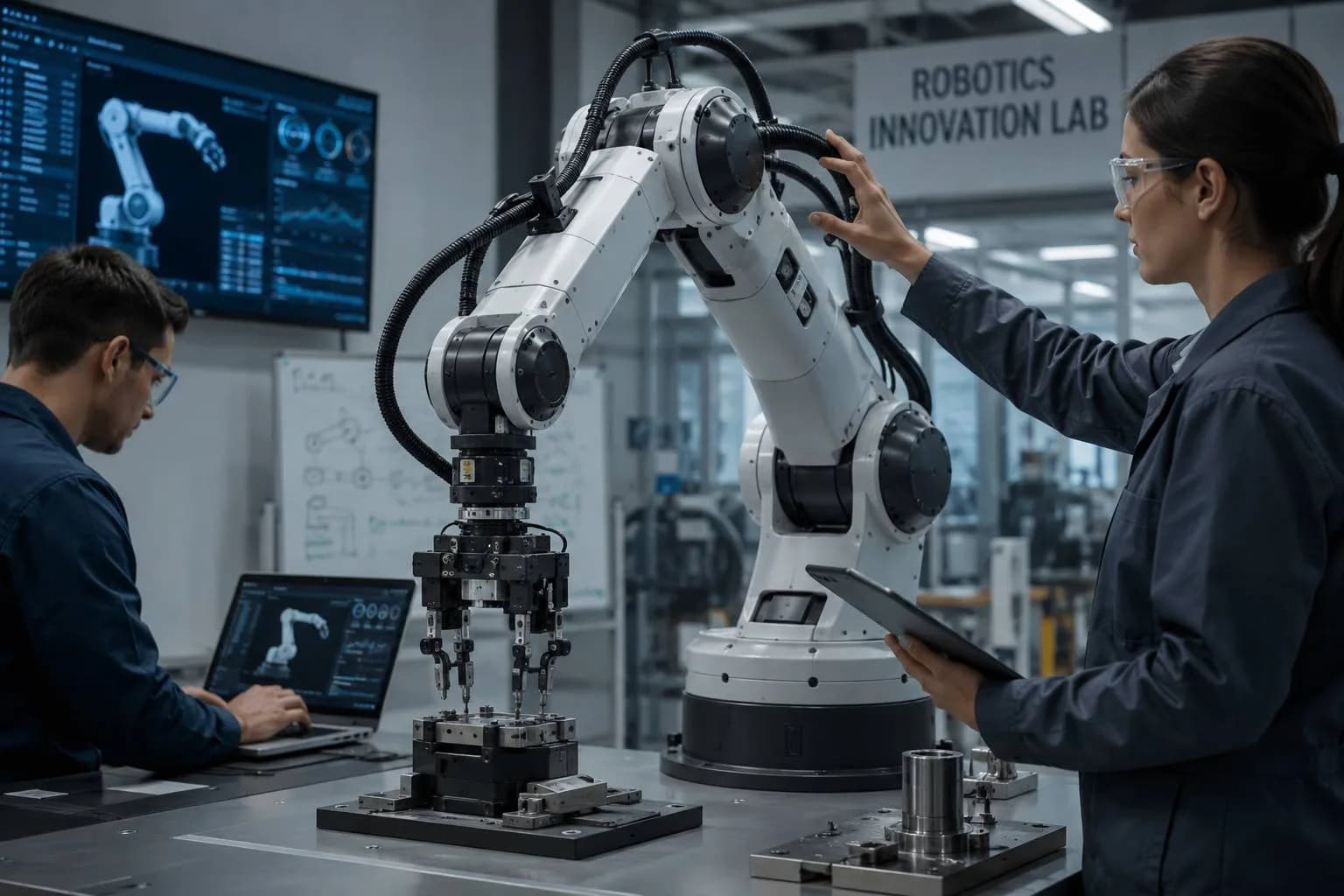
Ever seen a factory video where machines assemble products faster than human hands could manage? Robotics is no longer limited to science labs. It is now changing how industries build, deliver, inspect, repair, and serve customers.
Why Robotics Is Growing So Fast
Robotics Transforming Industries is happening because companies need speed, accuracy, safety, and lower long-term costs. Robots can work in dangerous zones, repeat tasks with precision, and support workers where human effort alone is not enough.
The International Federation of Robotics reported that 542,000 industrial robots were installed globally in 2024, more than double the number recorded ten years earlier. Asia accounted for 74% of new deployments, showing where automation is moving fastest.
Where Robotics Is Making The Biggest Impact
| Industry | How Robots Are Used |
|---|---|
| Manufacturing | Assembly, welding, painting, packaging, inspection, and quality control. |
| Healthcare | Surgery support, hospital delivery, rehabilitation, and lab automation. |
| Logistics | Warehouse sorting, inventory movement, delivery support, and order picking. |
| Agriculture | Crop monitoring, spraying, harvesting, irrigation support, and soil analysis. |
Factories Are Leading The Shift
In many cases, factories adopt robots first because repetitive work is easier to automate. A robot can weld the same part thousands of times with steady accuracy. That reduces errors and improves production speed.
From experience, this does not mean humans disappear from factories. Workers move toward machine supervision, programming, maintenance, quality checks, and safety management. The job changes, but skill demand increases.
The Financial Burden On Workers And Families
Robotics can improve productivity, but it can also create pressure for workers who lack updated skills. A technician may need training in robotics, coding, sensors, or machine repair to stay competitive.
It is like a tailor switching from hand stitching to computerized embroidery. The machine increases output, but the worker must learn how to operate it or risk losing income.
Healthcare And Logistics Are Catching Up
Robotics Transforming Industries is also visible in hospitals and warehouses. In healthcare, robots can support surgeons, move medicines, clean spaces, and assist patients with rehabilitation. They do not replace doctors, but they can reduce workload and improve precision.
In logistics, robots help companies handle rising e-commerce demand. Warehouses use automated systems to move shelves, sort parcels, scan inventory, and speed up deliveries.
What Businesses Should Prepare For
One common mistake people make is treating robotics as a one-time purchase. Robots need software, maintenance, spare parts, trained staff, cybersecurity, and safe working rules.
Small businesses should begin with targeted automation. A packing machine, robotic arm, or inventory robot may solve one costly bottleneck before a company invests in a larger system.
Closing Thought
Robotics is transforming modern industries by making work faster, safer, and more precise. But the real winner will not be the company that simply buys robots. It will be the company that trains people, improves processes, and uses automation to create better products, safer workplaces, and stronger long-term growth.
Quick Facts Box
- IFR reported 542,000 industrial robots installed globally in 2024.
- Global robot installations were more than double the level recorded ten years earlier.
- Asia accounted for 74% of new industrial robot deployments in 2024.
- Robotics is expanding across manufacturing, healthcare, logistics, agriculture, and construction.
Article Details
Category: Global
Published:
Author: Pari Row
More Stories