Israel Expels Gaza Aid Flotilla Activists as International Pressure Mounts
What happens when humanitarian missions collide with one of the world’s most sensitive conflicts? That question is once again dominating headlines after Israel deported hundreds of activists linked to a Gaza-bound aid flotilla, triggering criticism from rights groups and several foreign governments.
Aid Flotilla Sparks Fresh Diplomatic Tensions
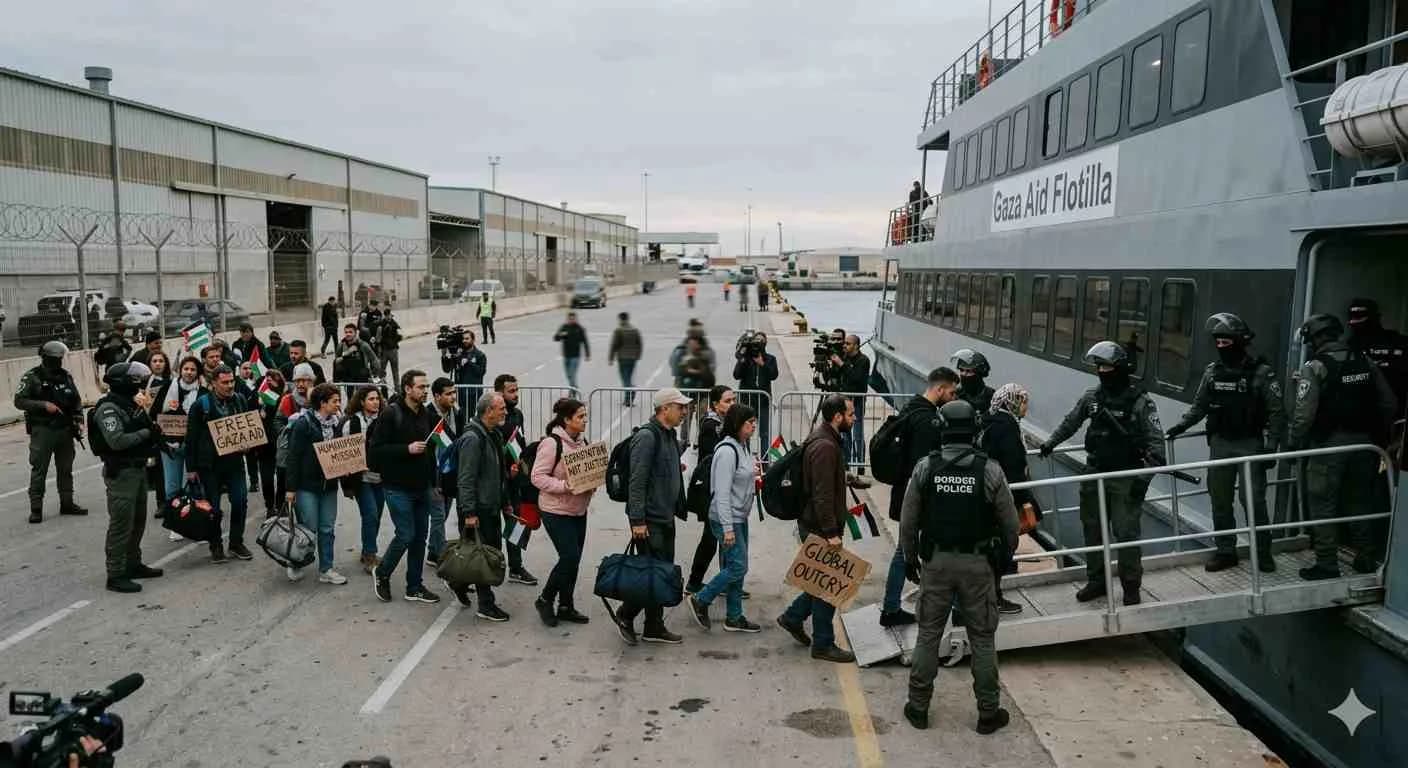
Israeli authorities confirmed the deportation of hundreds of international activists who attempted to deliver humanitarian aid to Gaza through a coordinated flotilla mission in the Mediterranean Sea. The activists came from multiple countries, including European and Middle Eastern states, according to publicly available reports.
The flotilla campaign was organized to challenge restrictions surrounding aid access to Gaza. Israeli officials argued that the maritime operation violated security regulations and could increase regional instability. The activists, meanwhile, described their mission as peaceful and humanitarian in nature.
In many cases, such incidents quickly move beyond the sea itself and into diplomatic corridors. Several governments reportedly requested consular access to detained nationals before deportation proceedings began.
Growing Global Reaction
Human rights organizations and humanitarian agencies reacted strongly after images and videos from the operation circulated online. Demonstrations were reported in multiple cities, with protesters demanding safer humanitarian access routes into Gaza.
The international criticism has also placed renewed attention on the broader humanitarian situation inside Gaza, where shortages of medical supplies, fuel, and food continue to affect civilians. Aid groups warn that disruptions in supply chains often hit ordinary families first.
From experience, one common mistake people make is assuming humanitarian blockades only affect political actors. In reality, everyday households bear the heaviest burden. For many families, rising food costs and supply shortages feel similar to a sudden electricity tariff hike that wipes out an entire month’s savings overnight.
Key Developments at a Glance
| Issue | Latest Update |
|---|---|
| Activists Detained | Hundreds processed before deportation |
| Mission Objective | Delivery of humanitarian aid to Gaza |
| International Response | Criticism from rights groups and foreign officials |
| Regional Impact | Renewed debate over aid access and security |
Security Concerns Versus Humanitarian Access
Israeli officials continue to defend the operation on security grounds, saying unauthorized maritime activity near Gaza creates operational risks. Authorities have repeatedly stated that humanitarian aid should move through approved channels instead of independent flotilla campaigns.
Critics disagree. Aid advocates argue that existing delivery mechanisms remain too slow and heavily restricted, especially during periods of escalating violence. Analysts say the latest incident could intensify pressure on international mediators already working to prevent further regional escalation.
The deportations may also affect future activist-led missions. Organizers are expected to review legal strategies, shipping routes, and diplomatic coordination before attempting another operation.
Quick Facts
- Hundreds of activists were reportedly deported after detention
- The flotilla aimed to deliver humanitarian aid to Gaza
- Multiple countries sought consular support for detained citizens
- Global protests and diplomatic criticism followed the operation
Closing Thought
The latest flotilla confrontation highlights how humanitarian access and national security concerns remain deeply intertwined in the Gaza crisis. While governments debate legal frameworks and maritime controls, civilians continue to face uncertainty on the ground. The coming weeks will likely determine whether international pressure leads to broader humanitarian coordination or deepens an already fragile regional divide.
Article Details
Category: Global
Published:
Author: Muhammad Sheikh
More Stories