
Quick Answer
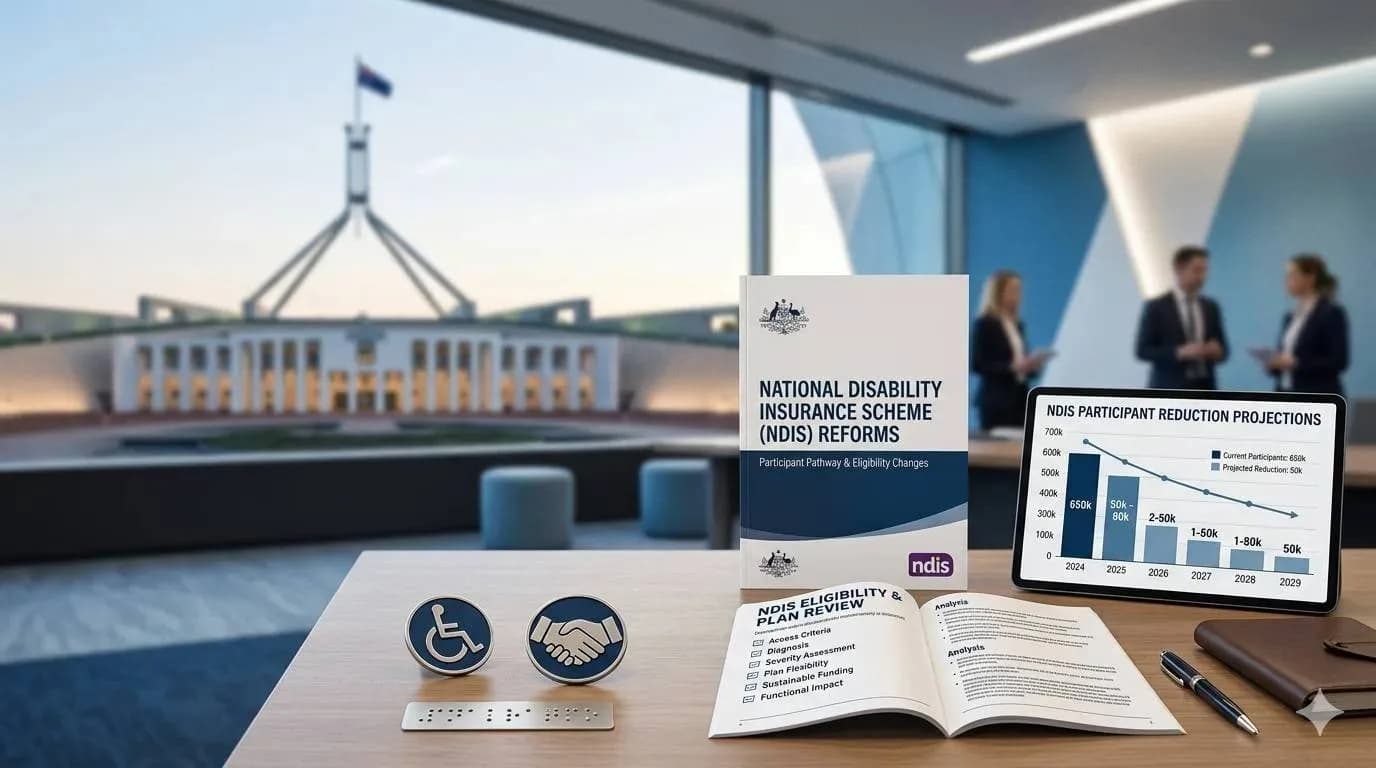
The proposed NDIS Eligibility Rules May Cut 241,000 Participants over the next four years as Australia reforms its National Disability Insurance Scheme (NDIS). The government says the changes will improve long-term financial sustainability by introducing stricter eligibility assessments. However, disability advocates warn that some people with genuine support needs could face uncertainty during reassessments.
What Are the New NDIS Eligibility Rules?
Australia's National Disability Insurance Scheme has supported millions of people living with permanent and significant disabilities since its launch. Now, the government is introducing reforms to slow the rapid growth in spending while ensuring support reaches those with the highest needs.
Instead of relying mainly on a medical diagnosis, future assessments are expected to place greater emphasis on how a person's disability affects everyday life. This means functional capacity may become just as important as clinical evidence.
From experience, large government welfare reforms often create confusion during the transition period. Similar changes in public benefit programs across countries have shown that clear documentation and updated assessments can make a significant difference.
Why Is the Government Making These Changes?
The Australian Government argues that the NDIS has expanded faster than expected, placing increasing pressure on public finances.
The proposed reforms aim to:
Improve long-term sustainability
Standardize eligibility assessments
Reduce unnecessary spending
Prioritize participants with the greatest support needs
Officials have indicated that implementation will occur gradually rather than all at once.
Who Could Be Affected?
Government modelling suggests that around 241,000 projected participants may no longer qualify under the revised eligibility framework over the next four years.
This does not automatically mean current participants will lose support immediately. Instead, eligibility may be reviewed through updated assessment processes.
One common mistake people make is assuming an existing approval guarantees lifelong access. In reality, many government-funded support programs require periodic reassessment as policies evolve.
Real-World Perspective
Discussions on community forums such as Quora show many families worry less about paperwork and more about consistency in assessments. Parents often share concerns that two people with similar disabilities may receive different outcomes depending on how functional limitations are evaluated. While these stories are personal experiences rather than official evidence, they highlight why transparency remains an important part of the reform debate.
Comparison Table
Current System | Proposed Reforms |
|---|---|
Greater reliance on diagnosis | Increased focus on functional capacity |
Broader participant growth | Stricter eligibility reviews |
Rising government expenditure | Stronger cost management |
Existing assessment approach | Updated national assessment framework |
Pros and Cons
Pros | Cons |
|---|---|
Better long-term funding sustainability | Some participants may lose eligibility |
More consistent assessment standards | Greater uncertainty during reassessment |
Improved allocation of public resources | Additional documentation may be required |
Focus on participants with higher support needs | Concerns from disability advocacy groups |
Final Thoughts
The proposed NDIS Eligibility Rules May Cut 241,000 Participants represent one of Australia's most significant disability policy reforms in recent years. While the government's goal is to protect the scheme's future, many families remain concerned about how the new eligibility framework will work in practice.
If you or someone you know relies on NDIS support, the best approach is to keep medical records current, follow official announcements, and seek professional guidance before any reassessment. Staying informed today can help reduce uncertainty as these reforms continue to roll out.
Frequently Asked Questions (FAQs)
1. What are the new NDIS eligibility rules?
The new NDIS eligibility rules propose stricter assessment criteria that focus more on a person's functional capacity rather than relying mainly on a medical diagnosis. The reforms aim to ensure support is directed to those with the highest needs.
2. Why is Australia changing the NDIS eligibility rules?
The Australian Government says the reforms are necessary to manage the rising cost of the National Disability Insurance Scheme and improve its long-term financial sustainability while maintaining support for eligible participants.
3. Could 241,000 people lose access to the NDIS?
Government modelling suggests that up to 241,000 projected participants could be affected over the next four years under the proposed eligibility changes. However, individual outcomes will depend on official assessments and the final implementation of the reforms.
4. Will current NDIS participants automatically lose their funding?
No. Existing participants will not automatically lose their funding. Some people may be asked to undergo reassessments under the updated eligibility framework to determine whether they continue to meet the requirements.
5. What is a functional capacity assessment?
A functional capacity assessment evaluates how a person's disability affects their ability to perform everyday activities, such as communication, mobility, self-care, learning, and social participation. It is expected to play a larger role in future NDIS eligibility decisions.
6. How can participants prepare for the new NDIS eligibility requirements?
Participants should keep their medical records up to date, obtain supporting reports from healthcare professionals, attend scheduled assessments, and regularly check official NDIS updates for any changes to eligibility rules.
7. Where can I find official updates about the NDIS reforms?
The most reliable information is available through the official Australian Government and National Disability Insurance Scheme (NDIS) websites. Avoid relying solely on social media or unofficial sources, as policy details may change during the implementation process.
Article Details
Category: International
Published:
Updated:
Author: Fiza
More Stories