Quick Answer
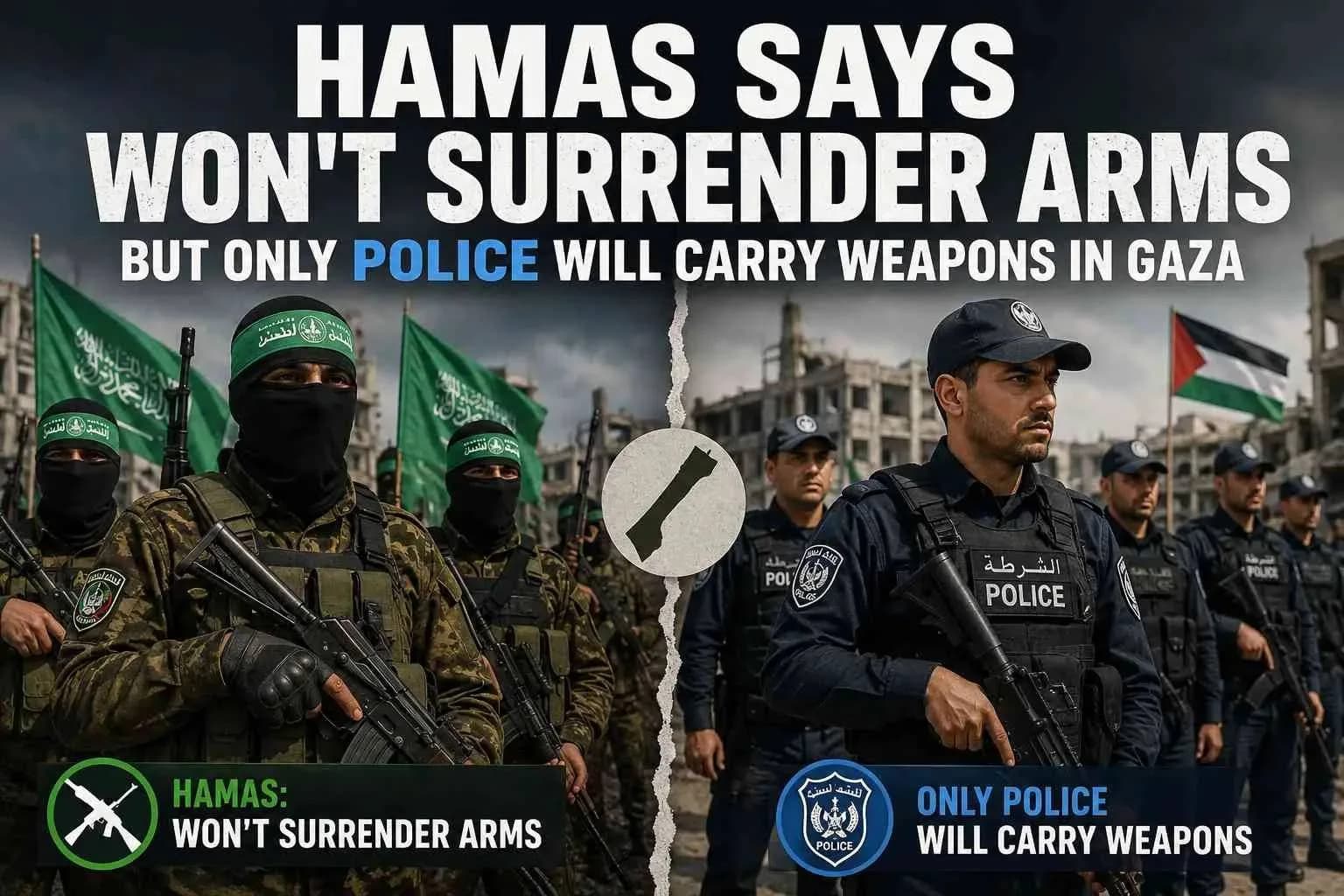
Hamas says it will not surrender its weapons completely, but discussions about Gaza’s future security include a possible model where only official police forces carry weapons publicly. The debate has become a major issue in ceasefire talks, reconstruction efforts, and international diplomacy because it involves security, governance, and the future stability of Gaza.
Why Hamas’ Weapons Stance Has Become a Global Debate
The issue of Hamas won't surrender arms has become one of the biggest challenges in discussions about Gaza’s future. International governments have pushed for weapons restrictions, while Hamas argues that its weapons are linked to security concerns and political resistance.
This debate is not only about military equipment. It involves deeper questions about trust, governance, civilian protection, and how Gaza should be managed after years of conflict.
From experience analyzing international conflicts, agreements rarely succeed through pressure alone. Successful peace processes usually require security guarantees, political commitments, and systems that people believe can work.
One common mistake people make is assuming disarmament automatically creates peace. In reality, post-conflict regions often require a careful balance between security reforms and political solutions.
Key issues shaping the debate include:
Hamas’ refusal to fully surrender weapons
International demands for security changes
The role of Palestinian police forces
Gaza reconstruction requirements
Long-term regional stability
Hamas Won't Surrender Arms: Understanding Its Position
Why Hamas Rejects Full Disarmament
Hamas has repeatedly rejected demands for complete weapons surrender. Its leadership argues that removing weapons without broader political agreements could leave the group vulnerable.
The organization views its arms as a form of protection and leverage during negotiations. Supporters of this position argue that security concerns must be addressed before any major disarmament process begins.
However, critics believe that long-term stability requires a single authority controlling weapons.
The disagreement reflects a common challenge seen in conflict regions worldwide. Armed groups often resist surrendering weapons when they believe those weapons provide protection or bargaining power.
Important factors behind Hamas’ position include:
Lack of trust between opposing sides
Concerns about future security arrangements
Political legitimacy arguments
Previous conflict experiences
A similar discussion appears in international forums where users debate whether armed groups can realistically disarm without guarantees that their opponents will also follow agreements.
Why the International Community Wants Weapons Restrictions
Security Concerns Behind Disarmament Demands
Many international governments argue that Gaza needs a security structure where one recognized authority controls public weapons.
Their argument focuses on preventing future conflicts and creating conditions for reconstruction.
Supporters of weapons restrictions believe that humanitarian projects, economic recovery, and civilian safety require predictable security conditions.
The main reasons behind these demands include:
Reducing chances of renewed fighting
Protecting civilians
Supporting reconstruction efforts
Creating stronger governance systems
In many post-conflict areas, rebuilding becomes difficult when multiple armed groups operate independently. Businesses, aid organizations, and residents often need confidence that law enforcement systems are functioning.
Gaza Police-Only Weapons Model Explained
How the Proposed Security Framework Could Work
The police-only model attempts to create a middle ground between complete disarmament and unrestricted armed activity.
Under this approach, only official Palestinian police and security forces would carry weapons publicly. Other groups would not display weapons in streets, public events, or civilian areas.
The goal is to create visible order while avoiding immediate confrontation over complete weapons surrender.
The framework could involve:
Police control over public security
Restrictions on armed demonstrations
Monitoring by external parties
Possible weapons storage arrangements
From experience, transitional security models often succeed when they focus first on reducing public violence and improving daily life.
Comparison of Gaza Weapons Approaches
Approach | Weapons Status | Public Security Control | Main Challenge |
|---|---|---|---|
Full Disarmament | Complete surrender | Police only | Hamas rejection |
Police-Only Model | Weapons hidden or restricted | Police control streets | Trust issues |
Weapons Freeze | Arms remain inactive | Monitoring required | Enforcement problems |
Previous US Proposal | Heavy weapons restrictions | International oversight | Political disagreement |
The comparison shows why the police-only model is being discussed as a possible compromise. It does not fully satisfy every side, but it attempts to address immediate security concerns.
What Palestinian Security Officials Say About Gaza Stability
Security officials have emphasized that public order remains a major concern. Their focus is not only on weapons themselves but also on preventing chaos and ensuring civilians can live normally.
A functioning security system requires:
Clear authority
Law enforcement control
Public safety measures
Accountability
The challenge is creating a system that prevents armed confrontations while maintaining political realities on the ground.
Customer Experience: How Security Decisions Affect Gaza Residents
For ordinary civilians, security debates are often measured through daily experiences rather than political statements.
Residents are mainly concerned about:
Safe movement between areas
Access to schools and hospitals
Reliable humanitarian aid
Opportunities for economic recovery
A discussion on public forums highlighted a common concern among civilians: people want normal lives where children can attend school and families can move without fear.
This perspective shows an important reality. Security policies are ultimately judged by how they affect everyday life.
Hamas Security Model Compared With Other Conflict Regions
Countries recovering from conflict have used different approaches to manage weapons.
Region | Approach | Result |
|---|---|---|
Northern Ireland | Weapons decommissioning with political agreements | Reduced violence |
Some post-conflict states | International monitoring | Gradual stabilization |
Gaza debate | Police-only security discussions | Still under negotiation |
The main lesson from other regions is that weapons management usually requires political agreements alongside security reforms.
Pros and Cons of the Police-Only Weapons Model
Pros
Reduces visible armed activity
Improves civilian movement
Creates stronger police authority
May support reconstruction efforts
Could improve international cooperation
Cons
Hidden weapons remain a concern
Trust between groups is limited
Enforcement could be difficult
Political disagreements may continue
A realistic approach requires acknowledging both advantages and challenges. No security model can succeed without cooperation from the groups involved.
Expert Perspective: What Happens Next?
The future of Gaza’s security situation will depend on whether different parties can agree on practical arrangements.
Possible developments include:
Continued negotiations
International monitoring efforts
Changes in security structures
Reconstruction-linked agreements
One common mistake is focusing only on announcements. The difficult part is implementation.
Long-term stability requires trust, accountability, and systems that protect civilians while addressing political realities.
Final Thoughts
The debate over Hamas won't surrender arms highlights one of the most complicated issues facing Gaza’s future. While international actors emphasize weapons restrictions, Hamas continues to reject complete disarmament.
The police-only weapons model represents an attempt to find a middle path between competing demands. However, its success depends on enforcement, cooperation, and broader political agreements.
For Gaza residents, the ultimate goal remains clear: security, stability, and the ability to rebuild normal lives.
FAQs
1. Why does Hamas refuse to surrender its weapons?
Hamas argues that its weapons are connected to security concerns and political resistance. The group believes disarmament requires broader agreements and guarantees.
2. What is the police-only weapons model in Gaza?
The model suggests that only official police and security forces would carry weapons publicly while other groups would avoid visible armed activity.
3. Will Hamas agree to disarm in the future?
Future decisions depend on political agreements, security guarantees, and negotiations between involved parties.
4. Why does the international community want Hamas disarmed?
Many countries believe weapons control is necessary for civilian protection, reconstruction, and long-term stability.
5. How would weapons restrictions affect Gaza civilians?
If successful, restrictions could improve public safety, support aid operations, and create better conditions for rebuilding.
6. Who would control security in Gaza under this model?
The proposed framework focuses on Palestinian police and official security forces managing public security.
7. Can weapons restrictions lead to long-term peace?
Weapons restrictions can support stability, but lasting peace usually requires political agreements, trust, and cooperation between all parties.
Article Details
Category: Global
Published:
Updated:
Author: Fiza
More Stories