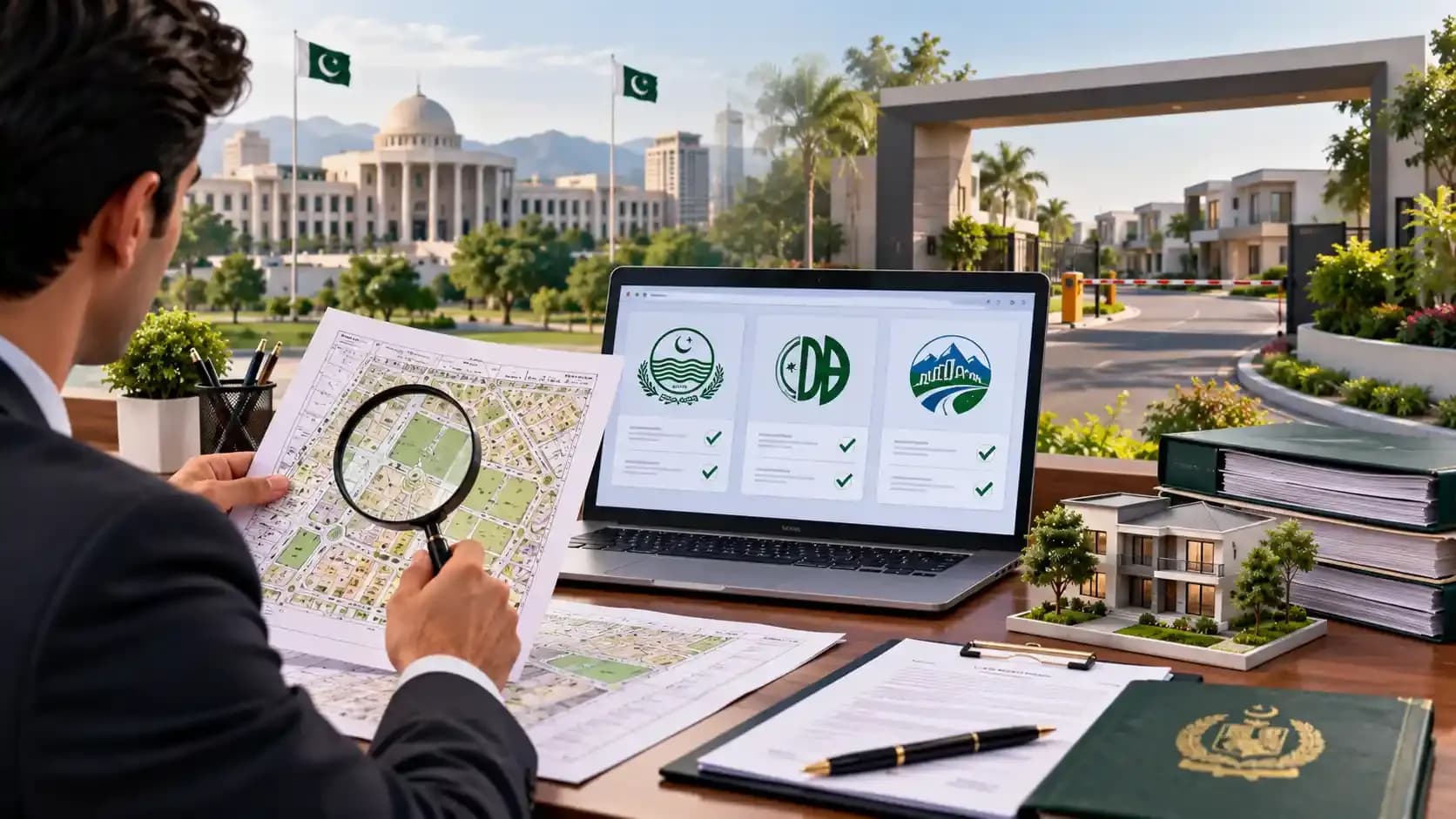
You work abroad and see a property opportunity back home. You cannot be physically present at the revenue office to finalize the sale. You cannot coordinate visit to verify the housing society or inspect the property in person. You wonder: can I buy property from abroad? How does power of attorney work? What happens after I buy - can I get my money back out if I need it?
Millions of overseas Pakistanis own property at home - for investment, family security, or retirement plans. Buying remotely is possible but requires careful planning: choosing the right representative, verifying documents from a distance, understanding tax rules that differ from local buyers, and navigating repatriation limits on your investment returns.
This guide walks through every step of overseas Pakistani property buying: power of attorney, remote verification, transfer, taxes, and repatriation rules.
For the complete step-by-step property buying process for residents, see buying property in Pakistan safely.
Who Can Buy Property as an Overseas Pakistani?
Eligibility: Pakistani citizens living abroad - whether on work visas, permanent residency, or citizenship in another country - can buy property in Pakistan provided they hold a valid Pakistani passport or CNIC (computerized national ID card).
No special permission needed: Unlike some countries, Pakistan does not require special permission for citizens to own property abroad, or for overseas citizens to own property at home. Your overseas status does not bar you from property ownership.
Restrictions: Some property categories (agricultural land in certain provinces, property in cantonment areas) may have restrictions. Verify before committing.
Power of Attorney - How to Buy from Abroad
What is it: A legal document that authorizes a trusted person in Pakistan (usually a family member or lawyer) to act on your behalf in property transactions - signing sale deeds, paying taxes, filing documents at the revenue office.
Why you need it: You cannot attend the revenue office in person or meet the seller. Your attorney-in-fact represents you legally and binds you contractually.
How to Create a Power of Attorney
Get a notarized power of attorney drafted by a lawyer in Pakistan. Include specific permissions: identify the property address, authorize negotiation, signing the sale deed, paying stamp duty, filing Intiqal, and receiving the new Fard.
Have it attested by your Pakistani embassy or consulate in your country of residence. This step is critical - without embassy attestation, the power of attorney may not be accepted by Pakistani revenue officers.
Provide a certified copy to your attorney-in-fact. Keep a copy for your own records.
Who Should Be Your Attorney-in-Fact?
Best choice: A close family member you trust completely - spouse, adult child, sibling, parent - who understands your intentions and can make decisions in your interest.
Alternative: A qualified property lawyer in Pakistan with a track record. Lawyers charge a fee but provide professional diligence and are bound by professional ethics.
Red flags: Do not give power of attorney to someone you do not know well, or to someone who pressures you to grant unrestricted powers. Always specify the exact property and transaction.
Verifying the Property from Abroad
Verification is harder without being physically present. Take these steps:
1. Check Housing Society Approval
If buying in a housing society, verify LDA/CDA/RDA approval online or by requesting your attorney to check with the authority.
See verifying a housing society for detailed approval verification steps.
2. Verify Seller's Ownership Documents
Ask your attorney to obtain and verify the seller's Fard (ownership document), Encumbrance Certificate (no legal claims), and Bank Clearance (no mortgage).
See property documents explained for what each document proves.
3. Arrange a Property Inspection
Hire a professional property surveyor in Pakistan to visit the site, verify dimensions, check utilities, and photograph the property. Send the surveyor's report to you. This costs Rs 5,000-15,000 but is crucial for remote buying.
4. Check for Court Cases
Ask your attorney to search local courts for any pending litigation involving the property or seller. Legal disputes that surface after you buy can entangle your ownership.
The Transfer Process from Abroad
Once you decide to buy, your attorney-in-fact follows this process:
Negotiates with the seller and agrees on price (guided by you via email/call).
Drafts the sale deed with a lawyer (typically Rs 5,000-10,000 fee). You review it before signing.
Gets the sale deed stamped (stamp duty 4-5% of property value, varies by province).
Files the Intiqal (ownership transfer) at the revenue office, paying CVT (2-3%), withholding tax (5% for non-filers, 2-3% for filers), and registration fees.
See property transfer taxes for the full breakdown of costs.
Obtains your new Fard (ownership document) in your name. This is sent to you or kept with the attorney for safekeeping.
Taxes for Overseas Pakistanis
Higher withholding tax: As a non-resident, your 236C withholding tax rate is typically 5% (compared to 2-3% for filers inside Pakistan). On a Rs 5 million purchase, this means Rs 100,000-250,000 extra in tax.
No local income tax on property: As a non-resident, you do not pay Pakistan income tax on the property's rental or capital gains - but this assumes you do not work in Pakistan or maintain a permanent place of residence here.
Repatriation tax: If you later repatriate (send back to your country) the proceeds from selling the property, you may face withholding taxes depending on your country's tax treaty with Pakistan. Plan ahead with an accountant.
Repatriation - Sending Money Back Abroad
What it is: Transferring money earned from property sales, rental income, or asset sales from Pakistan to your bank account abroad.
Limit: State Bank of Pakistan (SBP) allows overseas Pakistanis to repatriate earnings freely, but large transfers (above Rs 50 million or equivalent) are flagged for documentation. Transfers below this threshold are routine.
Process: Your attorney or bank initiates a bank transfer. You provide beneficiary details (your overseas bank account). The transfer takes 3-7 business days. Your bank deducts wire fees (typically 1-2% and a fixed charge).
Documentation: The bank requires proof of fund source (sale deed, Fard, original property purchase receipt). This is routine and protects against money laundering.
Tax on repatriation: SBP does not charge tax, but depending on your country of residence and its tax treaty with Pakistan, you may owe tax on this income in your country. Consult a tax professional.
Frequently Asked Questions
Q: Can I buy property without power of attorney if I visit Pakistan?
Yes. If you physically visit Pakistan and attend the revenue office in person, you do not need power of attorney for that specific transaction. However, if you return abroad and need to handle other matters (paying taxes, registering documents), you would still need power of attorney.
Q: What if my attorney-in-fact betrays me?
Misuse of power of attorney is a criminal offense in Pakistan (unauthorized sale or transfer). If you suspect abuse, report to police and file a civil suit to recover the property. This is why choosing a trustworthy attorney-in-fact is critical. Lawyers are bound by professional ethics and offer more recourse if there is misconduct.
Q: Can I buy property under a company name instead of my personal name?
Yes, but it is more complex. You would need to register a company in Pakistan first, which requires a local director or nominee. Consult a corporate lawyer for this route.
Q: What if the seller refuses to transfer the Fard to my name?
This is rare but can happen. Your sale deed is the legal proof of ownership. If the seller refuses to file the Intiqal, you can file a suit for specific performance at the civil court to compel the transfer. Having a good lawyer is essential here.
Q: Can I get a loan from a Pakistani bank to buy property as an overseas Pakistani?
Most Pakistani banks offer home loans to overseas Pakistanis, but terms are stricter than for residents. Interest rates are higher and loan-to-value ratios lower. See home loans in Pakistan for available options.
Buy Property from Abroad Safely
Identify a trustworthy attorney-in-fact - ideally a close family member or qualified lawyer.
Draft and get power of attorney notarized and attested by your embassy.
Ask your attorney to verify the housing society's approval by checking the society's approval status.
Request verified copies of the seller's property ownership documents and arrange a professional site inspection.
Budget for all applicable taxes. See property transfer taxes for the full cost breakdown.
For the complete property buying process from verification to ownership, see how to buy property in Pakistan safely.
Article Details
Category: Property
Published:
Author: Kaif
More Stories