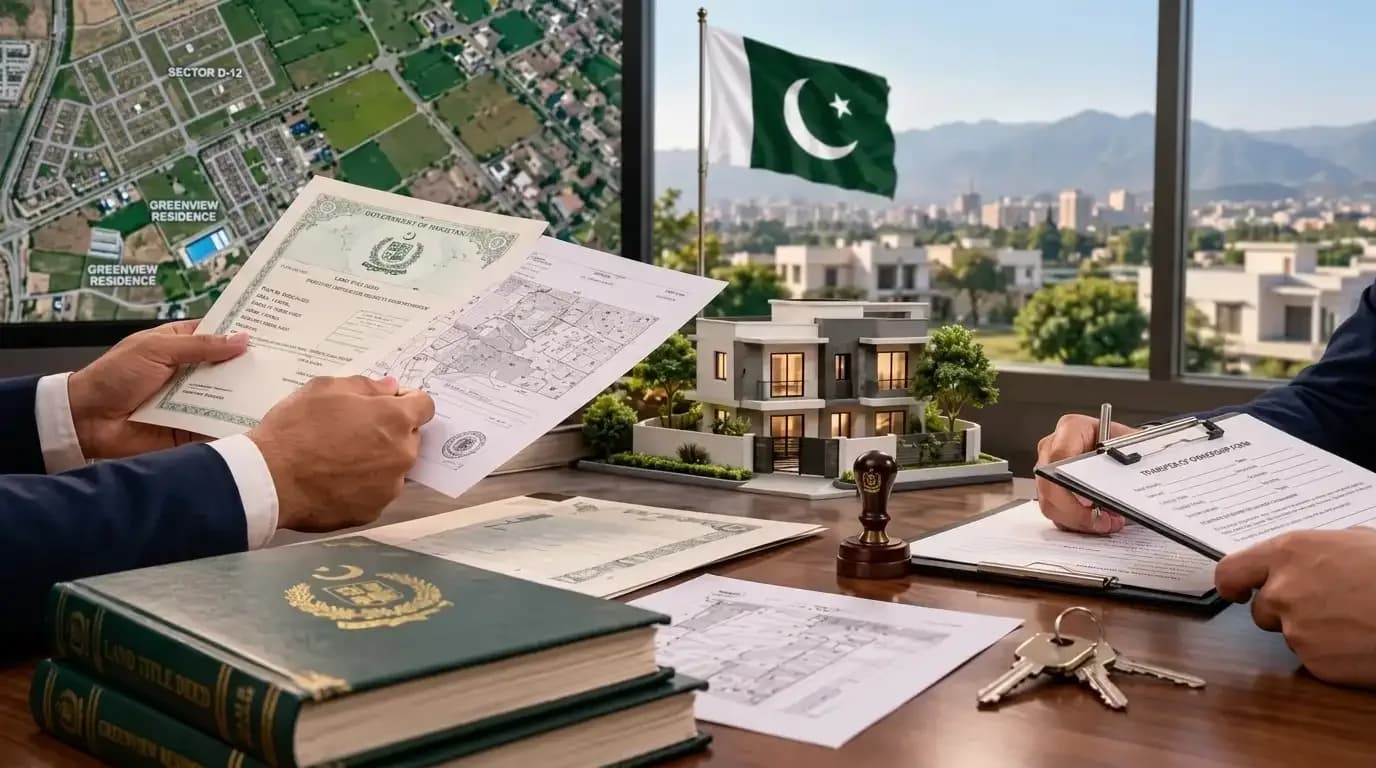
You are buying property and the seller hands you a stack of papers. Some are labelled 'Fard', others say 'Intiqal', and there is mention of 'mutation' and 'registry'. You have no idea what these documents mean or why they matter. You ask the seller and get vague answers. You ask friends and get conflicting information. You wonder: which documents are actually important? What do they prove? Can they be forged? What happens if a document is missing?
Property ownership in Pakistan is documented through a system of legal papers registered with government land revenue authorities. Each document serves a specific purpose: proving ownership, recording transfers, or officially updating government records.
Understanding these documents is critical because they protect your legal rights and determine whether you actually own the property. This guide explains every major property document, what each one proves, how to verify them, and what to do if documents are missing or damaged.
For the complete property buying process and how these documents fit into the larger picture, see the complete guide to buying property in Pakistan safely.
The Four Critical Property Documents in Pakistan
1. Fard - The Ownership Document
What is it: The Fard is the primary legal document proving ownership of a property. It is issued by the Land Revenue Department and is registered in the government's official records.
What it contains:
Property description: exact location, area (in acres, kanals, or square feet), boundaries, and survey number
Owner's name: the registered owner's full name and CNIC
Revenue record number: official reference number in the land revenue system
Acquisition date: when the current owner obtained the property
Official seal and signature: from the revenue officer, making it an official government document
Why it matters: The Fard is the absolute proof of ownership. Without it, you have no legal claim to the property. Always verify the Fard before proceeding with any purchase.
Red flags: Missing or damaged Fard, corrections or overwriting on the document, Fard in someone else's name, or Fard that does not match the property you are viewing.
How to verify: Visit the revenue office (Tehsil) in person with the seller. Ask to see the original Fard. Request the revenue officer to confirm the document's authenticity and check if any legal cases or claims exist against the property.
2. Intiqal - The Transfer Document
What is it: The Intiqal is the official document filed when property ownership is transferred from one person to another. It is the legal record of the sale transaction.
What it contains:
Buyer and seller details: names, CNICs, and addresses
Property description: matching the original Fard
Sale consideration: the agreed-upon price (sometimes written in words and figures)
Taxes paid: proof that stamp duty, CVT, and other transfer taxes have been calculated and paid
Revenue officer's approval: official registration and dated stamp
Why it matters: The Intiqal is the legal proof that the ownership transfer is complete and registered with the government. Without an Intiqal, the seller can dispute the sale or claim ownership. Always ensure the Intiqal is filed and approved before completing payment.
Timeline: Filing an Intiqal typically takes 30-60 days from application, depending on the revenue office workload.
Process: You and the seller visit the revenue office with the original Fard, sale deed, and required documents. The revenue officer verifies everything, calculates transfer taxes, collects payment, and issues a receipt. The Intiqal is then filed in the government system and a new Fard is issued in the buyer's name.
3. Mutation (Intqaal-e-Malik) - The Registration Update
What is it: Mutation is the official update to government revenue records reflecting the ownership change. After an Intiqal is filed, the revenue rolls (government land records) are updated through mutation.
What it shows:
New owner's name officially registered in revenue records
Property taxes updated to the new owner's name
Old owner completely removed from revenue records
Why it matters: Mutation is the final step that makes your ownership legally absolute. The property is now officially recorded as yours in government records. You become liable for property taxes, and the old owner has no further claim.
Timeline: Mutation typically completes within 2-4 weeks after the Intiqal is filed, but can take longer in crowded revenue offices.
How to verify: Visit the revenue office and ask to see the mutation order. Your name should appear as the new owner in the official revenue register (Masavi Maal or revenue roll). Request a certified copy of the mutation order for your records.
4. Sale Deed - The Contractual Agreement
What is it: The Sale Deed is a contractual document signed by both buyer and seller that records the terms of the sale — property description, price, payment method, and conditions.
What it contains:
Detailed property description and location
Sale price and payment terms
Buyer and seller signatures
Witness signatures (optional but recommended)
Date and place of execution
Why it matters: The Sale Deed is your contractual protection. It proves the terms you agreed to and can be used to resolve disputes about price, conditions, or payment methods. A lawyer typically drafts this document to ensure it is legally sound. The Sale Deed must be stamped by a provincial stamp collector - the stamp amount depends on the property value (typically 2-5% of the stated price).
To understand how stamp duty, CVT, and withholding tax apply to a Sale Deed, see our guide to property transfer taxes in Pakistan.
Other Important Documents
Encumbrance Certificate (No-Claim Certificate)
What it is: An official certificate from the revenue authority confirming that no legal claims, mortgages, or court cases exist against the property.
Why you need it: Proves the property is free from legal disputes and can be transferred cleanly to you.
How to get it: Request from the revenue office (Tehsil) - costs Rs 500-1,000 and takes 3-5 days.
Bank Clearance (NBCC - No Bank Claim Certificate)
What it is: A certificate from the seller's bank confirming the property is not mortgaged to any financial institution.
Why you need it: A mortgaged property can be seized by the bank even after you purchase it. This certificate protects you.
How to get it: The seller requests from their bank - typically takes 3-7 days and is free.
Housing Society NOC (No Objection Certificate)
What it is: A certificate from the housing society management confirming that the property dues (maintenance, charges) are clear and the society has no objection to the transfer.
Why you need it: Confirms the seller has no outstanding dues that could become your liability.
How to get it: The seller requests from the housing society management committee - typically takes 5-10 days and may have a small fee.
For more on checking whether a housing society is legitimate and understanding its NOC requirements, see how to verify a housing society in Pakistan.
Complete Document Checklist When Buying Property
Document | Essential? | Obtained From | Purpose |
Original Fard | Yes | Seller | Proof of seller's ownership |
Sale Deed (stamped) | Yes | Lawyer or seller | Contractual record of sale |
Encumbrance Certificate | Yes | Revenue office | Confirms no legal claims |
Bank Clearance (NBCC) | Yes | Seller's bank | Confirms no mortgage |
Housing Society NOC | Yes (if applicable) | Society management | Confirms dues clear |
Property Survey Report | Recommended | Professional surveyor | Confirms dimensions and utilities |
Tax Clearance | Yes | Revenue office | Confirms property taxes paid |
Recent Property Tax Receipt | Recommended | Seller | Shows current tax status |
Missing a document? Do not proceed with the purchase. Each missing document creates legal risk. Either obtain it from the source or from the revenue office as a certified copy (usually Rs 500-1,000 and 3-5 days).
After verifying your document checklist, understand all the transfer taxes you will encounter by reviewing the complete guide to property transfer taxes.
What If Documents Are Missing or Damaged?
Missing Fard
Action: Visit the revenue office (Tehsil) and apply for a certified copy of the Fard. Costs Rs 500-1,000 and takes 3-5 days. The original Fard is required for the property transfer (Intiqal), so this must be completed before purchase.
Risk: If the seller cannot obtain a certified copy, it may indicate the property was obtained fraudulently or the revenue records are not accurate. Investigate further before purchasing.
Damaged or Corrected Fard
Action: A Fard with minor corrections (initialled by the revenue officer) is acceptable. However, a heavily corrected, overwritten, or tampered Fard is a major red flag. Request the revenue office to verify if corrections are authentic.
Risk: A forged or fraudulently altered Fard means the seller does not legally own the property, and your purchase will be invalid.
Missing Sale Deed
Action: A lawyer can draft a new Sale Deed, but the original sale was not documented. This is risky. Proceed only with a lawyer's guidance and ensure all other documents are verified.
Risk: Without a stamped Sale Deed, the tax authorities may challenge the transaction later, or disputes may arise.
Frequently Asked Questions
Q: Can property documents be forged?
Yes. Fards can be forged, and sale deeds can be fake. Always verify the Fard at the revenue office in person. Ask the revenue officer to confirm the document is genuine and check their system records.
Q: What if the Fard is in someone else's name?
Red flag. If the seller cannot provide a Fard in their own name, they do not own the property. Do not proceed. The actual owner must be involved in the sale.
Q: How long are property documents valid?
Fards, Sale Deeds, and Mutation orders do not expire. Once issued, they remain valid forever unless cancelled or superseded by a newer document.
Q: Do I need the original documents or are photocopies acceptable?
Originals are required for verification and at the revenue office during the Intiqal filing. Photocopies alone are not acceptable. Always see and verify originals.
Q: Who keeps the documents after the sale is complete?
After the Intiqal is filed and the new Fard is issued in your name, you keep the new Fard and mutation order. The seller keeps only a copy of the Sale Deed for their records.
Verify Your Property Documents Before Buying
Request the original Fard from the seller and inspect it closely.
Visit the revenue office (Tehsil) with the seller and verify the Fard authenticity with the revenue officer.
Obtain an Encumbrance Certificate confirming no legal claims exist.
Request Bank Clearance (NBCC) from the seller's bank confirming no mortgage.
If buying in a housing society, request the NOC from the society management.
For the complete property buying process and where these documents fit in, see how to buy property safely in Pakistan.
For the transfer taxes involved in an Intiqal, see property transfer taxes in Pakistan.
For the steps to verify a housing society and its NOC requirements, see how to verify a housing society in Pakistan.
Article Details
Category: Property
Published:
Updated:
Author: Kaif
More Stories