Quick Answer
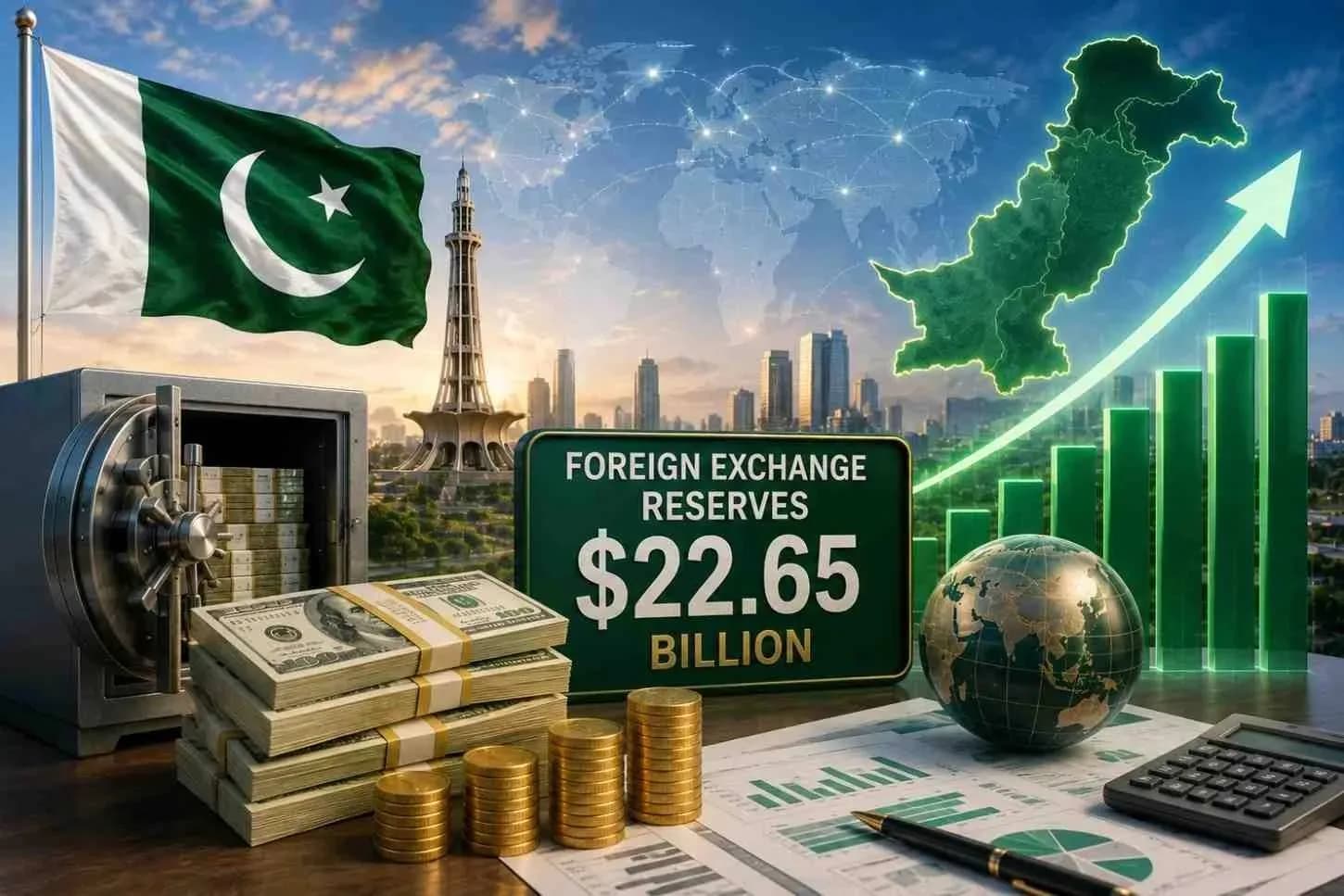
Pakistan’s foreign exchange reserves have reached approximately $22.65 billion, creating a stronger financial position for the country. The increase comes as the government focuses on attracting foreign investment, overseas Pakistani capital, and business opportunities. While higher reserves improve economic confidence, long-term success will depend on exports, reforms, and sustainable growth.
Pakistan’s Foreign Exchange Reserves Growth Signals Economic Stability
Pakistan’s foreign exchange reserves have become a major economic talking point as the country works to improve investor confidence. The latest increase to $22.65 billion shows improvement in the external financial position and provides a stronger cushion against economic pressures.
Foreign reserves play an important role in any economy. They help a country manage import payments, support currency stability, and meet international financial commitments.
For global investors, reserve levels are often one of the first indicators they review before entering an emerging market. A stronger reserve position can reduce concerns about payment risks and improve overall market confidence.
From experience, one common mistake people make is assuming reserve growth alone can solve every economic challenge. Reserves create stability, but sustainable progress requires stronger exports, industrial growth, and consistent policies.
Why Higher Reserves Matter for Pakistan’s Economy
A country with healthier reserves has more flexibility during difficult economic conditions. Pakistan has historically faced pressure from rising imports, energy costs, and foreign debt payments.
Higher reserves can help in several ways:
Improve confidence in the Pakistani rupee
Support import-dependent industries
Reduce short-term external financing pressure
Encourage foreign investors to explore opportunities
Strengthen Pakistan’s position with international lenders
For example, investors in the United States often analyze a country’s foreign currency position before committing capital. Similar patterns are seen in emerging markets where economic stability influences investment decisions.
Pakistan’s Investment Push and Global Investor Interest
Alongside reserve growth, Pakistan is increasing efforts to attract international investment. The government is encouraging overseas Pakistanis and foreign businesses to explore opportunities in different sectors.
The focus areas include:
Technology and startups
Energy projects
Manufacturing
Infrastructure development
Export-oriented industries
Overseas Pakistanis represent a significant economic opportunity. Their investment can provide long-term capital while strengthening connections between Pakistan and global markets.
According to discussions among overseas communities on platforms like Quora, many investors look for easier business procedures, policy consistency, and transparency before investing in Pakistan.
Key Economic Indicators
Indicator | Current Status |
|---|---|
Total Liquid Foreign Exchange Reserves | $22.65 Billion |
Reserve Direction | Increasing |
Investment Focus | Foreign Investors and Diaspora |
Economic Goal | Stability and Growth |
Impact on Businesses and Consumers
Higher reserves can provide relief for businesses that depend on imported machinery, technology, and raw materials. When foreign currency availability improves, companies can plan operations with greater confidence.
However, consumers may not immediately notice lower prices. Inflation depends on multiple factors, including production costs, energy prices, supply chains, and government policies.
In many cases, reserve improvement works behind the scenes by reducing economic uncertainty rather than creating instant changes in daily expenses.
Pros and Cons of Rising Foreign Exchange Reserves
Pros
Better economic stability
Improved investor confidence
Stronger ability to manage imports
Reduced pressure on currency markets
Cons
Reserves alone cannot fix structural issues
Dependence on external inflows remains a challenge
Export growth is still necessary
Pakistan Compared With Other Emerging Markets
Country | Reserve Strength Impact | Investor Focus |
|---|---|---|
Pakistan | Improving external position | Infrastructure and emerging sectors |
India | Large reserve base | Technology and manufacturing |
Bangladesh | Export-driven reserves | Textiles and manufacturing |
Vietnam | Strong export reserves | Global supply chains |
Compared with competitors, Pakistan has significant potential because of its population, geographic location, and growing digital economy. However, attracting long-term investment requires consistent reforms.
Customer Experience and Real Investment Concerns
Many overseas Pakistanis say they are interested in investing but want smoother processes and stronger protection. Real investor confidence depends on practical experiences, not only economic announcements.
Common concerns include:
Ease of starting a business
Clear regulations
Reliable infrastructure
Stable economic policies
Improving these areas can help Pakistan convert reserve growth into long-term investment opportunities.
Final Thoughts: What Comes Next for Pakistan?
The rise in Pakistan’s foreign exchange reserves to $22.65 billion is a positive economic signal. It shows improving financial strength and provides a better foundation for future growth.
However, maintaining this momentum will require continued focus on exports, investment-friendly policies, and economic reforms.
If Pakistan can combine stronger reserves with productive investment, innovation, and business growth, the country can improve its position among emerging global economies.
Stay updated with PehlePakistan.pk for more economic insights, investment trends, and important financial developments shaping Pakistan’s future.
FAQs
1. What are Pakistan’s current foreign exchange reserves?
Pakistan’s total liquid foreign exchange reserves have reached approximately $22.65 billion, reflecting improvement in the country’s external financial position.
2. Why are foreign exchange reserves important?
Foreign reserves help a country manage imports, support currency stability, and meet international financial obligations.
3. Will higher reserves reduce inflation in Pakistan?
Higher reserves can support economic stability, but inflation depends on several factors, including energy prices, supply chains, and government policies.
4. How do foreign reserves affect investors?
Investors often view stronger reserves as a sign of lower financial risk and improved economic confidence.
5. Can overseas Pakistanis invest in Pakistan?
Yes, overseas Pakistanis can contribute through business investment, remittances, and participation in different economic sectors.
6. Are higher reserves enough for economic growth?
No. Long-term growth also requires stronger exports, industrial development, productivity improvements, and consistent reforms.
7. What challenges does Pakistan still face?
Pakistan needs to improve exports, attract sustainable investment, maintain fiscal discipline, and create a more predictable business environment.
Article Details
Category: Goverment
Published:
Updated:
Author: Fiza
More Stories