Investment
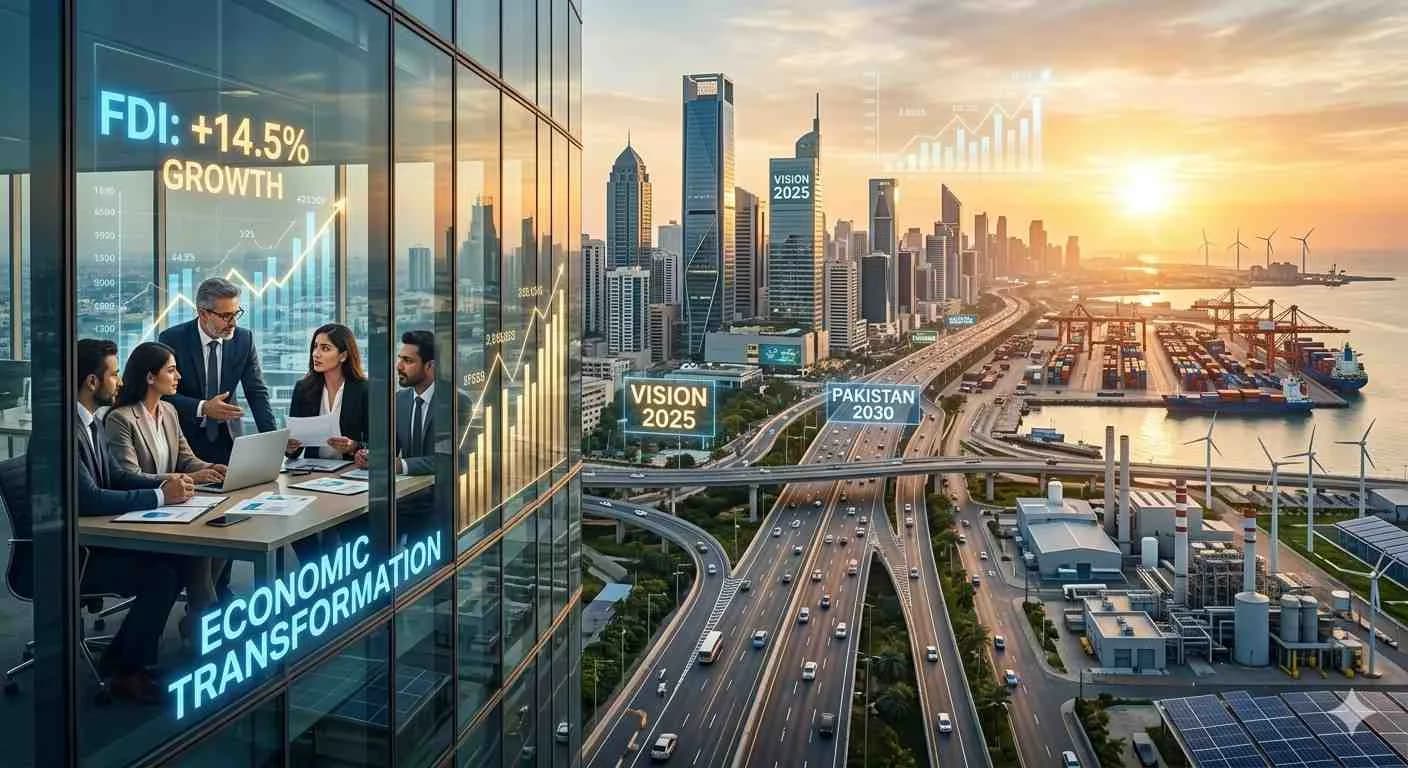
Pakistan Vision 2025 and the FDI Push: Can Foreign Investment Reshape the Country’s Economic Future?
What if foreign investors could help reshape Pakistan’s economic future faster than domestic reforms alone? That is the direction Pakistan Vision 2025 is trying to take, with Foreign Direct Investment becoming a central pillar of growth strategy.
Pakistan Vision 2025 sets an ambitious direction for the country, aiming to move toward a more stable, competitive, and upper-middle-income economy. At the heart of this roadmap is a simple but powerful idea: sustained growth needs capital, and Foreign Direct Investment is one of the most reliable sources of it.
In many cases, developing economies struggle not because of ideas, but because of funding gaps and limited technology access. This is where FDI plays a practical role. It brings not only money but also expertise, innovation, and global business practices that can improve local industries.
From experience, one common mistake people make is assuming investment policies only affect big corporations. In reality, when foreign investment flows into energy, telecom, manufacturing, or IT sectors, the impact reaches households. For example, better energy infrastructure can reduce outages, which directly lowers the cost of running small home businesses.
The Strategic Trade Policy Framework 2020-2025 also aligns with this vision. It focuses on improving exports, simplifying trade processes, and making Pakistan more attractive for global investors. Combined with Vision 2025, the goal is to build a more balanced economy that is less dependent on imports and more focused on productivity.
To understand this in simple terms, imagine a household struggling with rising monthly bills due to unstable electricity supply. A stable foreign investment in energy infrastructure could improve supply, reduce backup fuel costs, and ease financial pressure over time. This is how macroeconomic policy eventually connects with everyday life.
However, attracting investment is not just about policy documents. Investors look for consistency, ease of doing business, and long-term stability. This is why regulatory clarity and economic reforms remain just as important as vision statements.
Quick Facts Box
- Pakistan Vision 2025 targets transformation into an upper-middle-income economy
- FDI is identified as a key driver of industrial and technological growth
- STPF 2020-2025 focuses on export expansion and trade facilitation
- Private investment levels have shown recovery trends post-pandemic
Below is a simplified view of how Foreign Direct Investment typically impacts different sectors in Pakistan’s economy:
| Sector | Type of FDI Impact | Expected Economic Benefit |
|---|---|---|
| Energy | Infrastructure development and power generation projects | Reduced load shedding and improved productivity |
| Telecom | Network expansion and digital upgrades | Better connectivity and digital economy growth |
| Manufacturing | New production facilities and technology transfer | Job creation and export competitiveness |
| IT Sector | Startup funding and software exports | Foreign exchange earnings and skilled employment |
Article Details
Category: Investment
Published:
Updated:
Author: Aliya
More Stories