PM Shehbaz Begins Strategic China Visit With High-Level Delegation
Can Pakistan’s latest diplomatic engagement with China help unlock fresh economic momentum at a time when regional politics and global trade dynamics are rapidly shifting? Prime Minister Shehbaz Sharif’s four-day official visit to China is already drawing attention for both its timing and strategic importance.
Closing Thought
Pakistan and China continue to describe their relationship as an all-weather strategic partnership, but the real test lies in how quickly both countries can convert diplomatic goodwill into visible economic results. From infrastructure and technology to trade and regional connectivity, the outcomes of this visit could shape Pakistan’s economic direction for years ahead.
Quick Facts Box
- Prime Minister Shehbaz Sharif arrived in China on a four-day official visit.
- A high-level delegation is accompanying the premier.
- Key ministries include foreign affairs, planning, IT, and information.
- The visit is expected to focus on economic cooperation and regional connectivity.
Pakistan-China Ties Enter Another Important Phase
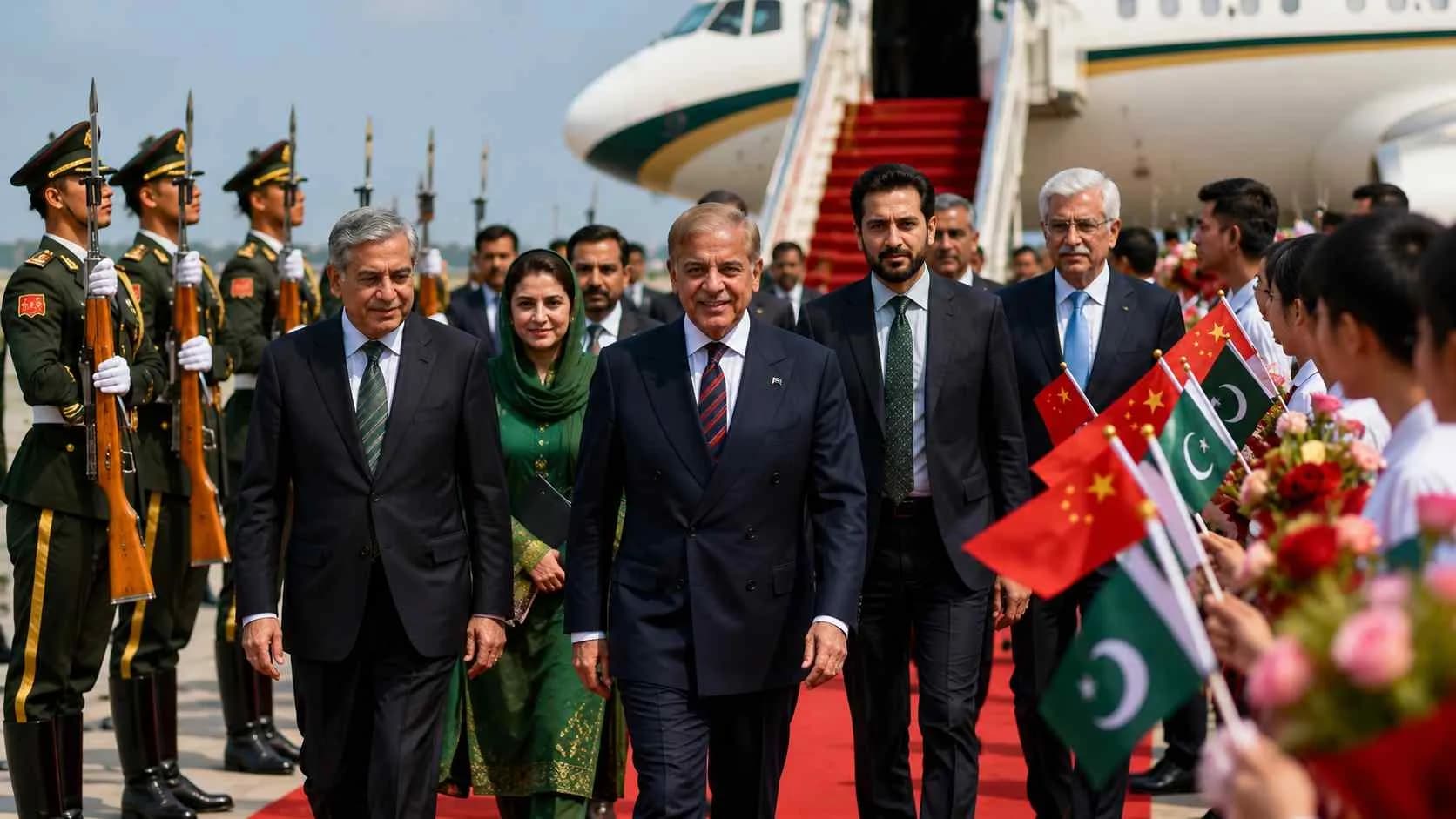
Prime Minister Shehbaz Sharif arrived in China alongside senior cabinet members as Islamabad looks to strengthen cooperation with its largest strategic and economic partner. The delegation includes Deputy Prime Minister and Foreign Minister Ishaq Dar, Planning Minister Ahsan Iqbal, Information Minister Attaullah Tarar, IT Minister Shaza Fatima, and Adviser Tariq Fatemi.
The timing of the visit matters. Pakistan is trying to stabilize its economy, attract foreign investment, expand exports, and accelerate long-delayed development projects. China, meanwhile, remains deeply connected to Pakistan through infrastructure, energy, defense cooperation, and regional trade initiatives.
From experience, diplomatic visits involving economic teams usually signal that discussions are expected to go beyond ceremonial meetings. The inclusion of planning and IT leadership suggests technology cooperation, investment frameworks, and digital infrastructure could become major talking points during the visit.
Economic Cooperation Likely to Dominate Discussions
One of the central expectations surrounding the visit is renewed momentum for economic collaboration under existing bilateral frameworks. Pakistan has consistently looked toward China for infrastructure investment, industrial partnerships, and financial cooperation during difficult economic periods.
In many cases, international partnerships are judged less by announcements and more by execution speed. That remains one of the biggest challenges for Pakistan. Several projects linked to connectivity and industrial development have faced delays due to administrative hurdles, financing concerns, and regional uncertainty.
Analysts believe Islamabad may also seek broader Chinese support in areas such as energy transition, information technology, agriculture modernization, and export-oriented manufacturing.
Why China Remains Critical for Pakistan
China is not just a diplomatic ally for Pakistan. It is one of the country’s largest investors and development partners. Major infrastructure corridors, energy projects, highways, and industrial zones over the past decade have been linked directly or indirectly to Chinese investment.
For ordinary Pakistanis, the impact of these partnerships often appears through electricity generation, transport infrastructure, and employment opportunities. However, economic pressure continues to affect households nationwide.
A simple example explains the challenge. When fuel prices, transport costs, and electricity bills rise together, families reduce spending on everything from education to healthcare. Governments then look for foreign partnerships that can improve industrial activity and ease financial pressure over time.
Key Areas Expected During the Visit
Regional Politics Also Matter
The visit is taking place during a period of shifting regional alliances and heightened geopolitical competition. Pakistan’s foreign policy leadership is likely to discuss regional stability, trade routes, and broader Asian economic integration during meetings with Chinese officials.
One common mistake people make is viewing diplomatic visits only through political headlines. In reality, regional diplomacy often directly affects investment confidence, trade agreements, currency stability, and long-term development planning.
Pakistan’s relationship with China also holds importance because Beijing continues expanding its economic influence across Asia, the Middle East, and Africa through infrastructure and trade initiatives.
Technology and Digital Cooperation Could Gain More Attention
The presence of Pakistan’s IT leadership in the delegation may indicate growing interest in digital partnerships. Pakistan’s technology sector has become one of the country’s fastest-growing industries, particularly in software exports, freelancing, fintech, and digital services.
Chinese investment in data infrastructure, smart systems, artificial intelligence, and telecom development could become increasingly important for Pakistan’s long-term economic planning.
Many investors overlook how technology cooperation now influences broader geopolitical relationships. Countries are no longer competing only through trade routes or factories. Digital infrastructure has become equally strategic.
Challenges Still Remain
Despite strong bilateral relations, Pakistan still faces structural economic issues including debt pressure, policy inconsistency, inflation, and investor concerns about long-term stability.
Foreign partnerships can support growth, but domestic reforms remain equally important. Investors often look for policy continuity, transparent regulation, and smoother execution before committing major capital.
That means the success of this visit will likely be measured not only by diplomatic statements but also by practical follow-up actions over the coming months.
What Comes Next?
Officials are expected to hold meetings covering trade, economic cooperation, regional connectivity, technology investment, and strategic coordination. Observers will closely monitor whether the visit produces new agreements, financing announcements, or implementation timelines for pending projects.
If economic coordination improves and delayed projects move forward, the visit could strengthen investor confidence and reinforce Pakistan’s long-term partnership with China.
Final Analysis
Prime Minister Shehbaz Sharif’s visit to China reflects Pakistan’s continued reliance on strategic diplomacy to support economic recovery and regional positioning. The inclusion of key ministers from finance-linked sectors shows that Islamabad wants practical economic outcomes rather than symbolic engagements alone. Whether these talks translate into faster project execution and stronger investment flows will become clearer in the months ahead.
Article Details
Category: Pakistan
Published:
Updated:
Author: Muhammad Umer
More Stories