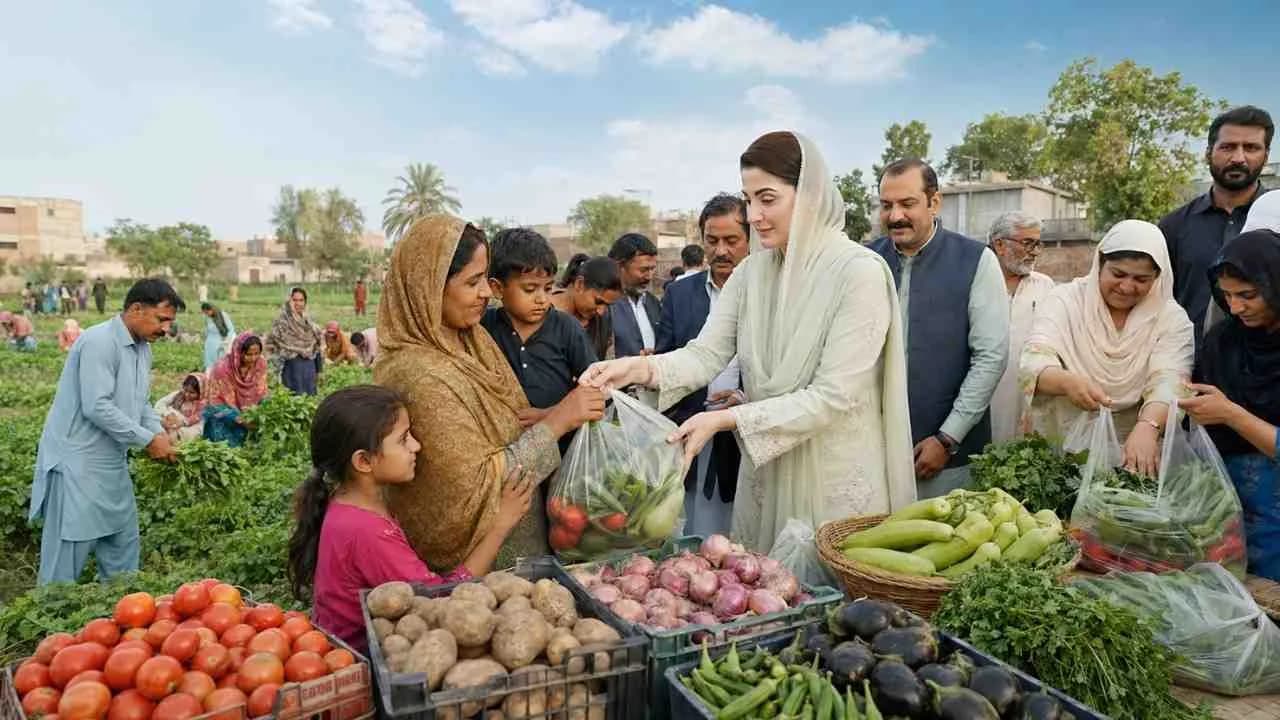
Grocery bills have become a genuine headache for families across Pakistan. Vegetable prices swing wildly from week to week, and for a household running on a tight budget, that unpredictability hurts. This is exactly the gap the Sasti Nahi Muft Sabzi, Sanjhi Sabzi scheme Muzaffargarh is stepping into.
Launched on the direction of Punjab Chief Minister Maryam Nawaz Sharif, this isn't your typical subsidy program. Instead of just lowering prices, the scheme hands out vegetables completely free of cost. In many cases, government relief programs sound good on paper but stumble in execution. This one, so far, looks different.
Why This Story Is Getting Attention
The idea started small, in a single village community in Muzaffargarh, and grew into something the provincial government now wants replicated across Punjab. That grassroots origin is part of what makes it worth paying attention to.
A community-driven model, not a top-down handout
Free seasonal vegetables grown on government land
A pilot program the CM has called a template for other districts
From experience covering government welfare schemes, the ones that start locally and get scaled up tend to have more staying power than those designed entirely in a boardroom. Whether Sanjhi Sabzi follows that pattern is what the rest of this article digs into.
What Is the Sanjhi Sabzi Scheme?
Understanding the Sanjhi Sabzi Muzaffargarh Model
The name itself tells you a lot. "Sasti Nahi, Muft Sabzi" translates roughly to "not cheap, but free vegetables," and "Sanjhi" means shared. Put together, it describes exactly what the project does: shared cultivation, free distribution.
This isn't a cash transfer or a ration card system. It's a working agricultural model where seasonal vegetables are grown directly for public use, then handed out to residents based on need. No middlemen, no retail markup, no waiting in long queues at a subsidized store.
The Core Objective
The government's stated goal is straightforward: cushion the blow of inflation for families who feel it the most. One common mistake people make is assuming every relief scheme works the same way. This one is different because it treats food security as a community responsibility, not just a government handout.
Free seasonal vegetables for residents
Cultivation on otherwise unused government land
A model designed to be self-sustaining over time
Who's Behind It
The scheme was rolled out under the direct instructions of CM Maryam Nawaz Sharif, with implementation led at the district level. That local ownership matters. In my experience following provincial welfare rollouts, schemes anchored to district administrations tend to move faster than those managed centrally from Lahore.
Where Did It Begin? The Muzaffargarh Origin Story
Sanjhi Sabzi Muzaffargarh: How a Small Village Started It All
Every successful government initiative usually has an origin story worth telling, and this one is genuinely interesting. The Sanjhi Sabzi project didn't start in a government office. It began in a small Christian community village in Muzaffargarh, where residents took the initiative to grow vegetables and share them with neighbours who needed them.
That detail matters more than people realise. In many cases, top-down schemes fail because they don't reflect what communities actually want or need. This one worked the other way around. People acted first, and the government noticed.
From Local Initiative to District Model
Once local officials saw the impact, the idea was formalised and expanded across Muzaffargarh district. From experience, this kind of organic-to-official transition tends to produce more durable programs than ones designed entirely from scratch by policymakers.
Originated in a Christian community village in Muzaffargarh
Residents voluntarily grew and shared vegetables before government involvement
District administration later scaled the model using government land
Why the Government Took Notice
CM Maryam Nawaz publicly praised the initiative, calling it a model worth replicating across Punjab. That kind of recognition from the top usually signals genuine political will, not just a one-off photo opportunity. Whether that translates into long-term funding and support is something worth watching closely over the coming months.
How the Scheme Works
The Practical Side of Sanjhi Sabzi Muzaffargarh
Good intentions only go so far. What actually makes this scheme worth discussing is the operational model behind it, and it's simpler than most government programs tend to be.
Seasonal vegetables are cultivated on government-owned land, both in urban pockets around public buildings and on unused rural plots. Currently, cultivation spans 140 plots covering a total of 139 kanals in Muzaffargarh alone. That's a meaningful footprint for a scheme still in its early stage.
Distribution: Who Gets What, and How
Residents receive vegetables according to their household needs, distributed directly at the community level. There's no formal ration card system yet, at least not publicly detailed, which keeps things flexible but also raises fair questions about long-term accountability.
Cultivation happens on urban and rural government land
140 plots across 139 kanals currently under production in Muzaffargarh
Distribution is based on residents' stated needs, not a fixed quota
A Model Built on Community Participation
One common mistake people make is assuming this is purely a government-run farm. In reality, much of the day-to-day cultivation still involves voluntary community participation, echoing how the project started in that original village. That mix of state resources and local labour is what gives Sanjhi Sabzi its distinct character compared to conventional subsidy schemes.
Recognition and Government Response
Maryam Nawaz Vegetable Scheme: How the Government Rewarded Success
Government recognition can make or break a pilot program's future. In this case, the response has been fast and fairly visible, which is worth unpacking.
DC Muzaffargarh, Muhammad Usman Tahir Jappa, met with CM Maryam Nawaz to brief her on the project's progress. She praised the initiative directly and awarded him the Chief Minister's Merit Badge along with a cash prize of Rs. 100,000.
Why This Recognition Matters
From experience, public recognition for district officials tends to accelerate replication elsewhere. Bureaucrats notice when good work gets rewarded, and it often pushes other DCs to pursue similar community projects in their own districts.
DC Usman Tahir Jappa received the CM's Merit Badge
A cash reward of Rs. 100,000 was granted for the initiative
The recognition signals the CM Punjab inflation relief scheme is a genuine policy priority, not just a talking point
A Signal to Other Districts
Calling the project a model for the province is a strong statement from the CM's office. It suggests the government sees this as more than a one-off Muzaffargarh success story. Whether that enthusiasm holds up once other districts attempt their own version remains an open question, and one worth revisiting in a few months.
Is the Scheme Available Across Punjab?
Sanjhi Sabzi Expansion Punjab Districts: Fact or Future Plan?
This is where a lot of readers get confused, and honestly, it's an easy mix-up to make. Headlines make it sound like the scheme is already running province-wide. It isn't, at least not yet.
Right now, the Sasti Nahi Muft Sabzi, Sanjhi Sabzi scheme Muzaffargarh is active only in Muzaffargarh district. What CM Maryam Nawaz has done is direct all Deputy Commissioners across Punjab to launch similar projects in their own districts, using the Muzaffargarh model as a template.
Directive Versus Rollout
There's an important difference between a government directive and an actual, funded, operating program. One common mistake people make is treating the two as the same thing.
Currently operational: Muzaffargarh district only
Directive issued: all Deputy Commissioners across Punjab
Not yet confirmed: specific timelines or budgets for other districts
What to Watch For Next
In my experience tracking provincial welfare rollouts, the gap between a CM's directive and a district actually launching a comparable program can range from a few weeks to several months, depending on local administrative capacity and land availability. If you're in another district and hoping to benefit soon, it's worth checking with your local DC office rather than assuming the scheme has already reached you.
Customer Experience and Real Use Cases
How Residents in Muzaffargarh Are Actually Experiencing the Scheme
This is the part most articles skip, and it's honestly the most important one. Policies look good in press releases, but the real test is what happens on the ground.
Based on available reporting, residents in the pilot village started participating voluntarily, growing vegetables not just for themselves but for neighbours who needed them more. That detail says a lot about how the program was actually received locally, at least in its earliest stage.
What We Know So Far
Households in the pilot area report receiving vegetables according to need, not a fixed ration
The original village community initiated cultivation on their own before government scale-up
District officials noted enough success to brief the CM directly on outcomes
To date, no detailed independent surveys or verified public testimonials from beneficiaries have been published. In many cases, early-stage government schemes like this take a few months before proper feedback data becomes available. It's worth treating early success stories as promising signals rather than confirmed, large-scale outcomes.
A Realistic Comparison
From experience, community food programs elsewhere, including several small-scale urban farming projects discussed on Quora by users in the US, tend to succeed when local residents feel ownership over the process rather than just being recipients. That's exactly the dynamic Muzaffargarh's pilot seems to be built on, which is a genuinely encouraging sign.
As more districts potentially roll this out, real testimonials and measurable impact data should become available, and that's where the scheme's true value will be judged.
Stay Informed as the Sanjhi Sabzi Scheme Expands
If you live in Muzaffargarh, or a district that might soon adopt this model, don't wait for word of mouth to reach you. Government schemes move fast once political attention is on them, and missing the early rollout window often means missing out on the first wave of benefits.
Here's what you can actually do right now:
Check with your local Deputy Commissioner's office for updates
Reach out to your union council if you believe your area qualifies
From experience, the families who benefit first from schemes like this are usually the ones paying attention early, not the ones waiting for a formal announcement to reach every news channel. If Sanjhi Sabzi expands to your district, being informed ahead of time genuinely puts you at an advantage.
Frequently Asked Questions (FAQs)
1. What is the Sasti Nahi Muft Sabzi, Sanjhi Sabzi scheme?
It's a Punjab government initiative launched in Muzaffargarh that provides free seasonal vegetables to citizens, grown on government-owned urban and rural land, as relief against rising food inflation.
2. Is the Sanjhi Sabzi scheme available across all of Punjab?
Not yet. Currently, it's active only in Muzaffargarh district. CM Maryam Nawaz has directed other Deputy Commissioners across Punjab to launch similar projects, but no confirmed province-wide timeline exists yet.
3. How can I register for free vegetables under this scheme?
No formal registration process or online portal has been publicly announced so far. Residents in Muzaffargarh currently receive vegetables based on need through local community distribution. It's best to check with your local DC office for updates.
4. Who started the Sanjhi Sabzi initiative?
The idea originated in a small Christian community village in Muzaffargarh, where residents voluntarily grew and shared vegetables. The government later scaled it into an official district-wide program.
5. How much land is currently being used for this scheme?
As of now, vegetables are being cultivated on 140 plots covering a total of 139 kanals in Muzaffargarh district.
6. Did the government reward anyone for this initiative?
Yes. DC Muzaffargarh, Muhammad Usman Tahir Jappa, received the Chief Minister's Merit Badge and a cash prize of Rs. 100,000 for successfully leading the project.
7. When will other districts get the Sanjhi Sabzi scheme?
No official date has been confirmed. The rollout will likely depend on each district's administrative capacity and available government land, so timelines may vary significantly from one district to another.
[Source: ARY News]
Article Details
Category: Goverments
Published:
Updated:
Author: Urooj
More Stories