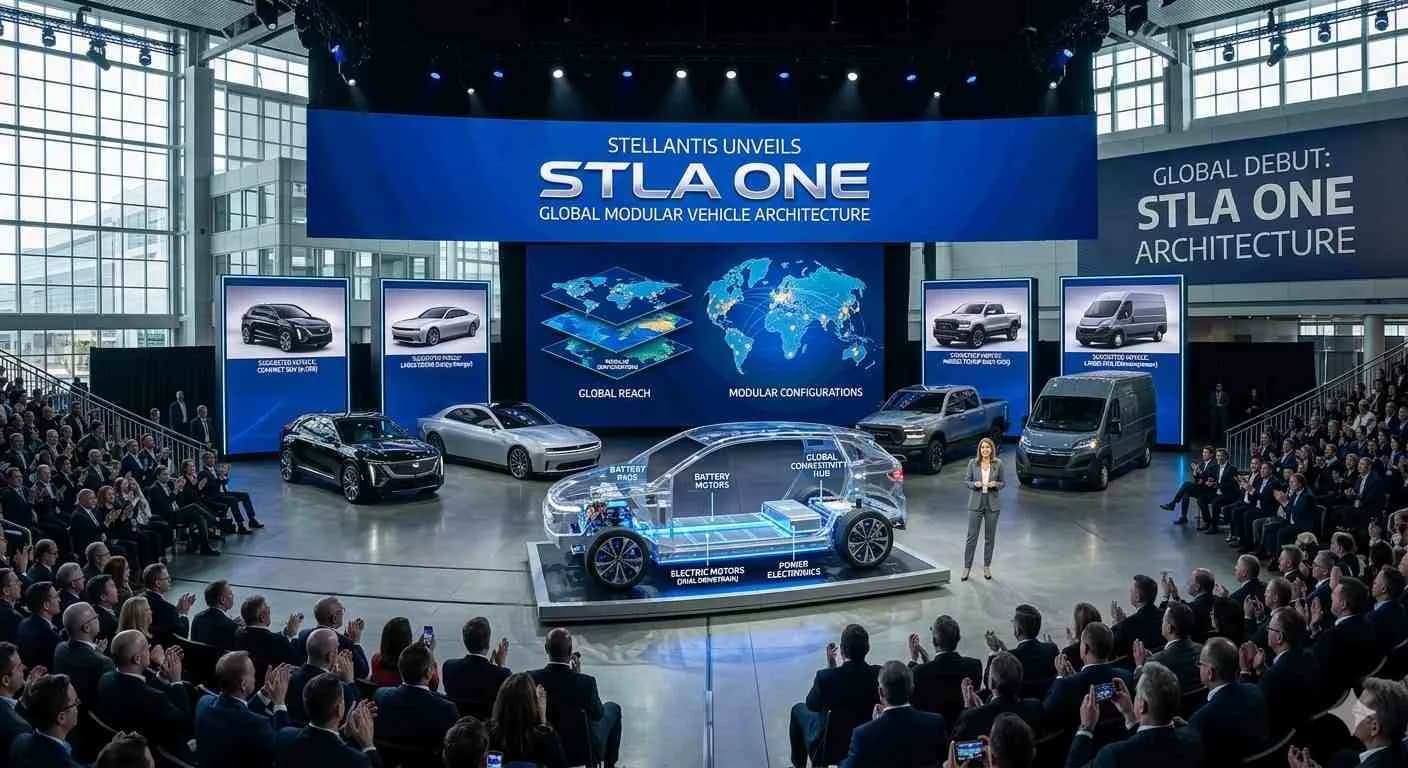
Stellantis Bets Big on Unified EV Future With STLA One Architecture
What happens when one vehicle platform is designed to replace dozens of fragmented systems across global car brands? The answer is a shift in how cars are engineered, produced, and scaled. Stellantis is betting exactly on that direction with its newly unveiled STLA One global modular vehicle architecture.
A Single Backbone for a Multi-Brand Strategy
Stellantis has introduced STLA One as a next-generation modular architecture intended to support multiple vehicle types across its global brand portfolio. The idea is simple but ambitious: reduce engineering fragmentation and create a unified foundation for electric, hybrid, and future mobility platforms.
From experience, automotive groups often struggle with platform sprawl. Too many architectures increase costs, slow development, and complicate supply chains. STLA One is designed to counter that problem with a scalable digital-first chassis system.
Why Modular Architecture Matters Now
The global automotive industry is under pressure from electrification timelines, stricter emissions standards, and rising production costs. Modular platforms allow manufacturers to reuse core components while adapting vehicle sizes and segments quickly.
In many cases, this approach is similar to building blocks in software development. Instead of writing a new system from scratch for every product, engineers reuse core modules and adjust features as needed. That is the logic Stellantis is now applying to hardware at scale.
Inside the STLA One Strategy
STLA One is expected to serve as a flexible base for compact cars, SUVs, and potentially next-generation electric models. The focus is on standardizing critical components such as battery integration, software systems, and electronic control units.
One common mistake people make is assuming modular platforms only reduce cost. In reality, they also accelerate innovation cycles, allowing automakers to bring updated models to market faster without rebuilding entire architectures.
Platform Comparison Overview
| Feature | Traditional Platforms | STLA One Approach |
|---|---|---|
| Architecture | Model-specific designs | Unified modular base |
| Production Cost | Higher due to duplication | Reduced through standardization |
| Time to Market | Long development cycles | Faster rollout across segments |
Financial Pressure Behind the Shift
Developing multiple vehicle platforms independently is expensive. Each new architecture requires engineering, testing, and certification from scratch. This creates financial pressure similar to a household managing multiple loans at different interest rates instead of consolidating them into one structured plan.
For example, a family in Karachi juggling separate education, rent, and medical payments often struggles more than one with a consolidated budget plan. The same principle applies to automakers managing fragmented engineering systems.
Quick Facts Box
- STLA One is a global modular vehicle architecture
- Designed to support EV, hybrid, and future mobility platforms
- Focuses on reducing engineering complexity and cost
- Part of Stellantis’ long-term platform consolidation strategy
What Comes Next for Stellantis
The real test for STLA One will be execution. Scaling a unified architecture across multiple global brands requires tight coordination between engineering teams, suppliers, and manufacturing hubs.
If successful, Stellantis could significantly reduce production inefficiencies while increasing flexibility across its lineup. That would allow faster adaptation to electric vehicle demand and shifting consumer expectations.
The automotive sector is clearly moving toward fewer platforms and smarter integration. STLA One is another step in that direction, where efficiency and scalability are becoming just as important as performance.
Article Details
Category: Global
Published:
Author: Muhammad Sheikh
More Stories