World Health Assembly condemns Iran attacks against Gulf amid global health supply disruptions
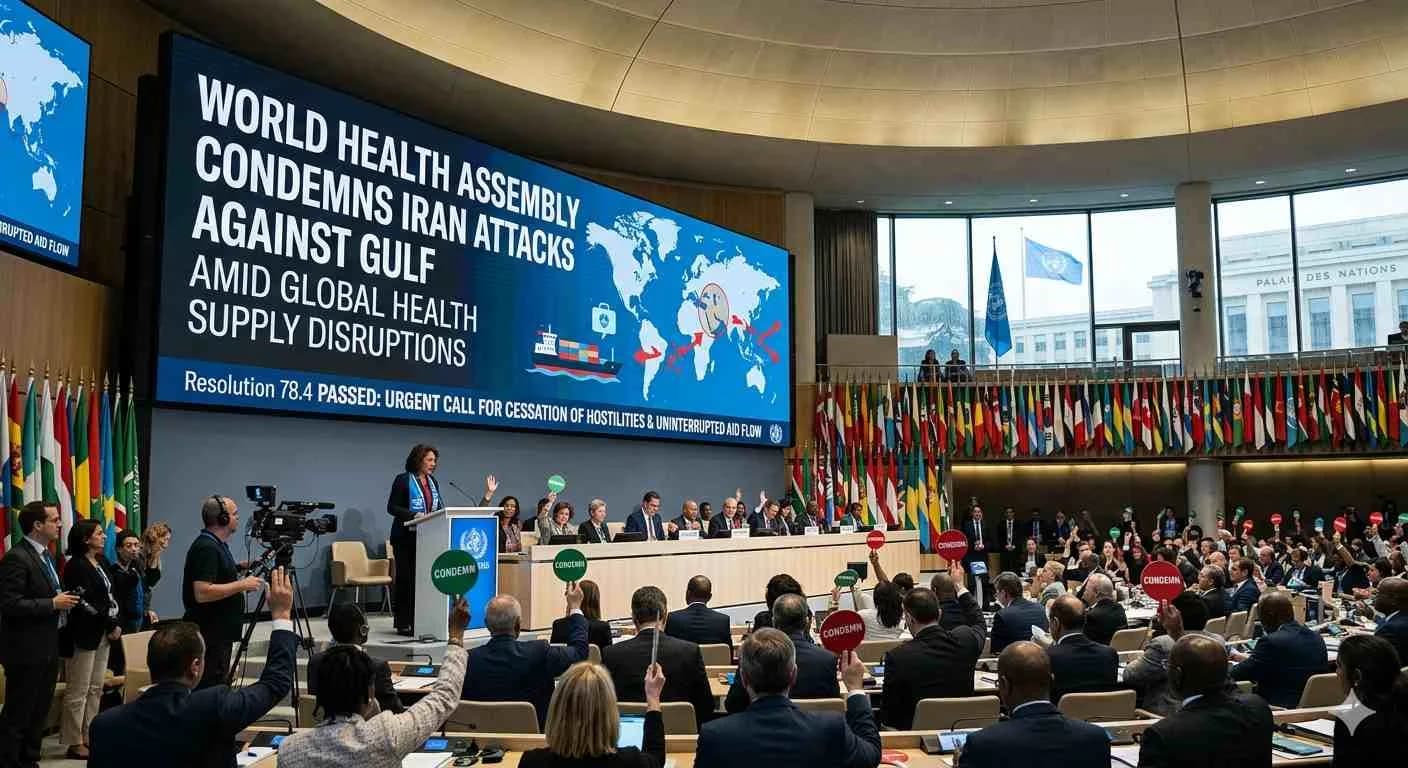
World Health Assembly Warns Escalation of Gulf Tensions Threatens Global Health Supply Chains
Can a regional conflict really disrupt hospitals thousands of kilometers away? The World Health Assembly’s latest resolution suggests it already is happening, as tensions linked to reported attacks in the Gulf region begin affecting global medical supply chains and emergency health systems.
Global Health Leaders Raise Alarm Over Supply Chain Strain
Health ministers and delegates at the World Health Assembly expressed concern over escalating instability in the Gulf region, warning that disruptions are already impacting the production and distribution of essential medicines and medical equipment.
Hospitals across several regions have reported delayed shipments of diagnostic tools, vaccines, and critical care supplies. The concern is not limited to conflict zones. Even countries far from the region are experiencing indirect pressure through global logistics networks.
In many cases, the healthcare system operates like a tightly connected supply grid. When one major hub faces disruption, delays spread across continents within days.
Why Health Supply Chains Are Highly Vulnerable
Modern medical systems depend heavily on international manufacturing, particularly for pharmaceuticals, raw chemical ingredients, and advanced medical devices. A single disruption in transportation routes or production zones can create ripple effects worldwide.
From experience, one common mistake people make is assuming healthcare systems function independently within each country. In reality, most hospitals rely on globally sourced components that are manufactured across multiple regions before reaching patients.
For families, the impact often appears indirectly. A delayed shipment of essential drugs can mean higher prices, limited availability, or postponed treatments. The financial pressure can feel similar to managing a household where grocery deliveries become unpredictable and expensive at the same time.
Key Concerns Highlighted at the Assembly
| Area of Concern | Observed Impact |
|---|---|
| Medical Supply Routes | Delayed shipments and logistics bottlenecks |
| Pharmaceutical Production | Raw material shortages in some regions |
| Hospital Operations | Strain on emergency and critical care planning |
| Global Coordination | Calls for stronger cross-border health frameworks |
International Pressure for Stability in Health Logistics
Health experts are urging governments to treat medical supply chains as critical infrastructure, similar to energy and food security systems. The debate now extends beyond diplomacy and into long-term healthcare resilience planning.
Several delegates emphasized the need for diversified production centers to reduce dependency on single regions. Others highlighted the importance of strategic stockpiles for essential medicines to avoid sudden shortages during geopolitical disruptions.
The World Health Assembly’s position reflects a growing recognition that health security is deeply tied to global stability. Any prolonged disruption in key regions could slow down emergency response capabilities worldwide.
Quick Facts
- World Health Assembly raised concerns over Gulf-related tensions
- Medical supply chains reported delays in multiple regions
- Pharmaceutical logistics remain highly dependent on global routes
- Calls increased for stronger international health coordination
Closing Thought
The latest warning from global health authorities highlights how interconnected modern healthcare systems have become. While geopolitical tensions may originate in specific regions, their impact often extends far beyond borders, affecting hospitals, patients, and supply networks worldwide. Strengthening resilience in medical logistics may now be as critical as responding to the crises themselves.
Article Details
Category: Global
Published:
Author: Muhammad Sheikh
More Stories