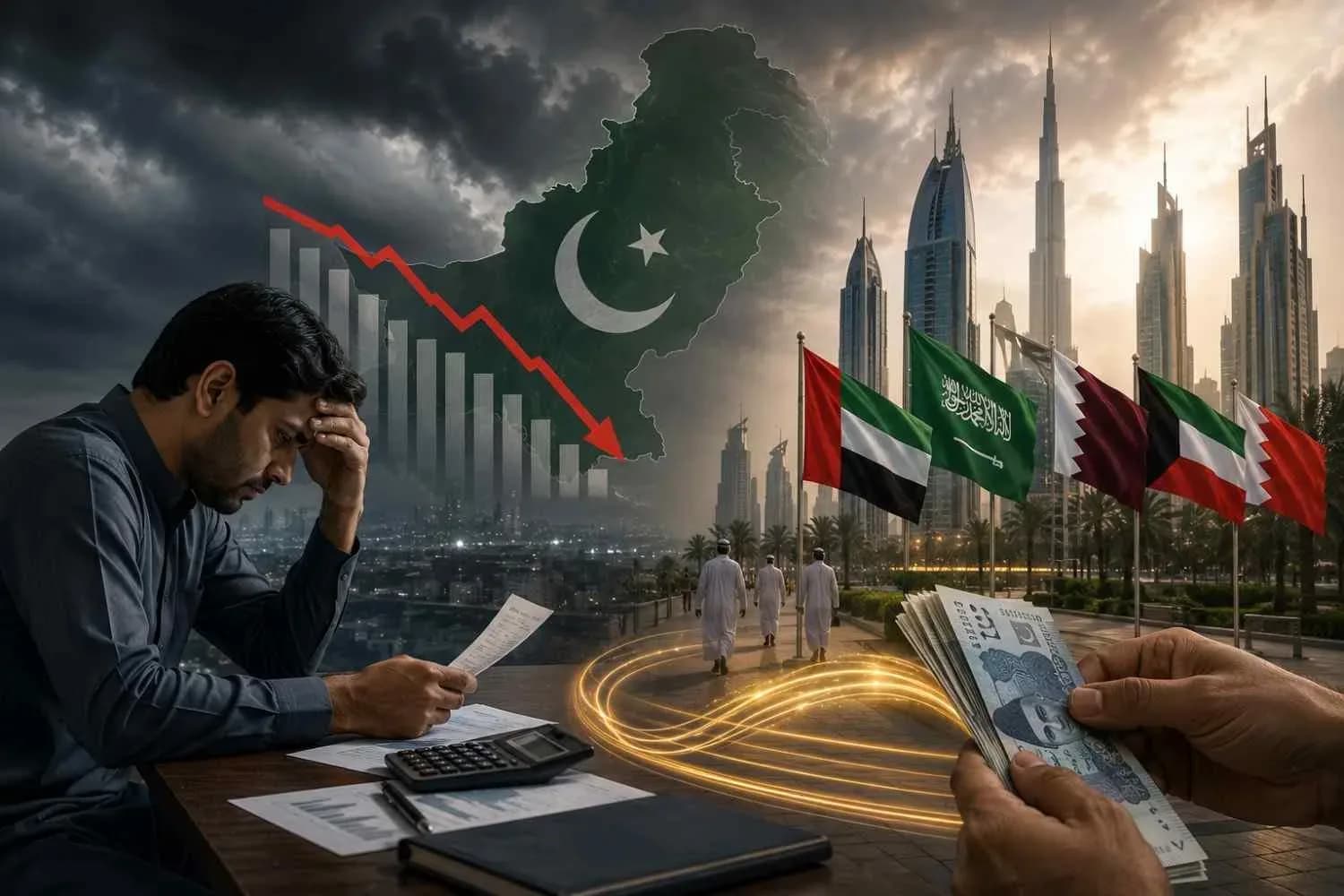
Why Pakistan’s Remittance Inflows Matter More Than Ever
Pakistan’s remittance inflows remain one of the country’s most important economic lifelines. Millions of overseas Pakistanis, especially those working in Gulf countries, send money home every month to support families and contribute to economic stability.
For many households, these funds are not simply financial transfers. They help pay education costs, healthcare bills, household expenses, and business investments. From experience, remittances often act as a safety net during inflationary periods when local incomes struggle to keep pace.
Countries such as Saudi Arabia, the UAE, Qatar, Kuwait, Oman, and Bahrain host a large Pakistani workforce. Any slowdown in Gulf economic activity can eventually influence employment opportunities, salary growth, and future recruitment.
How Gulf Uncertainty Could Affect Pakistan’s Economy
The Gulf region is closely connected with energy markets and global investment trends. When uncertainty increases, companies may delay projects, reduce hiring plans, or become more cautious with spending.
A major concern is not immediate job losses but slower growth in overseas employment opportunities. Many Pakistani workers may continue sending money in the short term, but prolonged instability could affect contract renewals and income levels.
Potential Economic Impact
Area | Possible Effect |
|---|---|
Foreign Exchange Reserves | Lower inflows may slow reserve growth |
Currency Stability | Reduced dollar supply may increase pressure |
Household Spending | Families may reduce non-essential expenses |
Banking Sector | Lower deposits may affect liquidity |
Gulf Remittances vs Other Foreign Exchange Sources
Source | Advantage | Challenge |
|---|---|---|
Remittances | Direct support without increasing debt | Depends on overseas employment |
Exports | Creates economic growth | Requires stronger competitiveness |
Foreign Loans | Provides short-term support | Increases repayment burden |
One common mistake people make is viewing remittances as only a family issue. In reality, they influence Pakistan’s broader economy, including retail markets, property activity, and import capacity.
Pros and Cons of Pakistan’s Remittance Dependence
Pros
Provides stable foreign currency inflows
Supports millions of families
Reduces pressure on government finances
Helps maintain economic activity
Cons
Creates dependence on foreign job markets
Exposes Pakistan to global disruptions
Can weaken if Gulf employment slows
Does not replace long-term economic reforms
Learning From Other Economies
Countries such as the Philippines have also relied heavily on overseas workers. However, they have invested in skills development and diversified employment opportunities to create stronger global workforce participation.
Pakistan can follow a similar path by expanding digital exports, technical training, and high-value industries.
Customer Experience: How Families Feel the Impact
Many overseas workers share that their monthly support helps families manage rising costs. On online communities such as Quora, expatriates often discuss how remittances help parents, children, and businesses survive economic pressure.
At the same time, families recognize the challenge of depending on income generated thousands of miles away.
Call to Action
Pakistan’s economic future depends on reducing risks while strengthening opportunities. Policymakers, businesses, and individuals should focus on skills development, exports, and investment growth alongside maintaining strong overseas employment connections.
FAQs
1. Why are Gulf countries important for Pakistan’s remittances?
Gulf countries employ millions of Pakistanis who send significant amounts of money back home.
2. Can Gulf tensions reduce Pakistan’s remittance inflows?
Long-term uncertainty may slow employment growth and affect future inflows.
3. Which Gulf country sends the most remittances to Pakistan?
Saudi Arabia and the UAE are among the largest contributors.
4. How do remittances help Pakistan?
They support reserves, household spending, imports, and economic stability.
5. Are remittances better than foreign loans?
Remittances do not create repayment obligations, making them a valuable economic source.
6. What should Pakistan do to reduce dependence on remittances?
Pakistan should expand exports, technology services, and skilled employment programs.
7. Will Pakistani workers leave Gulf countries due to uncertainty?
Current conditions do not suggest mass departures, but future employment trends require monitoring.
Article Details
Category: Business
Published:
Updated:
Author: Fiza
More Stories