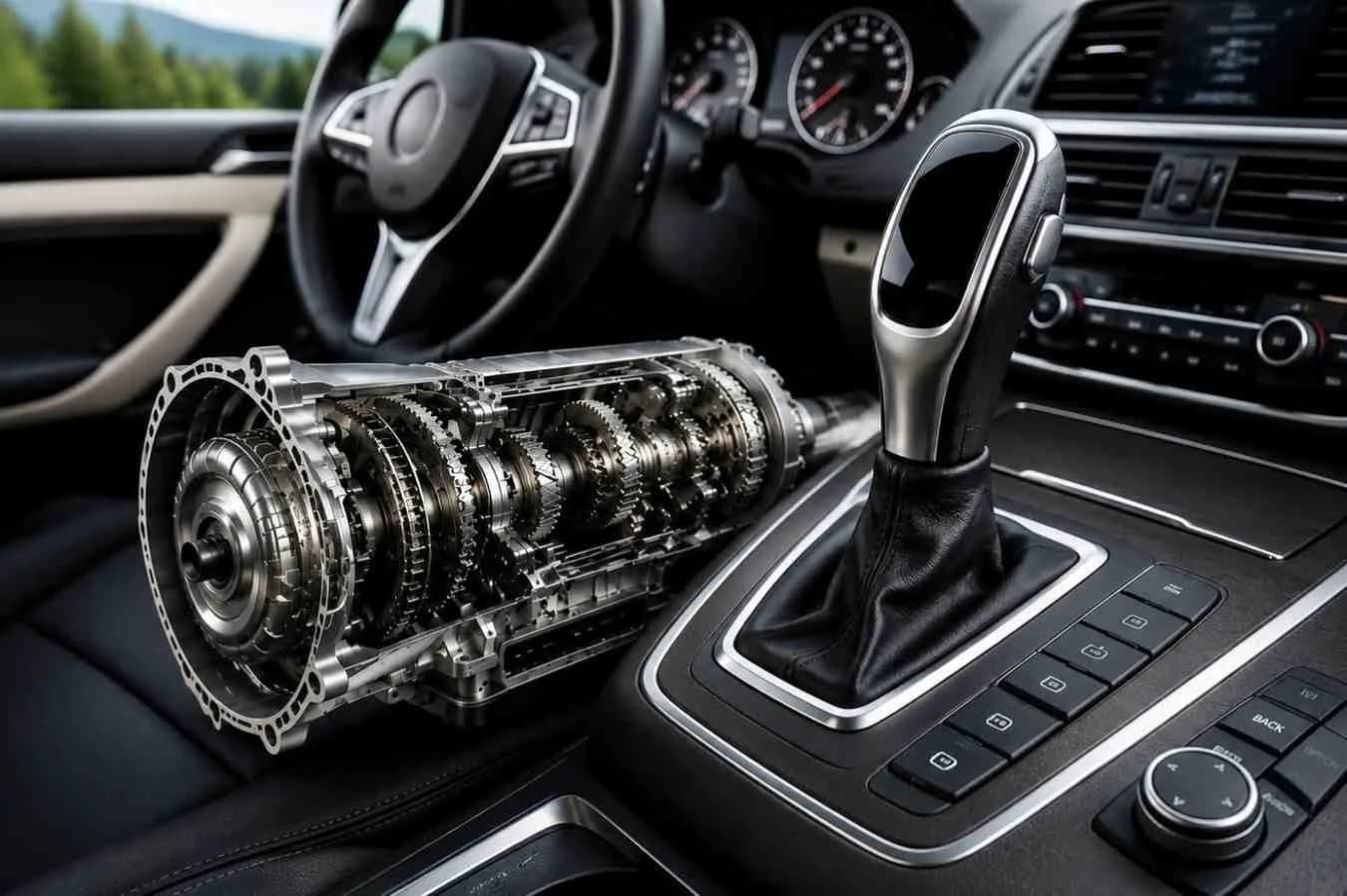
A Tiptronic gearbox is an automatic transmission that also gives drivers the option to shift gears manually without using a clutch pedal. It combines the convenience of automatic driving with the added control of manual gear selection, making it useful for situations like highway overtaking, steep hills, or winding roads. Commonly found in many premium and imported vehicles, a Tiptronic transmission can deliver smooth performance and a more engaging driving experience when properly maintained.
Introduction
Automatic cars have become increasingly popular worldwide as more drivers look for a comfortable and stress-free driving experience. However, not all automatic transmissions work in the same way. Alongside traditional automatic gearboxes, technologies such as Tiptronic, CVT, and Dual-Clutch Transmission (DCT) have introduced different driving characteristics and maintenance requirements.
Among these options, the Tiptronic gearbox stands out because it offers the best of both worlds. Drivers can leave the transmission in fully automatic mode for everyday commuting or switch to manual mode whenever they want greater control over gear changes. This flexibility makes it a popular choice for drivers who enjoy a more responsive driving experience without the need for a clutch pedal.
Whether you're planning to buy a used imported car or simply want to understand how different transmission systems work, knowing the basics of a Tiptronic gearbox can help you make a smarter decision. In this guide, we'll explain how it works, its advantages and disadvantages, common problems, maintenance costs, and how it compares with CVT, DCT, and traditional automatic transmissions.
What Is a Tiptronic Gearbox?
A Tiptronic gearbox is an advanced type of automatic transmission that allows drivers to enjoy fully automatic driving while also giving them the option to change gears manually. Unlike a traditional manual transmission, there is no clutch pedal. Instead, the driver can switch to manual mode and select higher or lower gears using the gear lever or, in some vehicles, steering-wheel-mounted paddle shifters.
The term "Tiptronic" was first introduced by Porsche in the early 1990s to give drivers more control without sacrificing the convenience of an automatic transmission. Since then, similar manual-shift automatic systems have been adopted by several manufacturers, including Audi, Volkswagen, and other premium car brands. Although some manufacturers use different names for comparable systems, the core idea remains the same: combining automatic comfort with manual gear selection.
What makes a Tiptronic gearbox different from a standard automatic transmission is its flexibility. In everyday city traffic, the gearbox can remain in automatic mode, smoothly selecting the appropriate gear based on speed and driving conditions. When extra control is needed, such as during highway overtaking, driving through mountainous roads, or descending steep slopes, the driver can manually shift gears without operating a clutch.
It is important to note that not every automatic transmission with manual shifting is a true Tiptronic system. Depending on the vehicle's manufacturer and model year, similar features may operate differently. If you're buying a used vehicle, always verify the exact transmission type through the vehicle's VIN, service history, or a trusted mechanic's inspection.
Expert Insight: A Tiptronic gearbox is designed to enhance the driving experience—not to replace a manual transmission. Its biggest advantage is giving drivers greater control when needed while maintaining the ease and comfort of an automatic car.
How Does a Tiptronic Gearbox Work?
A Tiptronic gearbox works like a conventional automatic transmission but gives the driver the option to take control of gear changes when needed. In normal driving, the transmission automatically selects the most suitable gear based on real-time data such as vehicle speed, engine RPM, throttle position, and engine load. This allows the car to deliver a smooth and comfortable driving experience without requiring the driver to shift gears manually.
When the driver wants more control, the gearbox can be switched to manual mode by moving the gear lever into the Tiptronic gate or using paddle shifters, depending on the vehicle. Instead of using a clutch pedal, the driver simply pushes the lever toward "+" to shift up or "–" to shift down. The transmission control system then executes the gear change electronically, helping protect the engine and gearbox from incorrect shifts.
Unlike a manual transmission, a Tiptronic system will not usually allow gear changes that could damage the engine. For example, if the driver attempts to shift into a gear that is too low for the current speed, the transmission may ignore the command until it is safe. This built-in protection makes Tiptronic easier to use, especially for drivers who want manual control without the learning curve of a traditional manual gearbox.
How the System Decides When to Shift
A Tiptronic transmission constantly monitors several inputs before selecting the appropriate gear, including:
Vehicle speed
Engine RPM
Throttle position
Engine load
Driving conditions, such as climbing hills or cruising on the highway
Using this information, the Transmission Control Module (TCM) determines the best time to shift for a balance of performance, fuel efficiency, and driving comfort.
Automatic Mode vs Manual Mode
Feature | Automatic Mode | Manual Mode |
|---|---|---|
Gear changes | Controlled by the transmission | Controlled by the driver |
Clutch pedal | Not required | Not required |
Best for | Daily commuting and city traffic | Overtaking, hills, and spirited driving |
Driving experience | Smooth and effortless | More engaging and responsive |
Real-World Example
Imagine you're driving on a motorway and need to overtake a slower vehicle. In automatic mode, the gearbox may take a moment to downshift. By switching to manual mode, you can select a lower gear before accelerating, allowing the engine to deliver power more quickly. Similarly, when driving downhill, manually selecting a lower gear can improve engine braking, reducing reliance on the brakes and helping maintain better control.
Expert Tip: Manual mode is designed to give drivers more confidence in specific driving situations. However, for everyday city driving, leaving the gearbox in automatic mode is usually the most comfortable and efficient option.
Key Features of a Tiptronic Transmission
A Tiptronic transmission is designed to offer a balance between driving comfort and driver control. While it performs like a regular automatic gearbox during everyday driving, it also allows manual gear selection whenever the situation demands. This combination makes it a practical choice for drivers who want convenience without giving up the ability to influence how the vehicle responds on the road.
Automatic Driving Convenience
One of the biggest advantages of a Tiptronic gearbox is its fully automatic operation. The transmission changes gears on its own based on speed, engine load, and throttle input, allowing drivers to focus on the road instead of constantly shifting gears. This makes daily commuting, stop-and-go traffic, and long-distance travel more comfortable and less tiring.
Manual Gear Selection Without a Clutch
When extra control is needed, the driver can switch to manual mode and change gears using the gear lever or paddle shifters, depending on the vehicle. Unlike a traditional manual transmission, there is no clutch pedal to operate. The gearbox handles the shift electronically, making the process simple even for drivers with little experience.
Better Control in Challenging Driving Conditions
Manual gear selection can be useful in situations where automatic gear changes may not provide the desired response. For example, selecting a lower gear before climbing a steep hill can help maintain engine power, while choosing a lower gear during a downhill drive improves engine braking and reduces strain on the braking system.
Improved Overtaking Performance
During highway overtaking, drivers often need quicker acceleration. Instead of waiting for the transmission to downshift automatically, manual mode allows the driver to select the appropriate gear in advance. This can provide a more immediate response, particularly when merging onto highways or passing slower-moving vehicles.
Built-In Electronic Protection
Although the driver can select gears manually, the transmission's electronic control system helps prevent unsafe gear changes. If a selected gear could cause excessive engine RPM or damage, the system may delay or reject the shift until it is safe. This added layer of protection makes a Tiptronic gearbox more forgiving than a conventional manual transmission.
Expert Insight: The real value of a Tiptronic gearbox is not how often you use manual mode, but having the option when road conditions demand greater control. For most daily journeys, automatic mode offers the ideal balance of comfort, efficiency, and ease of use.
Advantages and Disadvantages of a Tiptronic Gearbox
Like any transmission system, a Tiptronic gearbox has both strengths and limitations. It offers the convenience of an automatic transmission while giving drivers the freedom to shift gears manually when needed. However, its long-term performance largely depends on regular maintenance, driving habits, and the overall condition of the vehicle.
Before choosing a car with a Tiptronic transmission, it's important to understand both the benefits and the potential ownership costs. This can help you decide whether it suits your driving style and maintenance budget.
Tiptronic Gearbox: Pros and Cons
Advantages | Disadvantages |
|---|---|
Fully automatic for stress-free daily driving | Repairs can be expensive if major components fail |
Manual gear selection for greater driving control | Requires regular servicing to perform reliably |
No clutch pedal, making it easy to drive | Spare parts may be harder to find for some imported models |
Useful for highway overtaking and hilly roads | Repairs often require experienced transmission specialists |
Electronic safeguards help prevent incorrect gear shifts | Neglected maintenance can shorten gearbox life |
Offers a balance between comfort and performance | Purchase inspection is essential for used vehicles |
Benefits of Choosing a Tiptronic Gearbox
A Tiptronic gearbox is well suited for drivers who want the simplicity of an automatic transmission without giving up control completely. In everyday traffic, it delivers smooth and effortless driving, while manual mode becomes useful during overtaking, steep climbs, or downhill driving where better gear control is beneficial.
Another advantage is its built-in electronic protection. Unlike a manual transmission, the system helps prevent gear changes that could potentially harm the engine or transmission, making it more user-friendly for less experienced drivers.
Things to Consider Before Buying
Although a Tiptronic transmission can be reliable, it is generally more complex than a manual gearbox. If maintenance has been ignored or the transmission has been driven aggressively, repair costs can increase significantly. This is especially true for imported vehicles, where replacement parts and specialist labour may not always be readily available.
For this reason, buyers should never rely solely on mileage or the vehicle's appearance. A complete service history, a diagnostic scan, and a professional inspection provide a much clearer picture of the gearbox's condition and can help avoid unexpected repair expenses.
Expert Advice: A well-maintained Tiptronic gearbox is often a better investment than a poorly maintained vehicle with any other transmission type. Maintenance history should always carry more weight than the transmission name itself.
Tiptronic vs Automatic vs CVT vs DCT: Which Transmission Is Better?
There is no single transmission that is perfect for every driver. Each system is designed with different priorities, such as comfort, fuel efficiency, performance, or driving engagement. The best choice depends on how you drive, your maintenance budget, and the type of vehicle you own.
A Tiptronic gearbox stands out because it combines the convenience of an automatic transmission with the flexibility of manual gear selection. However, other transmission types, such as CVT (Continuously Variable Transmission) and DCT (Dual-Clutch Transmission), offer their own advantages in specific driving conditions.
Transmission Comparison
Transmission Type | Driving Experience | Fuel Efficiency | Maintenance | Best For |
|---|---|---|---|---|
Tiptronic | Smooth automatic driving with optional manual control | Good | Moderate to High | Drivers who want comfort with added control |
Traditional Automatic | Comfortable and easy to drive | Moderate | Moderate | Daily commuting and family vehicles |
CVT | Seamless acceleration with no fixed gear changes | Excellent | Moderate (requires correct CVT fluid) | Fuel-efficient city driving |
DCT (Dual-Clutch) | Fast, sporty, and responsive gear changes | Good to Excellent | Higher due to complex design | Performance-oriented drivers |
Manual Transmission | Full driver control with a clutch pedal | Good | Lower | Drivers who enjoy a hands-on driving experience |
Tiptronic vs Traditional Automatic
Both systems offer the convenience of automatic driving, but a Tiptronic gearbox gives drivers the option to shift gears manually whenever greater control is needed. A traditional automatic transmission handles every gear change automatically, making it a simple choice for everyday driving. If you occasionally enjoy a more involved driving experience, Tiptronic offers greater flexibility.
Tiptronic vs CVT
A CVT does not use fixed gears like a Tiptronic transmission. Instead, it continuously adjusts the gear ratio to keep the engine operating efficiently. This often results in smoother acceleration and better fuel economy, especially in city traffic. In contrast, a Tiptronic gearbox provides a more conventional driving feel and allows manual gear selection, which many drivers prefer on highways and hilly roads.
Tiptronic vs DCT
A Dual-Clutch Transmission (DCT) is designed for quick and precise gear changes, making it popular in sports and performance vehicles. While a DCT generally shifts faster than a Tiptronic gearbox, it is also a more complex system that can be costlier to repair if major components fail. Tiptronic, on the other hand, focuses on delivering a balance between everyday comfort and driver control rather than outright performance.
Which Transmission Should You Choose?
Your choice should depend on your driving needs rather than trends or brand names.
Choose a Tiptronic gearbox if you want automatic convenience with the option to control gear changes manually.
Choose a traditional automatic if you prefer a simple, comfortable, and low-effort driving experience.
Choose a CVT if fuel efficiency and smooth city driving are your top priorities.
Choose a DCT if you value quick gear changes and sporty performance.
Choose a manual transmission if you enjoy complete control and don't mind using a clutch.
Expert Insight: No transmission is universally better than another. A well-maintained gearbox—whether Tiptronic, CVT, DCT, or a traditional automatic—is usually a smarter investment than a poorly maintained vehicle with a more advanced transmission.
📊 Quick Comparison
Feature | Tiptronic | Automatic | CVT | DCT |
|---|---|---|---|---|
Manual Gear Selection | ✅ Yes | ❌ No | ❌ Usually No | ✅ Yes |
Clutch Pedal | ❌ No | ❌ No | ❌ No | ❌ No |
Smooth City Driving | ✅ Yes | ✅ Yes (Best) | ✅ Yes (Best) | ✅ Yes |
Sporty Driving | ✅ Yes | ❌ No | ❌ No | ✅ Yes (Best) |
Fuel Economy | Average | Average | ✅ High | ✅ High |
Maintenance Cost | Moderate | Moderate | Moderate | ⚠️ High |
Common Tiptronic Gearbox Problems
A Tiptronic gearbox is built to provide reliable performance, but like any mechanical system, it can develop issues over time. Most transmission problems are linked to poor maintenance, worn components, incorrect transmission fluid, or aggressive driving habits rather than the gearbox design itself.
If you're buying a used vehicle or already own one with a Tiptronic transmission, recognising the early warning signs can help prevent minor issues from turning into expensive repairs.
Delayed Gear Shifts
One of the most common complaints is a delay when the transmission changes gears. You may notice the engine revving higher than usual before the next gear engages or a slight hesitation during acceleration.
Possible causes include:
Low or degraded transmission fluid
Worn clutch packs or internal components
Faulty transmission sensors
Software or Transmission Control Module (TCM) issues
Ignoring delayed shifts can increase wear on internal parts, so it's best to have the gearbox inspected if the problem persists.
Rough or Jerky Gear Changes
A healthy Tiptronic gearbox should shift smoothly under normal driving conditions. If the vehicle jerks or feels harsh while changing gears, it could indicate that the transmission needs attention.
Common reasons include:
Dirty or old transmission fluid
Worn valve body components
Faulty shift solenoids
Electronic control issues
While occasional firmness may be normal in some vehicles, repeated jerking should be diagnosed by a qualified technician.
Gear Slipping
Gear slipping occurs when the transmission unexpectedly changes gears or struggles to stay in the selected gear. Drivers may notice a sudden increase in engine RPM without a matching increase in vehicle speed.
This issue can result from:
Worn internal clutches
Low hydraulic pressure
Transmission fluid problems
Internal mechanical wear
Since gear slipping can affect both performance and safety, it should be inspected as soon as possible.
Transmission Fluid Leaks
Transmission fluid plays a critical role in lubricating, cooling, and operating the gearbox. If you notice red or brown fluid beneath the vehicle or a dropping fluid level, the transmission may have a leak.
Leaks can develop from:
Damaged seals
Worn gaskets
Loose transmission pan bolts
Aging hoses or connections
Driving with insufficient transmission fluid can lead to overheating and serious internal damage.Warning Lights on the Dashboard
Modern vehicles continuously monitor transmission performance. If the Check Engine Light or a dedicated Transmission Warning Light appears, the vehicle may have detected an electronic or mechanical fault.
Although the car may continue to drive normally for a short time, a diagnostic scan should be performed to identify the exact cause rather than relying on guesswork.
Unusual Noises While Driving
Grinding, whining, humming, or clunking noises coming from the transmission area are never considered normal. These sounds may indicate internal wear, damaged bearings, or lubrication problems.
If unusual noises become more noticeable during acceleration or gear changes, avoid prolonged driving until the vehicle has been professionally inspected.
Expert Tip
Most major Tiptronic gearbox failures don't happen overnight. Small warning signs—such as delayed shifts, unusual noises, or rough gear changes—often appear weeks or even months before a serious breakdown. Addressing these issues early can significantly reduce repair costs and improve the gearbox's lifespan.Signs Your Tiptronic Gearbox Needs Attention
A Tiptronic gearbox is designed to deliver smooth and reliable performance, but like any mechanical component, it can show warning signs when something is not working correctly. Identifying these signs early can help prevent expensive repairs and protect the overall performance of your vehicle.
Many transmission problems start with small symptoms that drivers often ignore. A slight delay during shifting or an unusual sound may not seem serious at first, but these issues can become more costly if they are left unchecked.
If you notice any of the following signs, it is recommended to have your vehicle inspected by a qualified transmission specialist.
Delayed Response When Changing Gears
One of the early signs of a potential Tiptronic transmission problem is a delay between selecting a gear and the vehicle responding.
For example, when shifting from Park (P) to Drive (D), the car may take longer than usual to move. Similarly, during acceleration, the gearbox may hesitate before selecting the correct gear.
Possible reasons include:
Low or old transmission fluid
Hydraulic pressure issues
Electronic sensor problems
Internal component wear
A small delay may indicate a minor issue, but repeated hesitation should not be ignored.
Hard or Jerky Gear Shifts
A properly functioning Tiptronic gearbox should provide smooth gear changes. If you feel sudden jerks, vibrations, or harsh movements during shifting, it may indicate that the transmission needs attention.
Common causes include:
Worn transmission components
Incorrect fluid level
Damaged shift solenoids
Software or control module issues
Drivers often notice this problem more during low-speed driving, traffic conditions, or when the vehicle shifts between lower gears.
Unusual Noises From the Transmission Area
Strange sounds from the gearbox area should always be checked. A healthy transmission should operate quietly without grinding, whining, or clunking noises.
Warning sounds may include:
Whining noise during acceleration
Grinding sounds while changing gears
Clunking when shifting between modes
These noises can be linked to problems such as worn internal parts, insufficient lubrication, or mechanical damage.
Transmission Warning Light Appears
Modern vehicles use advanced electronic systems to monitor transmission performance. If the vehicle detects an abnormal condition, it may activate a warning light on the dashboard.
A transmission warning light can indicate issues related to:
Sensors
Transmission control module
Solenoids
Internal gearbox faults
It is important not to ignore warning lights, even if the vehicle still appears to drive normally.
Burning Smell or Overheating
Transmission fluid helps reduce heat and protects internal components. If the fluid becomes old, contaminated, or insufficient, the gearbox may overheat.
Signs of overheating may include:
Burning smell
Reduced performance
Slow gear engagement
Warning messages
Overheating is one of the biggest risks for automatic transmissions because excessive heat can damage internal parts.Poor Acceleration Despite Higher RPM
If the engine RPM increases but the vehicle does not accelerate properly, the gearbox may not be transferring power efficiently.
This can happen due to:
Gear slipping
Internal clutch wear
Hydraulic problems
A professional inspection can determine whether the issue is related to the transmission or another vehicle component.When Should You Visit a Mechanic?
You should consider professional inspection if you notice:
✔ Repeated jerking during gear changes
✔ Delayed engagement after shifting
✔ Strange transmission noises
✔ Fluid leaks under the vehicle
✔ Dashboard warning lights
✔ Reduced acceleration performance
Early diagnosis can often prevent a minor transmission issue from becoming a major repair.
Expert Advice: The best time to inspect a Tiptronic gearbox is when you first notice unusual behaviour, not after complete failure. Regular checks and timely maintenance can significantly improve gearbox reliability and reduce ownership costs
Is a Tiptronic Gearbox Reliable?
The reliability of a Tiptronic gearbox depends on several factors, including maintenance history, driving habits, vehicle condition, and how well the transmission has been serviced over time. A properly maintained Tiptronic transmission can provide smooth performance for many years, but neglecting regular maintenance can lead to expensive repairs.
Many buyers assume that the name of the transmission alone determines reliability. However, the reality is different. A well-maintained Tiptronic gearbox in a properly serviced vehicle can often be a better choice than another transmission type that has been poorly maintained.
Factors That Affect Tiptronic Gearbox Reliability
1. Regular Maintenance History
The most important factor behind long-term reliability is proper servicing. Automatic transmissions rely on clean and correctly specified transmission fluid to operate smoothly.
Important maintenance tasks include:
Checking transmission fluid condition
Replacing fluid according to manufacturer recommendations
Inspecting for leaks
Performing diagnostic checks when required
A vehicle with complete service records usually carries lower ownership risk compared with one that has an unknown maintenance history.
2. Driving Style and Usage
Driving habits can significantly affect gearbox life. Aggressive acceleration, frequent heavy loads, and overheating conditions can increase stress on transmission components.
For better reliability:
Avoid unnecessary hard acceleration
Do not ignore overheating warnings
Allow the transmission to operate smoothly before demanding high performance
Use the correct driving mode for different conditions
Normal daily driving usually places less stress on the gearbox compared with aggressive driving.
3. Vehicle Condition and Previous Ownership
For used car buyers, especially those purchasing imported vehicles, the previous owner's maintenance habits are extremely important.
A low-mileage vehicle does not always guarantee a healthy transmission. A car that was poorly maintained may have hidden gearbox issues, while a higher-mileage vehicle with complete service records may perform better.
Before purchasing a used Tiptronic vehicle, buyers should check:
Maintenance records
Transmission behaviour during test drive
Diagnostic scan results
Previous repair history
How Long Can a Tiptronic Gearbox Last?
The lifespan of a Tiptronic transmission varies depending on the vehicle model, driving conditions, and maintenance quality. There is no fixed mileage guarantee because every vehicle experiences different conditions.
Some important factors include:
Manufacturer recommendations
Quality of transmission fluid
Climate conditions
Driving patterns
Repair history
Regular servicing and early problem detection are usually the biggest factors in achieving longer gearbox life.
Are Tiptronic Gearboxes Reliable in Imported Cars?
Imported vehicles equipped with Tiptronic transmissions can offer excellent driving comfort and performance. However, buyers should be aware that maintenance costs may be higher if specialised parts or trained technicians are required.
Before buying an imported car, it is recommended to:
✔ Verify the exact transmission type
✔ Check availability of spare parts
✔ Review service records
✔ Get a professional inspection
This is especially important because some imported models may have different transmission versions depending on the year and market.
Expert Insight: A Tiptronic gearbox should not be judged only by its technology. Reliability depends more on how the vehicle was maintained throughout its life. A carefully inspected and properly serviced Tiptronic car can provide a comfortable and dependable ownership experience.
Tiptronic Gearbox Maintenance Tips
Proper maintenance is one of the most important factors in keeping a Tiptronic gearbox performing smoothly for a long time. Although modern automatic transmissions are designed to handle daily driving conditions, they still require regular care to prevent unnecessary wear and expensive repairs.
Many gearbox failures are not caused by the transmission design itself but by delayed servicing, incorrect fluids, overheating, or ignoring early warning signs. Following basic maintenance practices can help improve reliability, maintain smooth shifting, and reduce long-term ownership costs.
1. Follow the Recommended Transmission Service Schedule
Every vehicle manufacturer provides maintenance guidelines for its transmission system. Following these recommendations helps ensure that the gearbox continues operating efficiently.
Regular servicing may include:
Checking transmission fluid condition
Replacing fluid when required
Inspecting transmission components
Checking for leaks or abnormal behaviour
Skipping scheduled maintenance can allow small problems to develop into major transmission failures.
. Use the Correct Transmission Fluid
Transmission fluid plays a critical role in the performance of a Tiptronic transmission. It helps lubricate internal components, control hydraulic pressure, and manage operating temperatures.
Using the wrong type of fluid can affect:
Gear shifting quality
Internal lubrication
Transmission temperature
Overall gearbox performance
Always use the fluid recommended by the vehicle manufacturer rather than choosing a cheaper alternative.
3. Avoid Aggressive Driving Habits
Driving style has a direct impact on transmission health. Frequent hard acceleration, sudden gear changes, or excessive load can increase stress on internal components.
To protect your Tiptronic gearbox:
Avoid unnecessary rapid acceleration
Do not frequently switch between driving modes aggressively
Allow the vehicle to operate smoothly before demanding high performance
Avoid overheating during extreme driving conditions
A smoother driving style generally helps extend transmission life.
4. Do Not Ignore Small Warning Signs
Minor transmission symptoms should not be overlooked. Problems such as delayed shifting, unusual noises, or rough gear changes can indicate early issues.
Ignoring these signs may lead to:
Increased component wear
Higher repair expenses
Complete transmission failure in severe cases
Early inspection is usually less expensive than repairing a damaged gearbox.
5. Keep the Transmission Cooling System Healthy
Heat is one of the biggest enemies of automatic transmissions. Excessive temperature can damage fluid quality and affect internal components.
To reduce overheating risks:
Maintain proper cooling system condition
Check transmission cooling lines where applicable
Avoid excessive load on the vehicle
Address overheating warnings immediately
This is particularly important in areas with hot climates or heavy traffic conditions.
6. Get Professional Diagnostic Checks
Modern Tiptronic systems depend heavily on electronic controls. Regular diagnostic scanning can identify potential problems before they become serious.
Professional inspection can help detect:
Sensor faults
Electronic control issues
Transmission errors
Abnormal operating conditions
A qualified technician with experience in automatic transmissions can provide a more accurate assessment.
Maintenance Checklist for Tiptronic Gearbox Owners
Follow manufacturer service intervals
Use the correct transmission fluid
Check for leaks regularly
Pay attention to unusual shifting behaviour
Avoid unnecessary aggressive driving
Perform diagnostic checks when required
Repair small problems early
Expert Advice: A Tiptronic gearbox does not require complicated daily care, but it does require consistency. Regular servicing, correct fluid usage, and early problem detection are the key factors that help maintain smooth performance and avoid costly repairs.
Tiptronic Gearbox Maintenance & Repair Cost
The cost of maintaining a Tiptronic gearbox depends on several factors, including the vehicle model, transmission condition, required parts, labour charges, and the availability of specialised technicians. Since many Tiptronic-equipped vehicles are imported or premium models, repair and maintenance costs can be higher compared with commonly available automatic cars.
However, regular maintenance is usually far less expensive than dealing with major gearbox failure. Proper servicing, timely fluid changes, and early diagnosis can help reduce the risk of costly repairs.
Routine Tiptronic Gearbox Maintenance Costs
Regular maintenance generally involves checking the transmission system and replacing essential fluids when required.
Common servicing tasks include:
Transmission fluid inspection and replacement
Transmission filter replacement (where applicable)
Leak inspection
Computer diagnostic scanning
General gearbox performance checks
The cost can vary depending on:
Vehicle brand and model
Type of transmission fluid required
Workshop expertise
Location
Availability of genuine parts
Premium imported vehicles typically require specialised fluids and experienced technicians, which can increase servicing expenses.
Major Tiptronic Gearbox Repair Costs
If a Tiptronic transmission develops serious issues, repair costs can become significantly higher. Major repairs may involve replacing or rebuilding internal components.
Possible expensive repairs include:
Solenoid replacement
Valve body repair
Torque converter issues
Internal clutch component replacement
Complete gearbox rebuilding
The final cost depends on the extent of damage and whether original, refurbished, or aftermarket parts are used.
For imported vehicles, replacement parts may take longer to source and may cost more compared with locally supported models.
Factors That Affect Tiptronic Repair Costs
Several factors influence how much you may spend on maintaining or repairing a Tiptronic gearbox:
Vehicle Brand and Model
Luxury and imported vehicles often use more advanced transmission systems, which can increase parts and labour costs.
Transmission Condition
A gearbox requiring minor servicing will naturally cost less than one needing a complete rebuild.
Spare Parts Availability
Vehicles with limited local parts availability may have higher repair expenses due to importing components.
Technician Experience
Tiptronic transmissions require proper diagnosis and specialised knowledge. Choosing an inexperienced workshop may lead to incorrect repairs and additional costs.
How to Reduce Tiptronic Ownership Costs
Owners can lower long-term expenses by following simple preventive steps:
Maintain complete service records
Use manufacturer-approved transmission fluid
Inspect problems early
Avoid ignoring warning signs
Choose experienced transmission specialists
Perform a proper inspection before buying a used vehicle
Maintenance Cost Considerations for Used Car Buyers
For buyers considering a used imported car with a Tiptronic gearbox, the purchase price should not be the only factor. A cheaper vehicle with poor maintenance history can become expensive after purchase.
Before buying, always consider:
Previous service history
Transmission condition
Repair availability
Cost of replacement parts
Local technician expertise
A professional pre-purchase inspection can help identify potential gearbox problems before completing the deal.
Expert Insight: The biggest expense with a Tiptronic gearbox usually comes from delayed maintenance rather than routine servicing. Spending on regular inspections and correct fluids can help prevent much larger repair bills in the future.
Popular Cars That Use Tiptronic Gearboxes
A Tiptronic gearbox has been used in many vehicles, especially premium and imported models where manufacturers wanted to combine automatic comfort with additional driver control. While the name "Tiptronic" is strongly associated with Porsche, similar transmission systems have also appeared in vehicles from brands such as Audi, Volkswagen, and other manufacturers.
However, it is important to understand that the same car model may use different transmission technologies depending on the model year, engine option, and market region. A vehicle that uses a Tiptronic transmission in one country may have a CVT or DCT system in another version.
Before purchasing a used vehicle, buyers should always verify the exact gearbox type through the vehicle identification number (VIN), official specifications, service records, or a professional inspection.
Examples of Vehicles With Tiptronic Gearboxes
Porsche Models
Porsche was one of the first manufacturers to popularise the Tiptronic name. Several Porsche vehicles have used Tiptronic automatic transmissions in different generations.
Examples include:
Porsche Cayenne (selected generations)
Porsche Panamera (selected generations)
Porsche 911 models (certain older variants)
These vehicles were designed to provide sporty performance while maintaining everyday driving comfort.
Audi Models
Audi has offered Tiptronic transmissions in various models, especially those equipped with traditional automatic transmission systems.
Examples include:
Audi A4 (depending on model year)
Audi A6 (depending on model year)
Audi A8 (selected variants)
Audi vehicles often combine Tiptronic gearboxes with powerful engines, making them popular among drivers who want luxury, comfort, and responsive performance.
Volkswagen Models
Volkswagen has also used Tiptronic-style automatic transmissions in selected international models.
Examples include:
Volkswagen Passat (selected variants)
Volkswagen Touareg (selected generations)
These vehicles focus on a balance of comfort, practicality, and smooth driving performance.
Other Manufacturers
Some other manufacturers have used similar automatic transmissions with manual shifting capability. However, they may use different names depending on their branding strategy.
Because transmission technology changes frequently, buyers should avoid assuming a gearbox type based only on the vehicle model name.
Why Used Car Buyers Should Verify the Transmission Type
When purchasing an imported vehicle, checking the exact transmission system is extremely important. Two vehicles with the same model name may have completely different gearboxes.
Before buying, check:
✔ Vehicle VIN information
✔ Manufacturer specifications
✔ Service documents
✔ Gearbox behaviour during a test drive
✔ Professional diagnostic inspection
This step can help avoid unexpected maintenance costs after purchase.
Expert Insight: The reputation of a car model does not automatically guarantee gearbox reliability. The condition of the specific vehicle and its maintenance history are more important than the brand name or transmission badge.
Used Car Buying Guide: How to Check a Tiptronic Gearbox Before Buying
Buying a used vehicle with a Tiptronic gearbox can be a great decision if the transmission is in good condition. However, a gearbox problem can quickly turn an affordable purchase into an expensive repair project. This is why transmission inspection should be one of the most important steps before finalising any used car deal.
Many buyers focus mainly on mileage, exterior condition, and engine performance but overlook the transmission. Since automatic gearboxes contain complex mechanical and electronic components, a proper inspection can reveal problems that may not be visible during a short visual check.
Whether you are buying an imported vehicle or a locally available model, the following checklist can help you evaluate the condition of a Tiptronic transmission.
1. Take a Proper Test Drive
A test drive is one of the easiest ways to identify possible gearbox issues. Do not only drive the car for a few minutes on a smooth road. Test it in different conditions, including slow traffic, acceleration, braking, and highway speeds if possible.
During the drive, check:
Smooth gear changes
Delayed response when shifting
Unusual vibrations
Jerking between gears
Acceleration performance
A healthy Tiptronic gearbox should shift smoothly without hesitation or unusual behaviour.
2. Check Gear Engagement
When switching between Park (P), Reverse (R), and Drive (D), pay attention to how quickly and smoothly the vehicle responds.
Warning signs include:
Long delays before movement
Strong jerks when selecting gears
Strange noises during engagement
These symptoms may indicate possible transmission wear or electronic issues.
3. Review Complete Service History
A vehicle's maintenance records can provide valuable information about how the gearbox was treated.
Ask for:
Transmission service records
Fluid replacement history
Previous repair invoices
Workshop inspection reports
A well-maintained car with proper documentation is usually a safer purchase than a vehicle with an unknown history.
4. Check Transmission Fluid Condition
Transmission fluid provides lubrication and helps control gearbox operation. During inspection, technicians may check:
Fluid level
Fluid colour
Signs of contamination
Unusual burning smell
Dark or damaged fluid may indicate poor maintenance or excessive transmission stress.
5. Perform a Diagnostic Scan
Modern Tiptronic systems rely on electronic controls. A professional diagnostic scan can identify hidden issues that may not appear during normal driving.
A scan can help detect:
Transmission error codes
Sensor problems
Control module faults
Stored warning messages
This step is especially important when buying imported vehicles with complex electronic systems.
6. Inspect for Leaks and Physical Damage
Transmission fluid leaks should never be ignored. A mechanic should inspect the gearbox area for:
Fluid leakage
Damaged seals
Previous repair signs
Poor-quality modifications
Even a small leak can become a serious problem if not repaired.
7. Get a Professional Pre-Purchase Inspection
A qualified mechanic or transmission specialist can provide a more accurate assessment than a basic test drive.
A professional inspection should include:
✔ Road testing
✔ Computer scanning
✔ Transmission performance check
✔ Fluid inspection
✔ Maintenance history review
This small investment can help prevent unexpected repair expenses after purchase.
Tiptronic Used Car Inspection Checklist
Check Point | Why It Matters |
|---|---|
Smooth shifting | Shows normal gearbox operation |
Service records | Confirms proper maintenance |
Diagnostic scan | Detects hidden electronic faults |
Fluid condition | Indicates gearbox health |
Test drive | Reveals real-world performance |
Professional inspection | Reduces buying risks |
Expert Advice: When buying a used car, the transmission condition is often more important than the odometer reading. A properly maintained Tiptronic gearbox with higher mileage can be a better choice than a low-mileage vehicle with poor service history.
Final Verdict: Is a Tiptronic Gearbox a Good Choice?
A Tiptronic gearbox can be a good choice for drivers who want the comfort of an automatic transmission with the added flexibility of manual gear control. It provides a balanced driving experience by allowing effortless daily commuting while giving drivers more control during situations such as overtaking, hill driving, and highway journeys.
However, the decision to buy a vehicle with a Tiptronic transmission should not be based only on the gearbox name. Like any automatic transmission system, its performance and reliability depend heavily on maintenance history, driving habits, and the overall condition of the vehicle.
For used car buyers, especially those considering imported vehicles, a complete inspection is extremely important. A vehicle with proper service records and a well-maintained transmission can offer a smooth and enjoyable ownership experience. On the other hand, a neglected gearbox can lead to expensive repairs regardless of the brand or model.
Key Points to Remember
Tiptronic combines automatic convenience with manual control
It is useful for city driving, highways, and challenging road conditions
Regular maintenance plays a major role in gearbox reliability
Service history is more important than mileage alone
Professional inspection is recommended before buying a used Tiptronic vehicle
Compared with other transmission types, there is no universal winner. CVT transmissions may offer better fuel efficiency, DCT systems may provide faster shifts, and traditional automatic gearboxes may be simpler to maintain. A Tiptronic gearbox sits between these options by offering comfort, control, and a more engaging driving experience.
Final Expert Advice: If you find a vehicle with a Tiptronic gearbox that has been properly maintained, regularly serviced, and professionally inspected, it can be a reliable and enjoyable choice. Always evaluate the condition of the specific car rather than judging the transmission technology alone.
Frequently Asked Questions
What is a Tiptronic gearbox?
A Tiptronic gearbox is an automatic transmission system that allows drivers to manually select gears without using a clutch pedal. It provides the convenience of automatic driving while offering additional control through manual mode using the gear lever or paddle shifters.
Is a Tiptronic gearbox better than a normal automatic transmission?
A Tiptronic gearbox is not necessarily better than a traditional automatic transmission because both systems have different advantages. Tiptronic offers extra manual control, while a conventional automatic gearbox focuses on simple and comfortable driving. The better choice depends on your driving style, maintenance budget, and vehicle condition.
Does a Tiptronic gearbox have a clutch?
A Tiptronic gearbox does not have a clutch pedal like a manual transmission. It uses an automatic transmission system with electronic controls and internal components that manage gear changes automatically.
Is a Tiptronic gearbox reliable?
Yes, a properly maintained Tiptronic transmission can be reliable and provide smooth performance for many years. Reliability depends on factors such as regular servicing, correct transmission fluid, driving habits, and the overall condition of the vehicle.
How long does a Tiptronic gearbox last?
The lifespan of a Tiptronic gearbox depends on the vehicle model, maintenance quality, driving conditions, and previous ownership history. Regular servicing and early repair of small issues can help extend its operational life.
Is a Tiptronic gearbox expensive to repair?
Repair costs vary depending on the vehicle model, gearbox condition, spare parts availability, and labour charges. Imported or premium vehicles may have higher repair costs because they often require specialised parts and experienced technicians.
Tiptronic vs CVT: Which one is better?
Both transmissions have different strengths. A CVT usually focuses on smooth acceleration and fuel efficiency, especially in city driving. A Tiptronic gearbox provides a more traditional driving feel with manual gear control, making it suitable for drivers who want more involvement while driving.
Tiptronic vs DCT: Which transmission should I choose?
A DCT (Dual-Clutch Transmission) generally offers faster gear changes and is popular in performance vehicles. A Tiptronic gearbox focuses more on comfort, smooth operation, and flexible driving. The better option depends on whether you prioritize performance or everyday usability.
Can you drive a Tiptronic gearbox like a manual?
Yes, many Tiptronic vehicles allow drivers to manually select gears using the gear lever or paddle shifters. However, unlike a manual transmission, there is no clutch pedal, and the vehicle's electronic system helps prevent harmful gear selections.
What should I check before buying a used Tiptronic car?
Before buying a used vehicle with a Tiptronic gearbox, check:
Complete service history
Smooth gear shifting
Transmission fluid condition
Diagnostic scan results
Previous repair records
Professional inspection report
A proper inspection can help identify potential gearbox issues before purchase.
Article Details
Category: Car
Published:
Updated:
Author: Rabia
More Stories